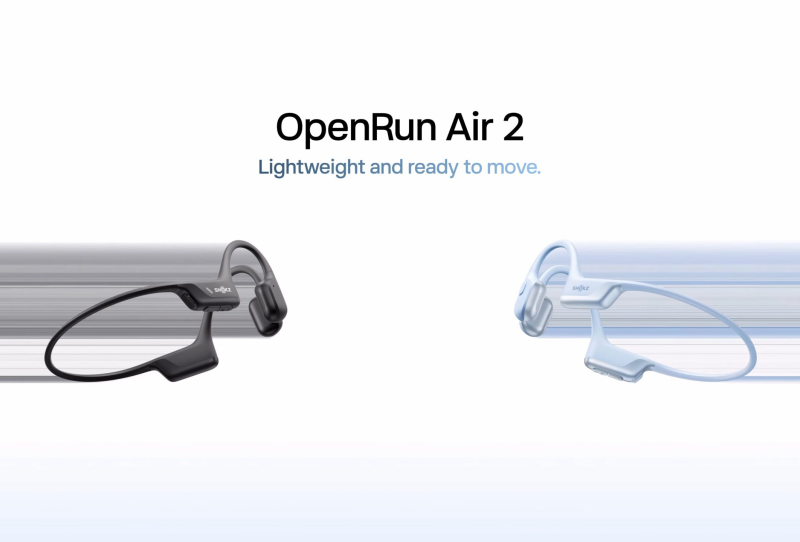
The Shokz OpenRun Air 2 has just landed as the brand’s latest attempt to make bone-conduction running headphones lighter, punchier and easier to live with day to day. Shokz has refined the neckband shape, reworked the internal driver, and swapped out its old charging cable for USB-C, all while keeping the open-ear design that lets runners hear traffic, dogs and fellow gym-goers around them.
Revealed alongside the true wireless OpenFit Air 2, the update targets the same crowd that made the original OpenRun and the pricier OpenRun Pro popular: runners, cyclists and outdoor lifters who want music or podcasts without sealing their ears shut. Rather than reinventing the formula, Shokz has focused on shaving weight, adding bass and fixing the small annoyances that came with the previous generation.
Table of Contents
A smaller, lighter fit for high-impact workouts
Shokz says the new neckband is more than 9% smaller than the original OpenRun and weighs just 26.4 grams, making it noticeably easier to forget it’s there mid-run. The ear hooks have been reshaped to sit closer to the contour of the ear, and the centre of gravity has shifted forward to cut down on the vertical bounce that bone-conduction headphones are prone to during sprints or trail running.
Holding it all together is a memory alloy frame, which keeps the one-piece band flexible enough to stretch over different head shapes without losing its snap-back shape. That flexibility matters for a headset that lives in a gym bag, gets stuffed under a cap, and has to survive being pulled on and off dozens of times a week.
PremiumPitch 3.0 and a genuine battery bump
On the audio side, Shokz has moved to what it calls PremiumPitch 3.0 acoustic technology, built around an all-metal, dual-coil, dual-reed transducer. The company says the new driver setup delivers stronger low-end bass, clearer vocal reproduction and a more balanced sound overall compared with the outgoing model, addressing one of the most common complaints levelled at bone-conduction headphones in general: thin, tinny bass.
Listeners can adjust that signature further through the Shokz companion app, which includes four preset EQ modes plus two customisable slots for anyone who wants to dial in their own balance of bass, mids and treble.
Battery life has also improved. Shokz rates the OpenRun Air 2 for up to 10 hours of playback, a 25% jump over the previous model’s roughly eight hours, and a five-minute top-up now delivers about two hours of use. The bigger change for daily convenience is the shift to USB-C charging, replacing the proprietary cable that many owners of the original OpenRun had to keep track of separately. The headset keeps its IP67 dust and water resistance rating too, so heavy sweat sessions and sudden downpours shouldn’t be a concern.
| Spec | Shokz OpenRun Air 2 |
|---|---|
| Weight | 26.4 grams |
| Battery life | Up to 10 hours (25% more than previous model) |
| Quick charge | 5 minutes for roughly 2 hours playback |
| Charging port | USB-C |
| Water/dust resistance | IP67 |
| Colours | Black, Ice Blue |
| Band sizes | Standard, Mini |
Where it sits against rivals and its own siblings
Shokz has effectively created a mid-tier gap between the entry-level OpenRun and the flagship OpenRun Pro, and the OpenRun Air 2 slots neatly into that space by borrowing driver tech and battery gains without the Pro’s premium positioning. It also arrives at a moment when open-ear audio is competing on two fronts: traditional bone-conduction designs like this one, and air-conduction earbuds such as the newly announced OpenFit Air 2, which rest just outside the ear canal instead of vibrating against the cheekbone.
Both approaches solve the same problem for outdoor exercisers, awareness of surroundings, but they sound and fit differently, and Shokz now effectively sells the choice to its own customers rather than ceding it to rivals. For anyone who prefers a fully sealed listening experience over open-ear designs, wireless headsets built for different use cases, such as the Logitech G PRO X 2 LIGHTSPEED, show just how differently a closed design can handle bass and isolation compared with bone conduction.
That contrast matters because bone-conduction headphones will never match the bass depth or noise isolation of closed-back headsets. Readers weighing up options for the gym versus the desk might find it useful to compare against closed-back headsets like the Corsair Virtuoso Max, which trades situational awareness for deeper isolation and richer low end, the opposite trade-off Shokz is making here.
What it means for runners and everyday buyers
The core appeal of the Shokz OpenRun Air 2 hasn’t changed: it’s aimed at people who value safety and awareness over audiophile-grade sound. The upgrades here are practical rather than flashy. Lighter weight and a better-balanced fit should matter more to a marathon trainer than any single spec figure, while the move to USB-C brings the headset in line with just about every other device people already charge daily.
The improved bass response also addresses a long-standing weak point of bone-conduction audio, and the added EQ flexibility through the Shokz app gives users more control than most competitors offer at a similar tier. Combined with the retained IP67 rating, the OpenRun Air 2 looks built to survive Australian summers, sudden rain, and the kind of daily grind that wears out cheaper sports headphones quickly.
Shokz will offer the OpenRun Air 2 in Black and Ice Blue, with Standard and Mini band sizes to suit different head shapes, giving buyers more fit options than the single-size approach some rivals still use. For runners who have stuck with bone conduction for its safety benefits but wanted better sound and simpler charging, this update addresses both complaints directly rather than treating them as an afterthought.