Table of Contents
Project overview
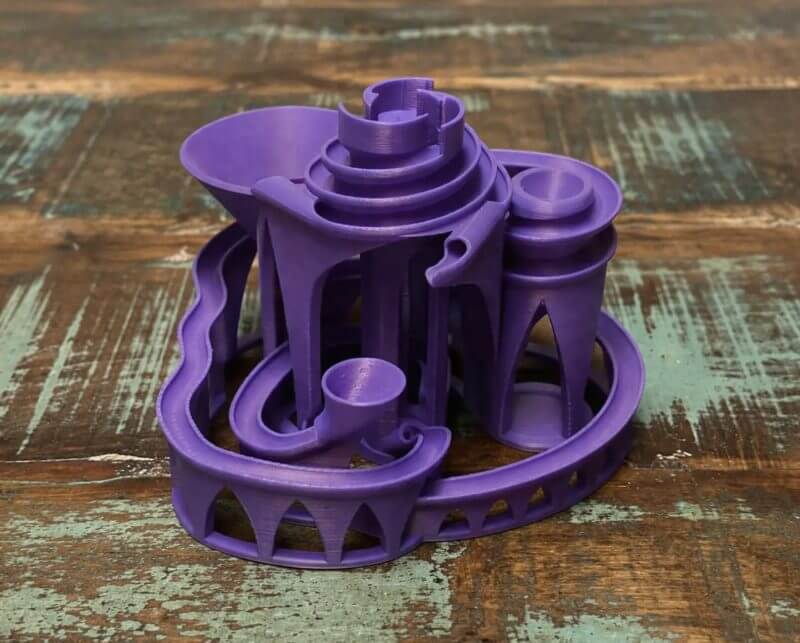
In this project, students design and 3D print a modular marble run using the Bambu Lab A1. Each student or group creates different track pieces, connectors, ramps, turns, funnels, or obstacles, then combines them into one larger working system.
This project is a strong match for STEAM learning because it blends physics, design, engineering, creativity, and mathematical thinking into one hands-on activity. It also works especially well with the Bambu Lab A1 because students can prototype parts, test movement, and quickly refine designs to improve how the marble travels through the course.
Why this project works well for STEAM learning
A marble run naturally introduces students to concepts such as gravity, motion, speed, friction, slope, momentum, and energy transfer. Instead of only learning those ideas through explanation, students can see them happening in real time as they test their printed designs.
It also encourages creative thinking because there is no single correct solution. Students can experiment with different shapes, pathways, and themes while still working towards a clear functional goal, which is to guide the marble smoothly from start to finish.
Learning goals
Students should learn how design choices affect movement and performance. They should also develop a stronger understanding of how slope, curve design, surface contact, and structure influence the behaviour of a moving object.
The project also helps students build confidence in prototyping and iterative design. They can test a part, identify what is not working, and then improve it through changes to shape, size, angle, or connection style.
Materials needed
- Bambu Lab A1
- PLA filament
- Marbles
- 3D design software such as Tinkercad or Fusion
- Ruler or measuring tools
- Cardboard or board for mounting if needed
- Tape or clips for temporary testing
- Worksheets or notebooks for recording ideas and results
Project brief for students
Students are challenged to create one or more marble run modules that can connect with other printed pieces. Each module must guide a marble successfully while also contributing something interesting to the overall design, such as a spiral drop, curved turn, jump section, zig-zag path, or speed control feature.
The final marble run should be functional, creative, and built from separate parts that work together. Students should think carefully about track width, wall height, connection points, slope angle, and how their piece fits into the larger system.
Suggested project stages
1. Research and concept planning
Students begin by exploring how marble runs work and what affects the movement of the marble. They can discuss how gravity pulls the marble downward, how steepness changes speed, and how friction or poor alignment can slow the marble or make it fall off the track.
At this stage, students sketch their ideas and decide what type of module they want to create. They should label key features and think about where the marble enters, how it moves through the section, and where it exits.
2. Digital design
Students create a digital model of their track piece using 3D design software. This stage encourages careful measurement and planning, since the marble needs enough space to roll freely while still being guided safely by the walls and curves.
Students can also think about aesthetics during this stage. They might theme their design around a race track, a futuristic transport system, or a science-inspired structure, which adds an arts component to the project.
3. Printing with the Bambu Lab A1
Once the design is complete, students prepare the file for printing on the Bambu Lab A1. The printer is well suited to this project because it makes prototyping practical and allows students to turn digital ideas into physical test pieces with a reliable workflow.
If the AMS Lite is available, students can also use different colours to highlight sections, identify module types, or make the overall marble run more visually engaging. This can be especially useful if the project is being presented as a collaborative class build.
4. Testing and improvement
After printing, students test their module with a marble and observe how well it performs. They should look for areas where the marble slows too much, jumps the track, gets stuck, or moves unpredictably.
This stage is where the engineering value of the activity becomes especially clear. Students can revise their design by adjusting the slope, widening a turn, smoothing a transition, or strengthening a connector before printing a better version.
5. Final assembly and presentation
Students connect their modules into one larger marble run and observe how the full system performs. They can present their design choices, explain what changes they made during testing, and discuss how their piece contributes to the completed course.
This final stage supports collaboration and reflection. It also helps students understand that successful engineering often depends on how individual parts work together within a larger system.
Curriculum links
Science
Students explore motion, gravity, friction, and energy transfer through direct observation and testing. They can compare how different track angles and surfaces affect marble speed and behaviour.
Technology
Students use 3D modelling software and digital fabrication tools to create a physical product. They also learn how the Bambu Lab A1 fits into a modern design and prototyping workflow.
Engineering
Students design a functional track component, test it, and refine it based on performance. They think about structure, alignment, strength, and reliability throughout the process.
Arts
Students can personalise their module through visual themes, shape choices, colour use, and decorative details. This helps the project feel creative as well as technical.
Mathematics
Students measure dimensions, calculate slopes, compare angles, and assess how changes in height or length affect the movement of the marble. They can also record and compare timing results between different designs.
Extension ideas
Students could create marble run modules designed around specific goals, such as the fastest path, the longest travel time, or the most creative obstacle. This adds a challenge-based element that can make testing and comparison even more engaging.
Another extension is to ask students to redesign their track for a different marble size or to include moving features such as gates, levers, or split pathways. Older students could also investigate how to reduce friction or design for more controlled speed.
Why the Bambu Lab A1 is a good fit for this project
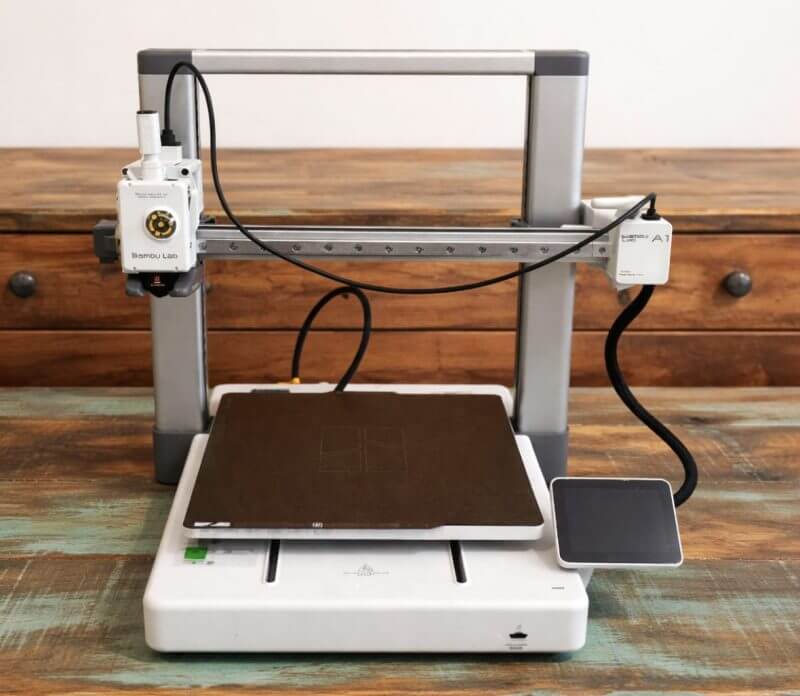
The Bambu Lab A1 is a great match for a marble run project because it supports rapid prototyping, reliable printing, and detailed design work in a format that feels accessible to learners. Students can move from concept to test piece more smoothly, which is important when the goal is to refine performance through repeated experimentation.
It also supports both function and creativity. Students are not only building something that works, but also making something visually engaging and personally meaningful. That makes this project a strong example of how the Bambu Lab A1 can support practical, enjoyable, and highly effective STEAM learning.