Street Fighter 6 producer Shuhei Matsumoto has revealed just how close Capcom’s flagship fighting franchise came to disappearing altogether, saying the series was effectively “dying” during the Street Fighter V era before he and director Takayuki Nakayama set out to rebuild it almost from the ground up. The comments shed new light on one of gaming’s more remarkable turnarounds, turning a franchise many had written off into one of the genre’s biggest success stories.
Key takeaways
- ✓Street Fighter 6 producer Shuhei Matsumoto says the franchise was 'dying' during the Street Fighter V era
- ✓Matsumoto worked closely with director Takayuki Nakayama to rebuild the series almost from scratch
- ✓Street Fighter V launched in 2016 with a thin roster and missing modes, drawing heavy criticism
- ✓Street Fighter 6 added three control schemes, World Tour mode and the Drive System to widen its appeal
- ✓The 2023 release is now considered one of the strongest comebacks in fighting game history
Matsumoto’s account centres on the years surrounding Street Fighter V, a game that launched in February 2016 to a rocky reception. The roster was thin at release, several promised modes were missing, and the netcode struggled in a genre where split-second online responsiveness can make or break a competitive scene. Capcom spent years patching, expanding and re-releasing the game through editions like Arcade Edition and Champion Edition, but the damage to the franchise’s reputation had already been done among players and the wider fighting game community.
Table of Contents
What went wrong with Street Fighter V
Fighting games live and die on their launch window. A thin roster and missing content at release tend to push competitive players toward rival titles almost immediately, and that is largely what happened to Street Fighter V. Tournament organisers and long-time fans voiced frustration publicly, and the game never quite shook its reputation as an unfinished product, even after later updates addressed many of the early complaints.
That reputational damage is the backdrop against which Matsumoto describes his work. Rebuilding trust with a fanbase that has already been burned once is a far harder task than building a successful game from a clean slate, and it meant the next entry couldn’t simply be an incremental sequel. It needed to be a statement.
How Matsumoto and Nakayama rebuilt the series
According to Matsumoto, the recovery effort was a close collaboration with director Takayuki Nakayama, who helped reshape the design philosophy behind what would become Street Fighter 6. Rather than chase the same narrow audience that Street Fighter V had struggled to retain, the pair pushed for a game that could welcome newcomers without alienating the hardcore competitive scene that still cared about the series.
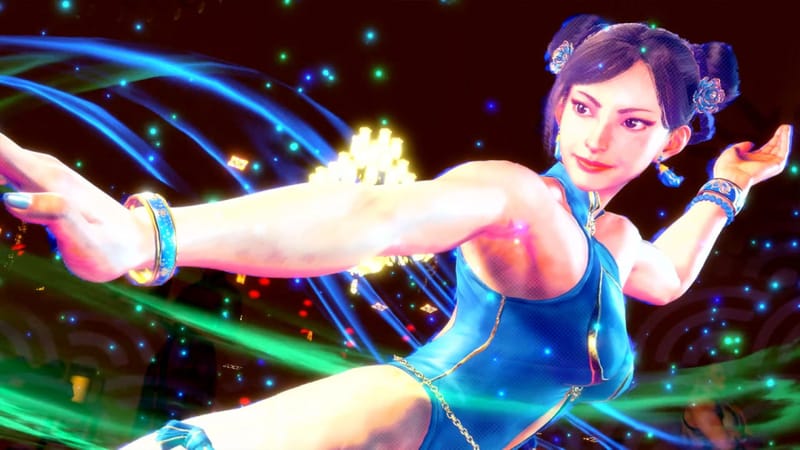
That approach showed up directly in the finished product. Street Fighter 6 launched in 2023 with three distinct control schemes, including a simplified Modern setup designed to lower the barrier to entry for players unfamiliar with traditional fighting game inputs. It also introduced the Drive System as a new combat layer, alongside a single-player World Tour mode and the Battle Hub, a social space built to make the game feel alive even for players who never touch ranked matches.
Those additions reflect a broader lesson Matsumoto and Nakayama appear to have taken from the Street Fighter V years: a fighting game’s health depends on more than just its core mechanics. Accessibility, content volume and a sense of ongoing support all matter just as much to a modern audience.
Street Fighter 6’s turnaround
The results speak for themselves. Street Fighter 6 was broadly praised by critics and players alike at launch, a stark contrast to the mixed reaction that greeted its predecessor seven years earlier. It has since become a fixture of major fighting game tournaments and a regular presence in Capcom’s live service plans, with ongoing character releases and balance updates keeping its competitive scene active.
The comeback is notable given how crowded the fighting game space has become. Titles like Tekken 8 and various entries in the Mortal Kombat series compete for the same pool of players, and other fighting games have struggled to hold onto players after launch in recent years. Street Fighter 6 bucking that trend, after its own predecessor nearly sank the franchise, makes Matsumoto’s account of the rebuild more than just a nostalgic look back.
What the recovery means for Capcom and the genre
Matsumoto’s comments also fit into Capcom’s broader push to modernise its development tools and processes across its catalogue, a sign that the company has been actively rethinking how it builds and sustains long-running franchises rather than letting them coast on reputation alone. Street Fighter’s recovery arguably set a template other teams inside the publisher have since drawn on.
It also says something about wider shifts happening across Japanese game development, where studios are increasingly willing to overhaul long-standing franchise formulas rather than protect them out of tradition. For a series as old as Street Fighter, which traces its roots back to 1987, that willingness to change course after a stumble is not something that can be taken for granted.
For players, the lesson from Matsumoto’s account is straightforward: a beloved franchise is never guaranteed to survive a bad instalment, and the difference between decline and recovery often comes down to a development team willing to admit what went wrong and rebuild accordingly. Street Fighter 6’s producer has now confirmed, in his own words, just how close that outcome came to going the other way.
Frequently asked questions
Why was Street Fighter V considered a failure?
Street Fighter V launched in 2016 with a limited character roster, missing single-player modes and rough online netcode, which drew heavy criticism from players and competitive communities before Capcom gradually improved it through later editions.
Who directed Street Fighter 6?
Takayuki Nakayama directed Street Fighter 6, working alongside producer Shuhei Matsumoto to redesign the franchise’s approach after the struggles of Street Fighter V.
Is Street Fighter 6 considered successful?
Yes. Street Fighter 6 received strong critical reception at launch in 2023 and has maintained an active competitive and casual player base, widely viewed as a major recovery for the franchise.
What new features did Street Fighter 6 add?
Street Fighter 6 introduced three control schemes for different skill levels, a new Drive System for combat, a single-player World Tour mode, and the Battle Hub social space.