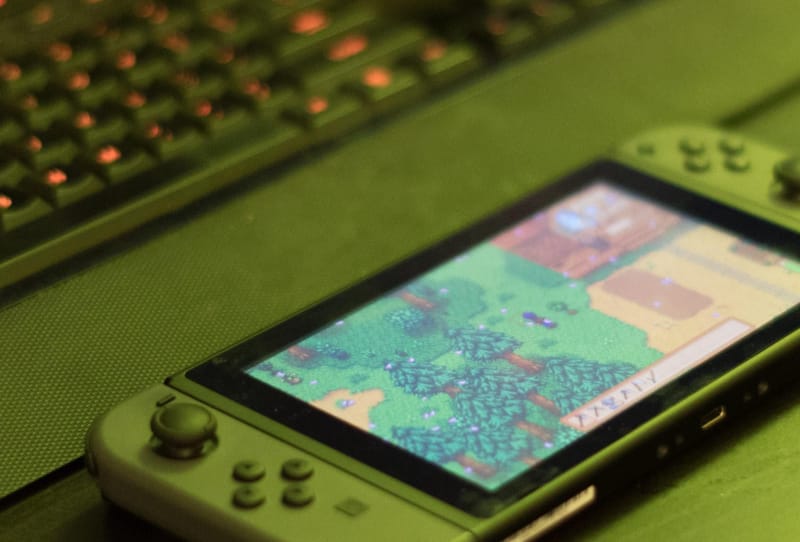
The Suyu Switch emulator has reached the end of the road, with its developers releasing version 0.04 as the project’s final build. It is a bittersweet send-off: the same update that closes the book on the popular Nintendo Switch emulator also introduces a static recompilation mode that pushes emulated games remarkably close to native PC performance.
Suyu emerged in 2024 as a spiritual successor to Yuzu, one of the most widely used Nintendo Switch emulators before Nintendo’s legal action forced its original team to shut the project down and hand over a substantial settlement. Suyu picked up where Yuzu left off, continuing development away from mainstream code-hosting platforms after repeated takedowns. Now, after roughly a year and a half of quiet but persistent work, its own developers have decided to call it quits.
Table of Contents
What changed in the final Suyu update
Version 0.04 is not a routine bug-fix release. Alongside the usual compatibility tweaks, it introduces a limited static recompilation mode aimed at select supported titles. This is the headline feature of the update, and arguably the most significant technical leap the emulator has made in its short life.
There is a catch, though. This farewell build drops support for macOS and Android entirely, narrowing the emulator’s reach to Windows and Linux systems only. For a project already winding down, that trade-off suggests the team prioritised shipping the recompilation work over maintaining broader platform coverage in its last days.
Because development has officially ceased, this static recompilation implementation will not be expanded further, refined, or patched. What ships in 0.04 is effectively frozen in time, a snapshot of what the technique could do before the project’s developers moved on.
Why static recompilation matters for emulation
Most emulators, including earlier versions of Suyu and Yuzu, rely on dynamic recompilation. That process translates a game’s original CPU instructions into instructions the host PC understands, but it does so on the fly, while the game is running. It works well, but it carries constant overhead, and that overhead is one of the main reasons demanding Switch titles can stutter even on powerful gaming PCs.
Static recompilation takes a different approach. Instead of translating code during play, it converts the game’s instructions into native machine code ahead of time, as a one-off process. Once that conversion is done, the game runs far closer to how it would if it had been built for the PC from the start, rather than being translated moment to moment. That is why this final Suyu update can claim performance approaching native PC speeds for the titles it supports, a notable achievement for any Switch emulator.
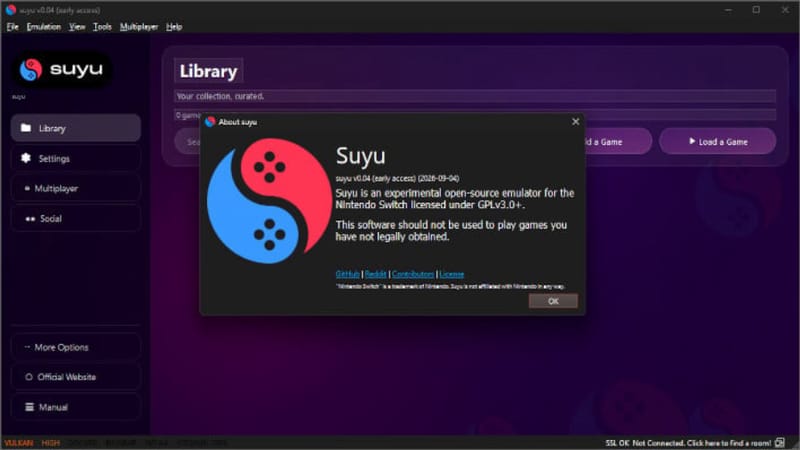
The trade-off is flexibility. Static recompilation typically needs to be tailored to individual games, which is why Suyu’s implementation is described as limited rather than universal. It is a proof of concept as much as a finished feature, but it is one that other emulation projects will likely study closely.
The legal pressure behind the shutdown
Suyu’s closure cannot be separated from the wider legal climate around Nintendo Switch emulation. Nintendo’s pursuit of Yuzu’s creators in 2024 ended with a multi-million dollar settlement and the immediate shutdown of that project, sending a clear signal to other emulator teams. Suyu absorbed much of Yuzu’s codebase and community, and it has operated under similar scrutiny ever since, shifting hosting arrangements more than once to avoid takedown requests.
With Nintendo continuing to defend its intellectual property aggressively, and with the Switch 2 now on the market, it is not surprising that a small volunteer team decided the risk and effort of continuing were no longer worth it. Shipping one last meaningful technical improvement before stepping away is a graceful, if quiet, way to close out the project.
What this means for Switch emulation going forward
For players who relied on Suyu, version 0.04 is likely the last official build they will see, and there is no indication anyone plans to fork it the way Suyu itself forked Yuzu. That leaves a noticeable gap in the Switch emulation space, at least for now.
The technical legacy may outlast the project itself, though. Static recompilation as a concept is not new to emulation broadly, but seeing it applied successfully to Switch titles, even in limited form, gives other developers a working reference point. Anyone running emulated titles on a capable gaming rig will still benefit from a well-tuned system, and those interested in optimising PC gaming settings for better performance or upgrading a gaming PC’s processor and motherboard will find that CPU performance matters just as much for emulation as it does for native gaming.
Nintendo, for its part, shows no sign of easing its stance on unauthorised emulation of its hardware, a position outlined across its various legal actions and policies available through Nintendo’s official site. Whether another team picks up where Suyu left off, or whether the risk simply proves too high for anyone else to try, remains to be seen.