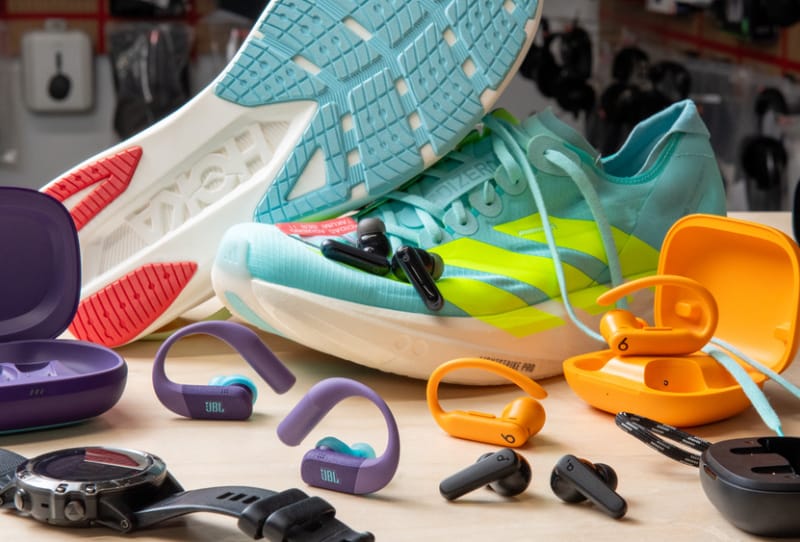
The best wireless earbuds for gym workouts are the ones that stay in your ears through burpees and sprints, survive sweat without complaint, and let you skip a track without fumbling. Everything else, including noise cancelling, companion apps and heart rate sensors, is a bonus rather than a requirement. This guide walks you through exactly what to check before buying, how to set your earbuds up properly, and which features matter most once you’re actually mid-set.
Key takeaways
- ✓Look for an IPX4 rating or higher so sweat and light rain do not damage your earbuds
- ✓Ear hooks or stability fins keep earbuds secure during running, lifting and high-intensity training
- ✓Active noise cancelling blocks gym noise well but reduces battery life noticeably
- ✓Physical button controls are more reliable than touch controls once your fingers get sweaty
- ✓Apple's AirPods 5 bring active noise cancelling to a smaller case for iPhone users
It’s written for anyone who trains regularly, whether that’s weightlifting, running, HIIT classes or just walking laps of the park, and wants earbuds that won’t fail halfway through a session.
Table of Contents
What you’ll need
- A Bluetooth-enabled phone or music player
- Wireless earbuds rated at least IPX4 for sweat and splash resistance
- A charging case, ideally one that holds a few extra charges
- Spare ear tips in different sizes, if supplied
- A music or podcast app you actually enjoy using during training
How to choose wireless earbuds for gym workouts
- Decide on a fit style first. Ear hooks, stability fins and simple round tips all behave differently once you start moving, so pick based on how intense your sessions usually are.
- Check the sweat and water resistance rating before anything else. Look for IPX4 as a baseline, with higher ratings being more forgiving if you train outdoors or in humid conditions.
- Test how the controls work. Physical buttons tend to be far more reliable than touch panels once your fingers are damp, since touch controls can misfire from sweat or accidental brushes.
- Decide whether you need active noise cancelling. It’s genuinely useful for drowning out gym music and clanking equipment, but it does shorten battery life, so weigh that trade-off against how long your sessions run.
- Check the battery life against your actual training schedule. A pair that lasts six to seven hours with ANC on is plenty for most people, but marathon trainers or all-day gym staff may want more.
- Think about extras like a built-in heart rate sensor if you like tracking biometrics mid-session, though this isn’t essential for most casual or intermediate training.
- Match the earbuds to your phone’s ecosystem where possible. Apple users often get smoother pairing and quick-switching with Apple-designed chips, while Android users have more flexibility across brands.
- Try the fit during an actual workout before committing long-term. A pair that feels secure standing still in a shop can still work loose once you start jumping or sprinting.
Fit styles compared
| Fit style | Best for | Trade-off |
|---|---|---|
| Ear hooks | Running, HIIT, high-movement training | Bulkier, less discreet |
| Stability fins (removable) | Weightlifting, moderate cardio | Still some slippage during very sweaty sessions |
| Standard in-ear tips | Walking, low-intensity gym use, everyday listening | Can loosen during fast or jarring movement |
Setting up your earbuds for training
- Pair the earbuds with your phone and install the companion app if one is available, since many brands let you fine-tune EQ and control layouts there.
- Fit each ear tip or hook properly by doing a gentle tug test. They should resist light movement without feeling painful.
- Adjust the EQ if the default sound feels too bass-heavy or thin for your workout playlist.
- Build a dedicated workout playlist. If you already use a Plex media server for your music library, Plexamp is a solid option for streaming your own collection without relying on a third-party music service.
- If you want to trim or clean up your own training audio, such as interval timer cues or voice memos, a free audio editor like Audacity handles basic cutting and levelling without any ongoing cost.
Audiophile in-ear monitors versus workout earbuds
You may come across premium in-ear monitors like the 64 Audio Ocean while researching earbuds, and it’s worth understanding why they’re a different category entirely. The 64 Audio Ocean is built for critical, detailed listening and studio-style monitoring, not for sweaty training sessions. It’s typically wired, lacks the sweat and water resistance that gym use demands, and prioritises sound accuracy over secure fit or durability. If you’ve read a 64 Audio Ocean review and were tempted by the sound quality, it’s genuinely excellent for home listening, but it’s not a sensible substitute for purpose-built workout earbuds.
Apple users and noise cancelling at the gym
Apple’s lineup, including AirPods 5, brings active noise cancelling into a smaller, lighter case, which suits people who want strong ANC without a sports-specific design. AirPods 5 noise cancelling performs well at blocking lower, constant sounds like treadmill hums or air conditioning, though the standard fit doesn’t offer the same security as ear hooks during fast, bouncy movement. If you’re deep in the Apple ecosystem and mainly do steady-state cardio or weight training, they’re a reasonable option, but sprinters and high-impact trainers may still prefer a hooked design.
Tips and troubleshooting
- If earbuds keep falling out, try a smaller or larger ear tip size before giving up on the pair entirely, since fit issues are often solved with the right tip rather than a different product.
- Bluetooth dropouts near gym equipment are usually caused by interference from other wireless devices or metal machinery blocking the signal. Keep your phone on the same side of your body as your dominant earbud where possible.
- If touch controls keep triggering accidentally from sweat, check the companion app for sensitivity settings or switch to a model with physical buttons instead.
- Clean ear tips and the charging contacts regularly. Sweat and skin oil build-up can affect both comfort and charging reliability over time.
- If ANC feels like it’s creating ear pressure or fatigue during long sessions, try transparency mode instead, which lets in ambient sound without the sealed feeling.
Frequently asked questions
Do I need active noise cancelling for gym workouts?
No, it’s not essential. ANC is helpful if you train in a noisy gym and want to stay focused, but it does reduce battery life, so it’s a trade-off rather than a must-have feature.
What water resistance rating should gym earbuds have?
Aim for at least IPX4, which protects against sweat and splashes from any angle. If you train outdoors in rain or heavy downpours, a higher rating offers extra peace of mind.
Are ear hooks necessary for workout earbuds?
Not for everyone. Ear hooks suit high-movement training like running and HIIT, while stability fins or well-fitted standard tips can work fine for lifting or low-intensity sessions.
Can I use audiophile in-ear monitors like the 64 Audio Ocean at the gym?
It’s not recommended. These are designed for critical listening rather than sweat resistance or secure, active fit, so a purpose-built workout pair will serve you far better during training.