Table of Contents
Project overview
Students design and 3D print a self-watering plant pot that can help keep a small plant hydrated over time. The project combines science, technology, engineering, arts, and mathematics by asking students to think about plant needs, water movement, product design, measurement, and visual presentation.
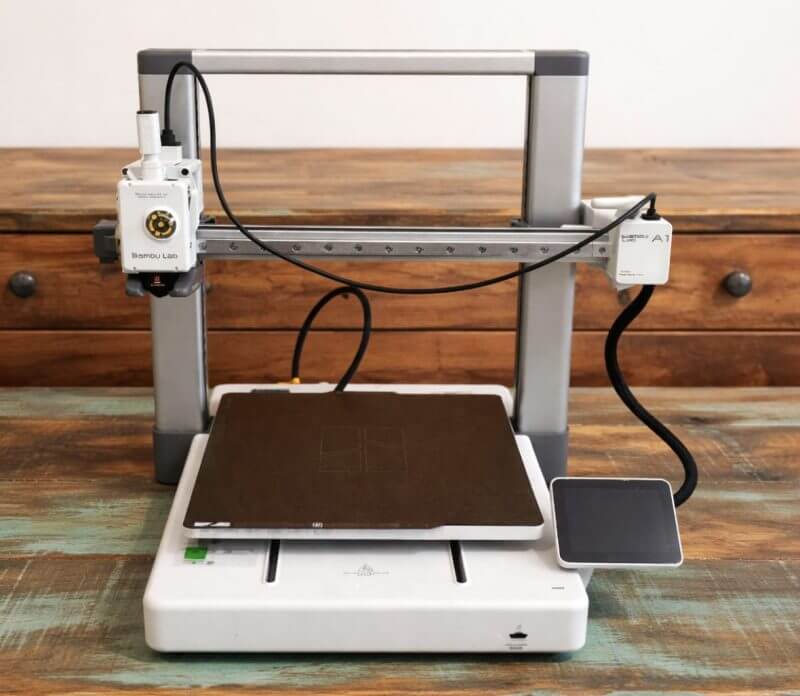
This is a strong fit for the Bambu Lab A1 because students can prototype different pot shapes, water reservoirs, and insert systems, then print and test them with real plants. It gives them a practical object with a clear purpose, which makes the learning experience feel useful and rewarding.
Why this project works well for STEAM learning
This project connects science through plant growth and water absorption. It connects technology through 3D modelling software and the use of the Bambu Lab A1. It supports engineering by requiring students to design a functional object that solves a real problem.
It also includes mathematics through measuring dimensions, estimating water capacity, and comparing results between different designs. The arts come into the project through the visual design of the pot, including shape, colour choices, surface patterns, and decorative themes.
Learning goals
By the end of the project, students should be able to understand how a product can be designed to solve a practical problem. They should also be able to explain how shape, size, and structure affect the performance of a 3D printed object.
Students should gain experience with prototyping and design revision. They should also learn how to test a printed object, identify weaknesses, and improve the design based on real results.
Materials needed
- Bambu Lab A1
- PLA or PETG filament
- 3D modelling software such as Tinkercad or Fusion
- Small plant or herb
- Potting mix
- Cotton wick or absorbent cord
- Water
- Ruler or measuring tape
- Notebook or worksheet for recording results
Project brief for students
Students are asked to create a plant pot that includes two main sections. The top section holds the soil and plant, while the lower section stores water. A wick or similar system draws water from the bottom chamber into the soil over time.
The printed design must be attractive, functional, and easy to use. Students should think about the size of the pot, how the water will be refilled, how the top and bottom sections fit together, and how the design could suit a classroom, kitchen, or windowsill.
Suggested project stages
1. Research and planning
Students begin by learning how self-watering pots work and why consistent moisture matters for plant health. They can discuss how capillary action helps move water and why some plants may benefit from steady watering.
At this stage, students sketch their ideas and label the key parts of the design. They should think about the reservoir, planting chamber, wick path, refill point, and overall shape.
2. Design development
Students build a digital version of their idea using simple 3D design software. They measure the dimensions carefully and make sure the parts can fit together correctly.
This stage is a good opportunity to discuss wall thickness, drainage, stability, and print orientation. Students can also think about how decorative features can be added without affecting function.
3. Printing with the Bambu Lab A1
Once the design is ready, students prepare the file for printing. The Bambu Lab A1 is well suited to this stage because it makes the process of turning a digital idea into a physical object much more manageable for learners.
If the AMS Lite is available, students can also use multiple colours to separate functional parts or add visual interest. For example, the reservoir could be one colour while the planting section is another, making the design easier to understand and more appealing to display.
4. Assembly and planting
After printing, students assemble the pot, insert the wick, add soil, and plant a small herb or flower. They then fill the water reservoir and observe how the system works over time.
This stage helps students see whether their design performs as intended. They can check if the reservoir is easy to fill, whether the wick draws water effectively, and whether the overall structure feels stable and practical.
5. Testing and evaluation
Students monitor the plant and pot over several days or weeks. They can record how often the reservoir needs refilling, whether the soil stays evenly moist, and whether any design changes might improve performance.
This is where the engineering side of the project becomes especially valuable. Students can identify design problems, such as a reservoir that is too small or an opening that is hard to access, and then revise the design for a second version.

Curriculum links
Science
Students explore plant needs, water movement, and environmental conditions that affect growth. They can compare how different watering methods affect plant health.
Technology
Students use digital tools to model an object and prepare it for 3D printing. They also learn how a 3D printer like the Bambu Lab A1 fits into a modern design workflow.
Engineering
Students design a product with a practical purpose, test its performance, and improve it through iteration. They consider structure, fit, and usability throughout the process.
Arts
Students develop the visual appearance of the pot through shape, style, and colour. They can also theme the design around nature, school identity, or a creative concept.
Mathematics
Students measure dimensions, estimate volume, compare capacities, and calculate how much water the reservoir can hold. They may also compare plant growth data over time.
Extension ideas
Students could create a class range of self-watering pots designed for different plants. One group might make a compact herb pot, while another designs a larger system for a flowering plant.
They could also compare different wick materials and record which one performs best. Another option is to redesign the pot for a specific user, such as a student bedroom, a classroom windowsill, or an elderly gardener who wants a simpler watering solution.
Why the Bambu Lab A1 is a good fit for this project
The Bambu Lab A1 is ideal for this kind of activity because it helps students move from concept to prototype without unnecessary complexity. Its ease of use, strong print quality, and reliable workflow make it much easier to run practical classroom projects where students need to test real designs.
It also supports creativity alongside function. Students are not only making a decorative object, but solving a real problem through design, measurement, prototyping, and testing. That makes this project an excellent example of how the Bambu Lab A1 can support meaningful STEAM learning.
I can also turn this into a teacher-friendly classroom project sheet with sections for year level, learning outcomes, time required, and assessment criteria.