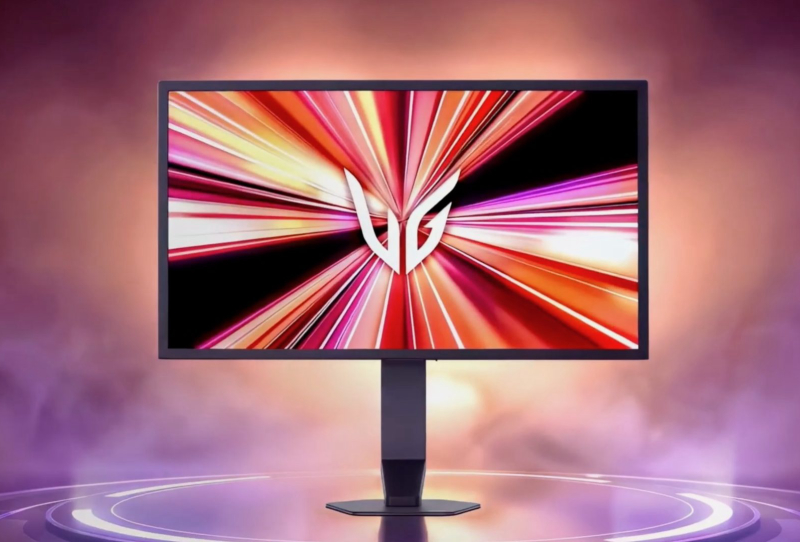
LG has started selling what it calls the world’s first 1000Hz gaming monitor to hit that refresh rate natively at full HD resolution, giving competitive players another rung on the ever-climbing refresh rate ladder. The 24.5-inch UltraGear 25G590B was first announced back in May, and it has now moved from teaser to a real product US buyers can get their hands on.
The pitch is simple: most monitors advertising 1,000Hz today only reach that number in a stripped-back mode, usually at a lower 720p resolution. LG says its panel runs the full 1,000 frames per second natively at 1080p, meaning no compromise on image detail to chase the higher number. The company has also confirmed the screen can be pushed further still, with an overclock mode that reaches 1,100Hz for players willing to squeeze out every extra frame.
Table of Contents
What the LG UltraGear 25G590B Actually Offers
Beyond the headline refresh rate, the monitor leans on a fairly familiar esports-focused spec sheet. It uses an IPS panel, chosen for consistent colour and viewing angles rather than the deeper contrast of an OLED alternative, paired with a 1-millisecond response time to keep fast motion looking crisp rather than smeared.
The 24.5-inch size is a deliberate choice too. LG argues that a smaller screen keeps the entire image within a player’s direct line of sight, which matters more in fast-paced shooters than sheer screen real estate does. A built-in frame-rate counter is also included, letting players check in real time whether their system is actually delivering the frames the panel is capable of showing.
| Spec | Detail |
|---|---|
| Panel type | IPS |
| Native refresh rate | 1,000Hz at 1080p |
| Overclocked refresh rate | 1,100Hz |
| Screen size | 24.5 inches |
| Response time | 1ms |
| Extra feature | Built-in FPS counter |
How This 1000Hz Gaming Monitor Compares to Rivals
LG isn’t the first brand to throw the number 1,000Hz onto a spec sheet. Samsung, TCL, and Acer have all shipped monitors with a 1,000Hz mode in recent times, but each one caps that mode at 720p, a noticeably softer resolution than full HD. LG’s argument is that its panel avoids that trade-off entirely, letting buyers keep 1080p sharpness while still hitting the same eye-watering frame count.
That distinction, native versus optional high-refresh mode, is likely to matter most to the kind of buyer chasing marginal gains in high-refresh gaming monitors and similar competitive gear, rather than the average shopper picking a screen for everyday use. For most people browsing the web or watching video, the jump from a common 240Hz or even 360Hz panel to 1,000Hz will be effectively invisible.
Why LG Is Betting on Esports Players
LG is marketing the monitor directly at competitive gamers, with a tagline promising players can “see faster” and “aim sharper” in first-person shooters. The company’s messaging leans on the idea that a higher native refresh rate reduces motion blur and produces smoother-looking movement on screen, theoretically shaving fractions of a second off reaction times in fast-twitch games.
Whether that translates into a measurable competitive edge is a harder question. Hitting frame rates anywhere near 1,000 frames per second in a modern game demands a genuinely powerful graphics card, meaning the monitor’s ceiling is only useful to players whose systems can actually push that many frames in the first place. Human reaction time also has its own limits, and diminishing returns tend to set in well before four-figure refresh rates come into play, which is part of why some observers have questioned whether the format is overkill for anyone outside elite competitive circles.
What It Means for Buyers Watching the Market
Even if the practical benefit is debatable for casual players, the launch signals where the top end of gaming monitor development is heading. Refresh rates that once topped out at 144Hz or 240Hz just a few years ago have climbed steadily, and manufacturers now use ultra-high numbers as a marketing differentiator in a crowded, competitive display market.
For Australian buyers, the more useful takeaway is what this says about the wider lineup below it. LG, along with rivals such as Samsung, Acer, and TCL, will likely continue pushing native high-refresh panels down into more mainstream price tiers over time, the same pattern seen with 144Hz and 240Hz displays becoming commonplace after starting out as premium features. Shoppers not chasing bleeding-edge esports performance may be better served waiting for that trickle-down effect, while players wanting the absolute peak refresh rate today now have a native full HD option to consider alongside the existing 720p-capped alternatives from other brands.