Acer used IFA 2026 to reveal its own spin on NVIDIA’s compact AI desktop platform, and the result is a machine that looks nothing like the reference design most people expected. The Acer SFF RTX Spark takes the same Grace Blackwell hardware that powers NVIDIA’s RTX Spark platform and wraps it in a chassis Acer designed from scratch, aiming squarely at creators, gamers and anyone who wants serious local AI grunt without a tower sitting under the desk.
The “SFF” in the name stands for small form factor, and that’s the whole point of the design. Rather than copying the boxy look of the earlier DGX Spark systems aimed at developers and data scientists, Acer has built something that could pass for a stylish mini PC while still packing enough compute to run demanding local AI workloads.
Table of Contents
What Acer showed off at IFA 2026
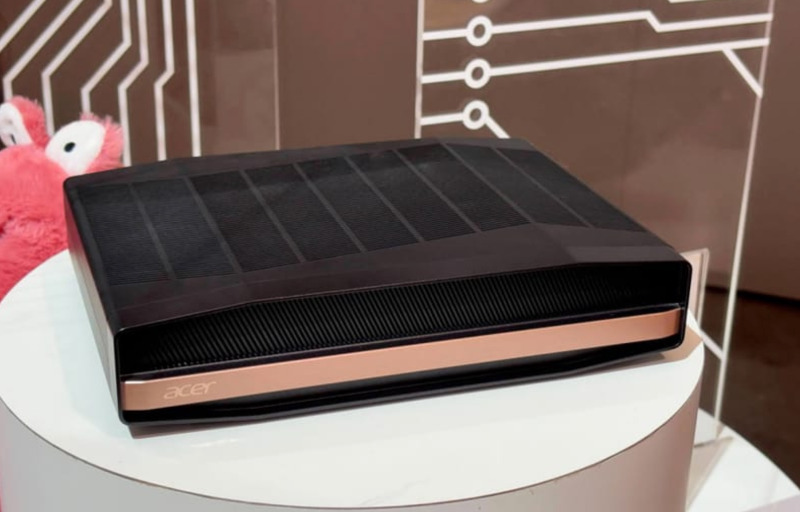
The SFF RTX Spark arrives with a predominantly black shroud broken up by a single bronze accent strip, giving it a sharper, more premium look than the utilitarian aesthetic NVIDIA’s own reference hardware has favoured so far. It’s a deliberate departure, and one that signals how differently PC makers plan to interpret NVIDIA’s RTX Spark platform once it reaches retail.
Flexibility in placement is part of the pitch too. The chassis can sit flat on a desk in a horizontal orientation, or slot into a dedicated stand for vertical use, which matters for anyone trying to squeeze a capable AI workstation into a tight desk setup. Acer has also layered in its usual software customisations, the kind found across its wider PC and laptop range, on top of NVIDIA’s full optimisation stack for gaming and local AI tasks.
Positioning it against the platform’s roots
NVIDIA originally framed the Spark platform around AI developers and data scientists working with large models locally. The RTX branding on this new wave of machines, including Acer’s version, signals a shift toward home office users, content creators and gamers who want desktop-class AI performance without renting time on a cloud GPU cluster. That’s a meaningfully different audience, and the design choices reflect it.
Specifications inside the compact shell
Underneath that bronze-trimmed shroud sits genuinely serious silicon. Acer’s configuration options top out at a 6,144-core GeForce RTX GPU built on NVIDIA’s Blackwell architecture, paired with up to 20 cores on the Grace CPU. NVIDIA rates the combined package at roughly 1 PetaFLOPS of FP4 compute, a figure aimed squarely at running large language models and generative AI tools locally rather than in the cloud.
| Component | Specification |
|---|---|
| GPU | Up to 6,144-core GeForce RTX (Blackwell architecture) |
| CPU | Up to 20-core NVIDIA Grace CPU |
| Compute | Up to 1 PetaFLOPS FP4 |
| Memory | Up to 128 GB LPDDR5X unified memory |
| Operating system | Windows 11 |
The unified memory pool is worth dwelling on. Configurations scale up to 128 GB of LPDDR5X shared between the CPU and GPU, which is the kind of capacity that lets larger AI models run entirely on-device instead of being split across separate system and graphics memory. Running Windows 11 rather than a Linux-based developer OS also makes the machine far more approachable for creators and gamers who aren’t comfortable managing a data science stack.
How the Acer SFF RTX Spark stacks up against rivals
NVIDIA’s original DGX Spark machines were purpose-built for engineers prototyping AI models, with a design language that made no concessions to living-room or home-office aesthetics. Acer’s SFF RTX Spark inverts that priority. It keeps the same underlying silicon but dresses it for a very different shelf, competing less with workstation towers and more with the growing wave of compact AI-capable desktops now emerging from PC makers eager to capture the local AI enthusiast market.
That puts it in an interesting position relative to gaming desktops built around discrete GPUs. Buyers weighing a machine like this against a conventional RTX-powered tower, of the sort covered in reviews of cards such as the Gigabyte RTX 4070 Ti SUPER Eagle OC, will need to think about whether unified memory and AI throughput matter more to them than raw gaming frame rates. NVIDIA has already been busy locking in game support ahead of launch for the broader Spark family, suggesting the company doesn’t want gaming performance treated as an afterthought on these machines.
What it means for buyers and the wider market
Acer hasn’t detailed exact configurations, availability windows, or which markets will see the SFF RTX Spark first, so anyone keen on one should treat this as an early showcase rather than a retail-ready announcement. NVIDIA’s broader rollout of NVIDIA’s RTX Spark chip across laptops and desktops suggests Acer’s box is one of several interpretations of the platform that partners will bring to market over the coming months.
What is clear is that PC makers see genuine appetite for compact machines that can run AI workloads locally, sidestepping cloud subscription costs and privacy concerns tied to sending data offsite. Acer’s design choices here echo a broader trend across the industry, where other compact desktop builds squeezing in serious power have shown there’s real demand for small chassis that don’t compromise on capability. For Acer, a brand already active across Acer’s other recent hardware efforts, the SFF RTX Spark is a statement that it wants a seat at the table as local AI computing moves from data centres into home offices.