Insomniac Games has moved to quash a Marvel’s Wolverine generative AI rumour after players spotted two unsettling bathroom signs inside the PlayStation 5 exclusive. The images, which showed warped, melted-together human figures, spread quickly across social media as fans wondered whether the studio had leaned on AI-generated art to fill out the game’s world.
The concern started with a TikTok clip from user SmoothMango, who zoomed in on a pair of restroom signage graphics found during play. “That looks AI-generated,” they said, adding that there was “no way it’s a bathroom for mutants” designed to look that strange on purpose. The clip made its way to X, where user Rock Solid reposted stills from the video, and the debate snowballed from there.
Table of Contents
Insomniac Blames a UV Map Bug, Not AI
With anxiety about AI-generated content in big-budget games running high, Insomniac didn’t let the theory linger. James Stevenson, the studio’s director of community and marketing, replied directly to the X post to explain what had actually gone wrong. He described it as a UV map bug, a technical rendering issue where texture data gets misaligned on a 3D model, rather than anything to do with machine-generated artwork.
Stevenson was blunt about it. “There are no AI-generated assets in Marvel’s Wolverine,” he wrote, confirming a fix for the glitch is already in the works. UV mapping errors are a known, if unglamorous, part of game development, and they can produce exactly the kind of stretched, distorted textures that fuelled the original suspicion. It’s an unflattering visual bug, but a mundane one rather than evidence of a generative AI shortcut.
No timeline has been given for when the patch will land, so players may keep encountering the odd signage until Insomniac ships the correction. Still, the studio’s quick and specific response has largely defused the immediate concern, even as it highlights how twitchy the gaming community has become around anything that resembles AI-made art.
A Second Headache in Wolverine’s Launch Week
The bathroom sign saga wasn’t the only rough patch for Marvel’s Wolverine since it launched on September 15. Days earlier, players had already zeroed in on Logan’s Scent Trails, a tracking mechanic that lets the character follow scent cues through the environment. Fans nicknamed the visual effect “fart gas” almost immediately, and the mockery spread fast enough that Insomniac issued a small fix within days of release.
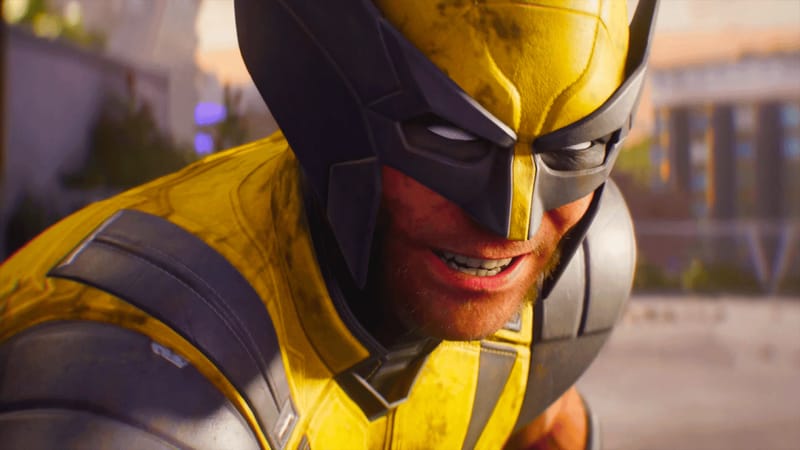
The studio has also said it’s investigating a toggle option for the scent-tracking feature as ongoing post-launch support continues. Combined with the UV map controversy, it paints a picture of a high-profile release that’s drawn plenty of attention to its rough edges, even while its core reception has been comparatively solid.
Why Generative AI Suspicion Spreads So Fast in Gaming
The speed at which fans assumed the worst says as much about the current climate around AI in creative industries as it does about the actual bug. Studios across gaming have faced scrutiny over AI tool use, and any visual anomaly that resembles the telltale artefacts of generative image models, like melted faces or garbled text, now gets treated as a red flag first and a bug second.
Insomniac isn’t alone in navigating this. Other developers have faced another developer facing generative AI backlash over marketing material, while some publishers have gone out of their way to publicly rule the technology out, including GTA 6’s decision to avoid generative AI entirely. At the same time, plenty of studios are exploring the opposite path, with how other studios are embracing AI tools for game creation becoming an increasingly visible trend. That split makes it harder for players to guess, at a glance, which camp any given developer falls into.
Sales, Reviews and What Happens Next
None of this appears to have dented Marvel’s Wolverine’s commercial performance, with the game reportedly off to a strong sales start despite the online noise. Critical reception has been more mixed. IGN’s review scored the game 6 out of 10, arguing that its combat is “slick and satisfying” early on but “wears thin well before its conclusion,” and that strong character writing couldn’t fully offset a linear story structure that some players have found restrictive.
For now, the practical takeaway for players is straightforward. The distorted bathroom signage is a cosmetic bug tied to texture mapping, not a sign that Insomniac cut corners with generative tools, and a fix is on the way. The bigger story is how quickly a rendering glitch became a flashpoint, a reminder that in 2026, developers are expected to answer for AI questions almost as fast as they answer for gameplay ones.