Robot vacuums have become remarkably capable over the past few years, yet few new releases genuinely shift what is possible in a single pass around the home. The Roborock Saros 20 Flow is one of those rare refreshes, pairing a strikingly slim chassis with serious suction and a mopping system built around continuously refreshed water rather than a static pad. As Roborock’s newest flagship, it has been designed to handle hard floors, carpets and everything in between without asking the owner to swap accessories or fuss over settings.
Review summary
Roborock Saros 20 Flow
The Roborock Saros 20 Flow combines a slim 8.98cm chassis with powerful 36,000 Pa suction and a continuously refreshed water mopping system to deliver genuinely capable cleaning across carpet, tile and timber in a single pass. The retractable navigation turret, dual anti-tangle brushes and pressurised roller mop address common robot vacuum shortcomings with thoughtful engineering. It represents a meaningful step forward in what a robot vacuum can accomplish without constant adjustment or accessory swapping.
Highlights
- ✓Ultra-slim body fits under low furniture while maintaining full LiDAR navigation
- ✓Pressurised roller mop with fresh water refresh handles sticky spills in one pass
- ✓Intelligent water adjustment and obstacle recognition for mixed homes
- ✓High threshold climbing and anti-tangle brush system for pet owners
- ✓Comprehensive app setup and customisation
At its core sits a 36,000 Pa HyperForce digital motor, a SpiraFlow 2.0 Pressurised Self-Cleaning mopping system, and an all-new RockDock base station that quietly handles washing, drying and refilling. Add an 8.98 centimetre ultra-slim body, a threshold-climbing AdaptiLift Traverse 3.0 chassis, and a retractable navigation turret, and the spec sheet reads like a genuine attempt to cover every scenario an Australian household might throw at it.
This review works through the Saros 20 Flow’s design, the features that define it, and how it performs in everyday use across carpet, tile and timber floors, pet hair, and the kind of stubborn kitchen spills that tend to separate a decent robot mop from a genuinely great one.
Table of Contents
Design and Functionality
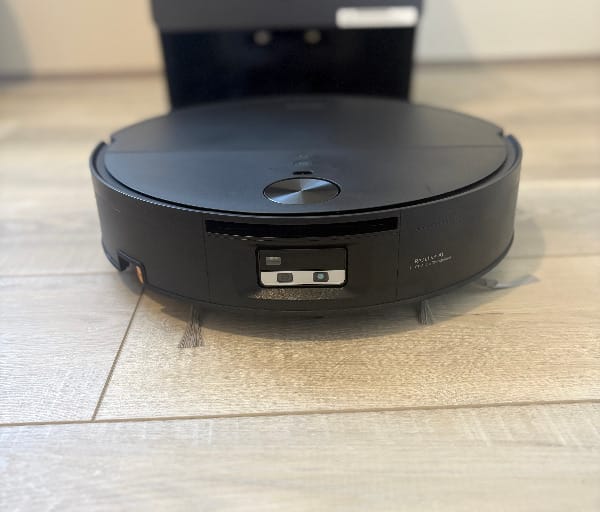
The Saros 20 Flow presents a circular, low-profile body finished in a matte dark coating rather than the glossier look of some earlier Roborock models. It is not the flashiest robot vacuum on the market, but the restrained finish suits the slimmer, more purposeful shape Roborock has gone for this time around.
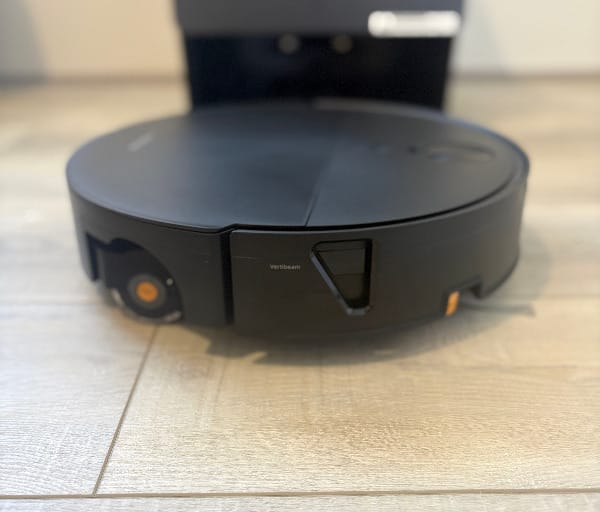
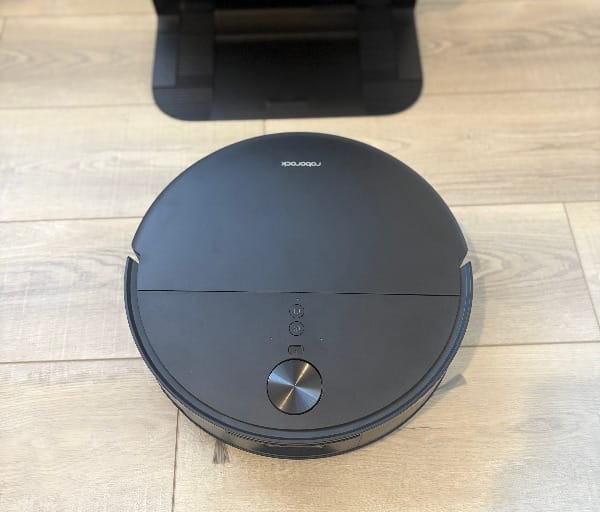
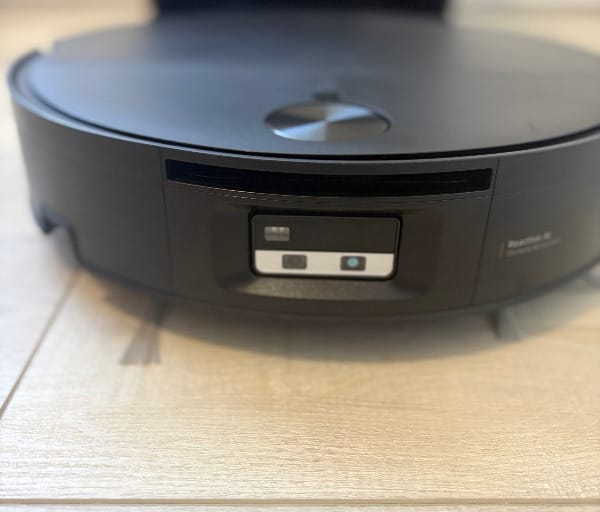
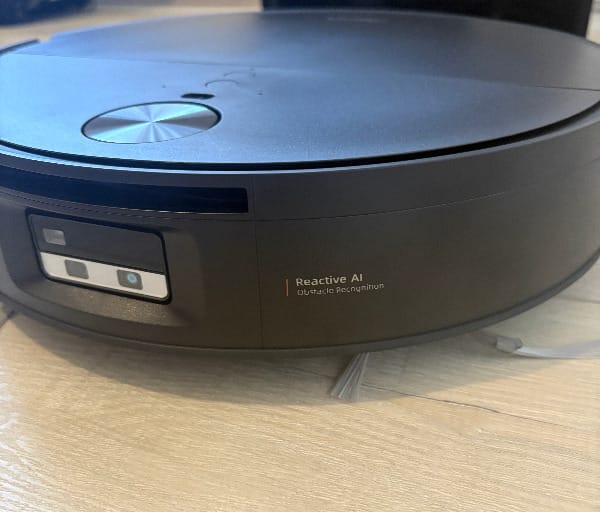
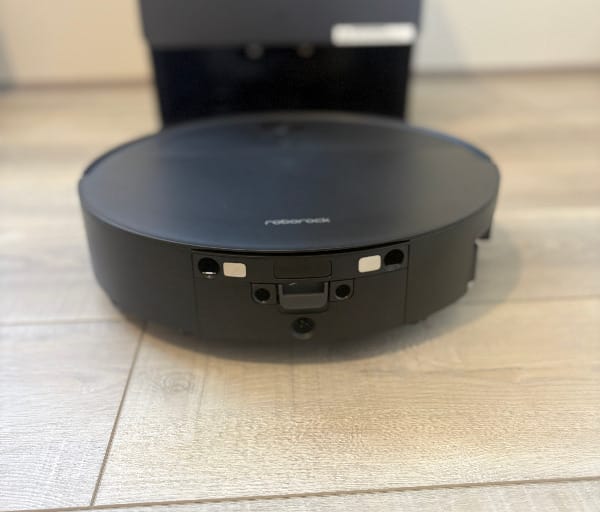
That matte surface does mean fingerprints and dust show a little more readily than on a gloss finish, though it is a minor trade-off given how much the slimmer body adds to the robot’s practical reach under furniture. It still feels like a premium device in the hand, with tight panel gaps and a solid, reassuring weight.
Sitting atop the chassis is the RetractSense Navigation System, a LiDAR turret that rises for wide-open rooms and tucks itself away when the robot needs to duck under low furniture. Even with the turret retracted, the Saros 20 Flow keeps navigating accurately thanks to a 100-degree rear-view camera that takes over mapping duties in those tighter moments.
That retractable design is central to the headline claim of an 8.98 centimetre body height, making this one of the slimmest roller-mop robot vacuums currently fitted with a full LiDAR navigation system. In practice, that lower profile opens up a lot of floor space that taller robots simply have to skip.
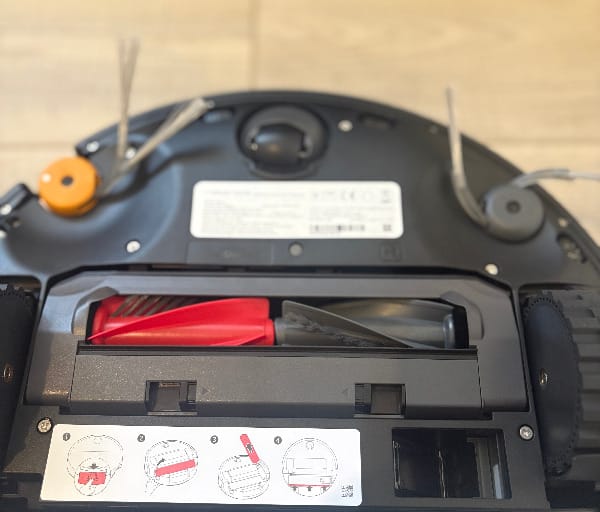
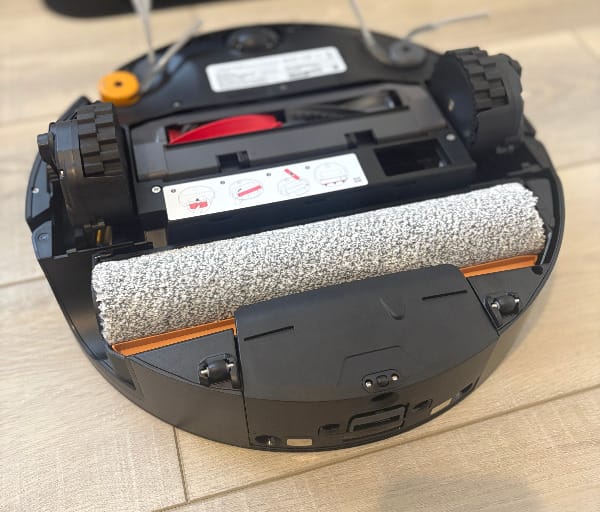
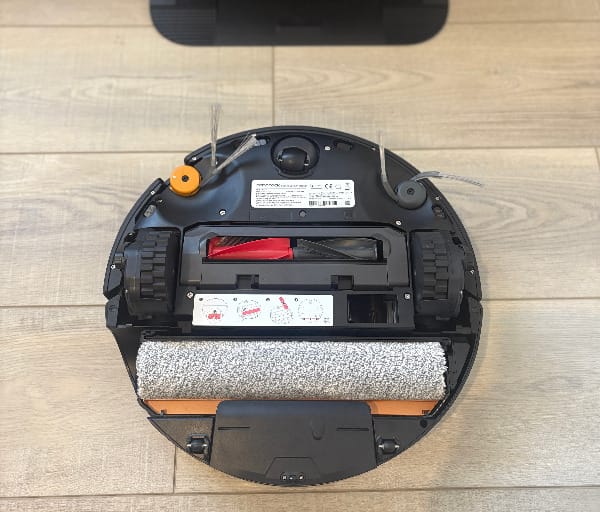
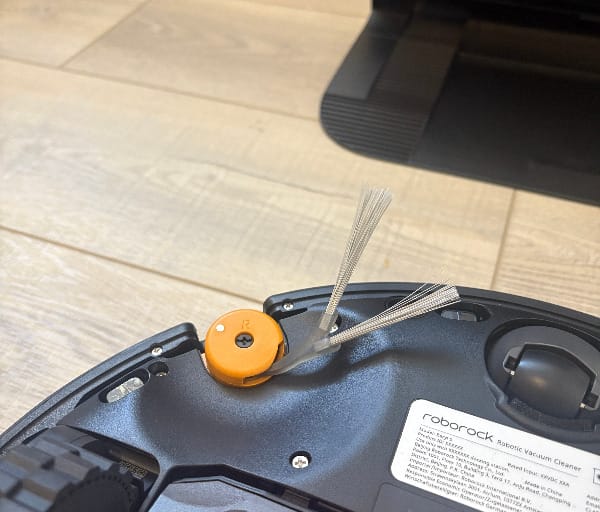
Flip the Saros 20 Flow over and the underside tells the real design story. A DuoDivide main brush sits centrally, flanked by dual lifting side brushes, with the roller mop positioned at the rear to pick up where the vacuuming leaves off.
That roller mop design is a deliberate departure from the spinning pad mops seen on older Roborock models and many rival brands. Rather than smearing dirty water around in circles, the roller rotates continuously against a stream of fresh water, which keeps the cleaning surface genuinely clean rather than just damp.
The dual lifting side brushes are designed to extend cleaning coverage by roughly 30 percent compared with a single fixed brush, sweeping debris in from skirting boards and corners before the main brush and roller mop take over. They lift automatically when the robot senses carpet, helping to avoid tangled bristles and carpet fluff being flicked around the room.
Build quality throughout feels consistent with what buyers would expect from a flagship-tier robot vacuum, with sturdy plastics, a well-damped lid over the dustbin, and wheels that feel substantial enough to handle rugs and uneven transitions without excessive wobble.
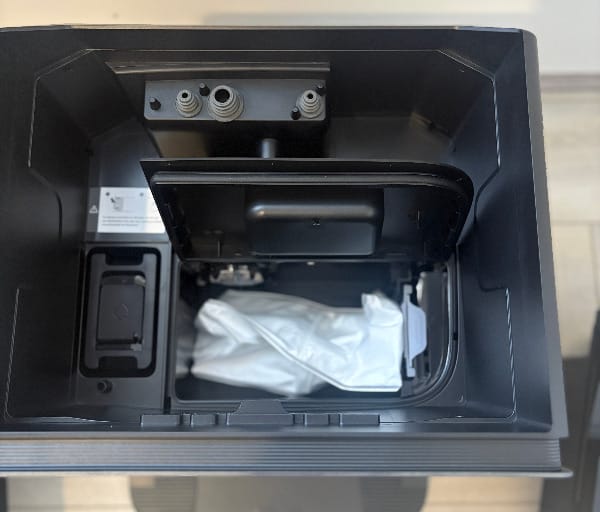
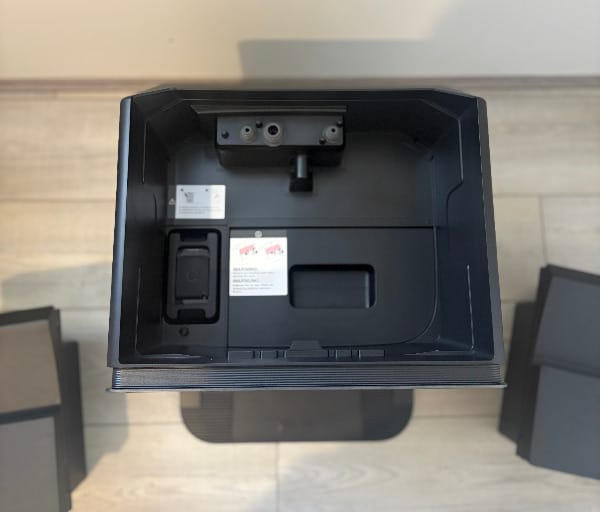
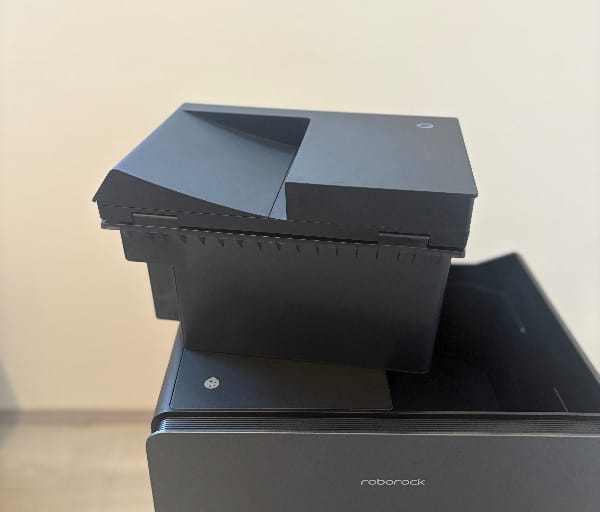
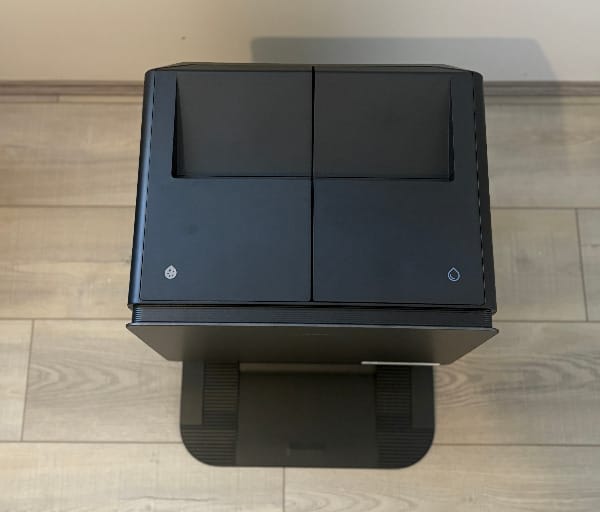
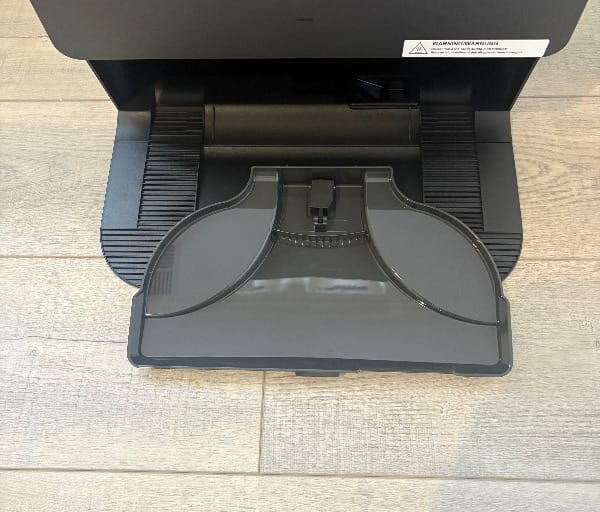
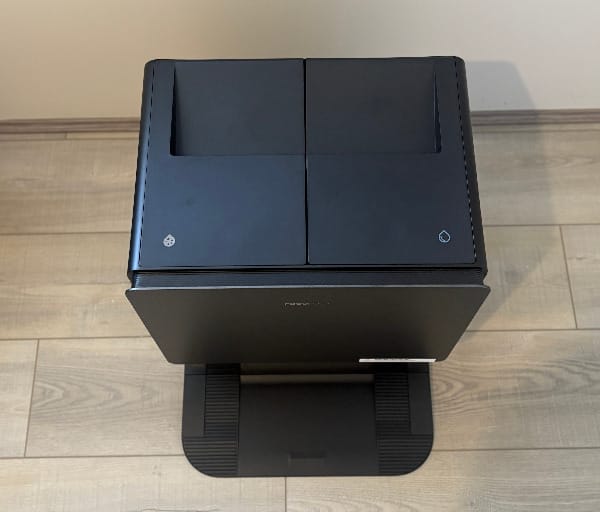
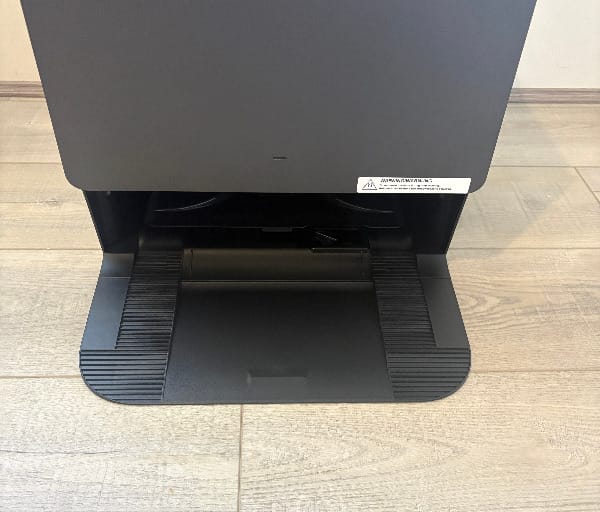
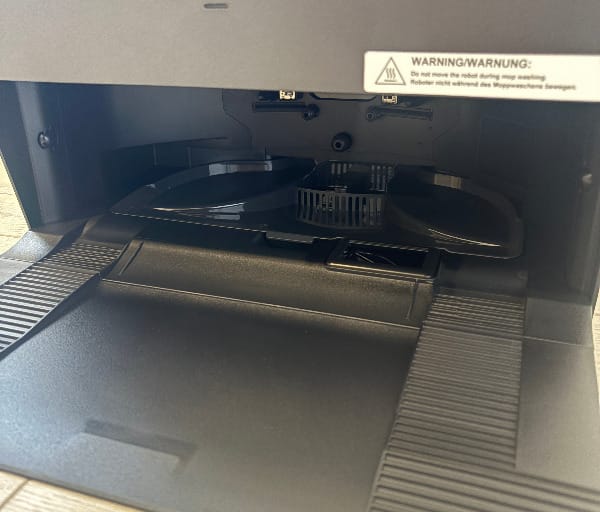
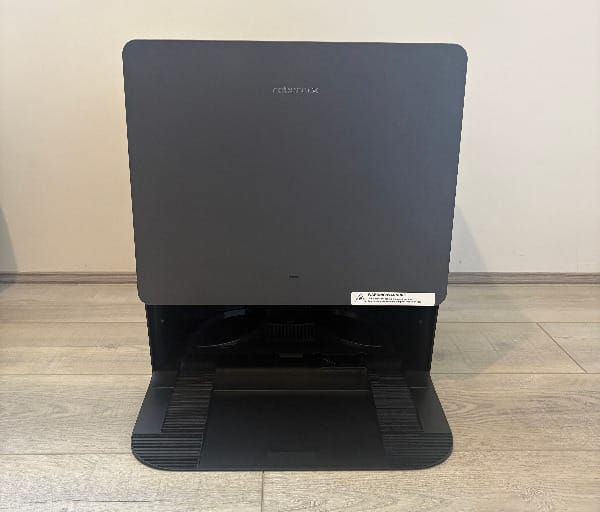
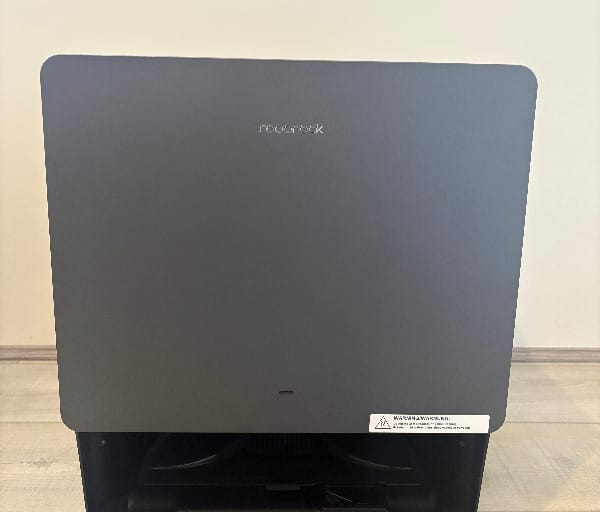
The RockDock base station follows a similarly understated design language, finished in the same matte tone as the robot itself. It is a boxier, more utilitarian shape than some of the sculptural docks on the market, but it is far from unattractive and blends into a laundry or hallway corner easily enough.
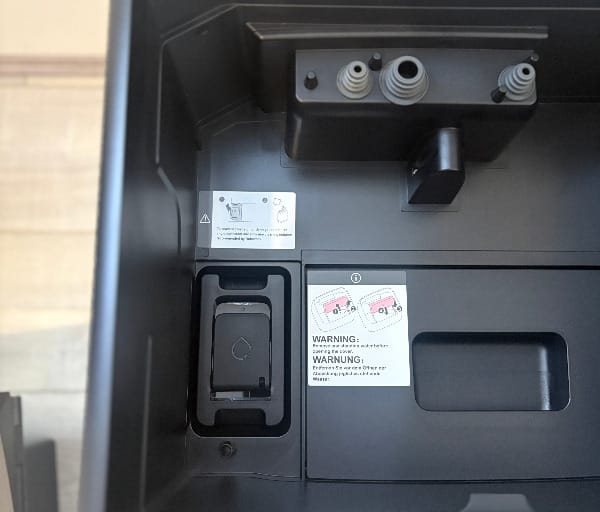
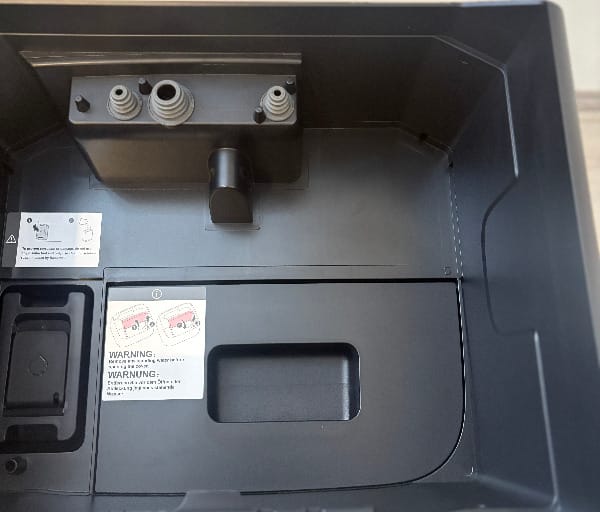
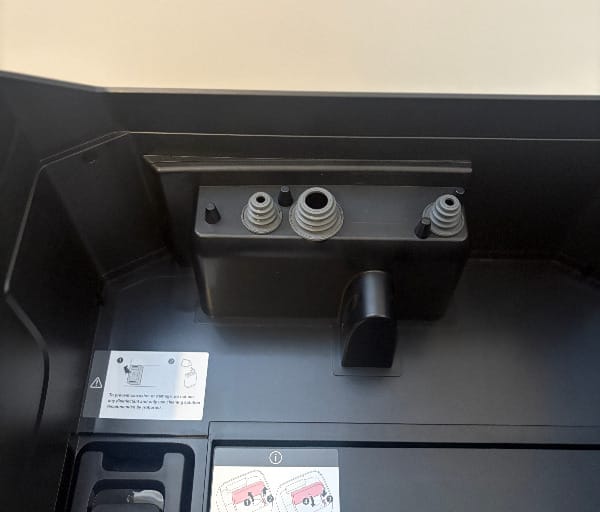
Clean and dirty water tanks sit at the top of the RockDock, making them simple to lift out, empty and refill without needing to disturb the rest of the unit. The dust collection bag is housed separately, keeping the water-handling side of the dock away from the drier vacuuming side.
Because the RockDock handles warm water washing, drying and automatic dust emptying, it does need a reasonably clear patch of floor nearby, plus access to power. It is not the smallest dock on the market, but its footprint is manageable for most Australian laundries, hallways or open-plan living areas.
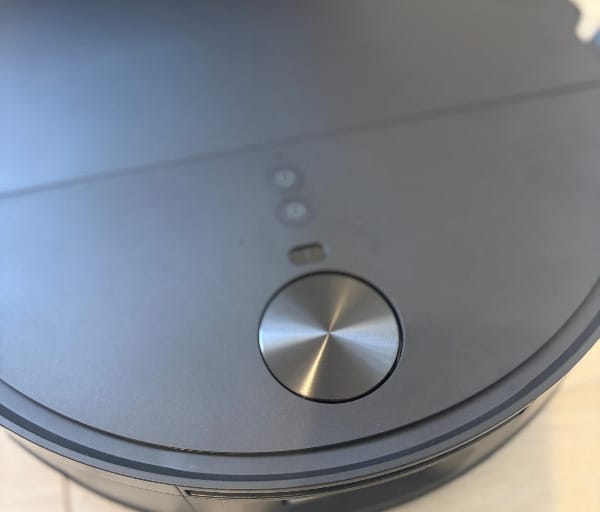
Physical controls on the robot itself are kept minimal, with a simple set of buttons for power, spot cleaning and manual docking, while almost everything else is handled through the Roborock app. This keeps the top of the unit clean and uncluttered rather than crowded with buttons most owners will rarely touch.
Status lighting around the top edge gives a quick visual cue for charging, cleaning and error states, which is a handy touch for households that are not glued to the app at all times. It is a small detail, but one that makes the robot feel easier to live with day to day.
The mop itself uses a 270 millimetre high-density antibacterial cloth wrapped around the roller, which is both wider and denser than many pad-style mops fitted to older robot vacuums. That wider contact patch is part of why the mopping system can cover more floor per pass without needing repeated passes over the same section.
Maintenance has clearly been considered at the design stage too, with the roller mop, side brushes and dustbin all accessible without tools, and the RockDock’s water tanks designed to be lifted and refilled in seconds rather than minutes.
Taken together, the design leans firmly toward function over flash, and that is no bad thing in a robot vacuum. Every design choice, from the retractable turret to the roller mop and slim chassis, is in service of actually cleaning more of the floor, rather than simply looking impressive while parked in its dock.
Key Features
The headline figure is 36,000 Pa from Roborock’s HyperForce digital motor, a substantial jump in raw suction compared with earlier generations. That extra power is paired with a Dual Anti-Tangle System, which is designed to stop the common robot vacuum complaint of hair wrapping tightly around the brush roll.
That anti-tangle system combines the DuoDivide main brush with dual lifting side brushes, both engineered specifically with pet owners in mind. Rather than relying solely on bristle design, the brush geometry actively works to funnel hair away from tangling points rather than letting it accumulate around the roller’s axle.
Mopping is handled by the SpiraFlow 2.0 Pressurised Self-Cleaning system, which uses 16 pressurised clean water outlets to continuously refresh the mop roller as it works. The roller spins at up to 240 RPM and applies around 2.5 times the downward mopping pressure of a standard pad mop, which is what allows it to shift sticky spills in a single pass rather than needing several passes over the same patch.
Full details of how that pressurised system works are set out on Roborock’s SpiraFlow 2.0 technology page, which breaks down how the continuous water flow keeps the mop cloth from simply redistributing grime around the floor.
Hygiene is addressed through warm water mopping, with the RockDock automatically refilling the onboard tank with warm water after every wash cycle. Warm water helps break down grease and grime more effectively than cold water alone, and Roborock states the system achieves a 99.99 percent bacteria removal rate as a result.
The 270 millimetre high-density antibacterial mop cloth is also certified safe for use in homes with pets and infants, and Roborock claims it reduces visible water marks left behind on hard floors by around 30 percent compared with earlier mop designs. That matters for anyone with dark timber or polished tile where streaking is usually obvious.
Smart Water Level Adjustment uses AI-powered RGB recognition to identify different floor types as the robot moves through the home, automatically tuning how much water is released for each surface. On timber floors specifically, the system is designed to reduce water usage to help minimise streaking, and this feature can be switched on manually within the Roborock app.
For homes with a genuine mix of flooring, the Automatic Roller Shield feature protects carpets and rugs from getting wet by lifting the mop roller up to 15 millimetres clear of the floor, with true wet and dry separation claimed to leave zero drips behind during the transition.
Getting around the home itself is handled by AdaptiLift Traverse 3.0, a climbing arm mechanism that performs a coordinated lift-and-climb manoeuvre to scale double-layer thresholds up to 8.8 centimetres high in total, made up of a 4.5 centimetre and a 4.3 centimetre stage. That is a genuinely tall obstacle for a robot vacuum to clear, and it is aimed squarely at homes with varied flooring heights between rooms.
The flip side of that climbing ability is the ultra-slim 8.98 centimetre body, paired with the retractable RetractSense Navigation System, which together are claimed to deliver a 100 percent success rate cleaning in spaces 8.98 centimetres high or taller. That combination of climbing over obstacles and ducking under low furniture is a rare pairing in a single device.
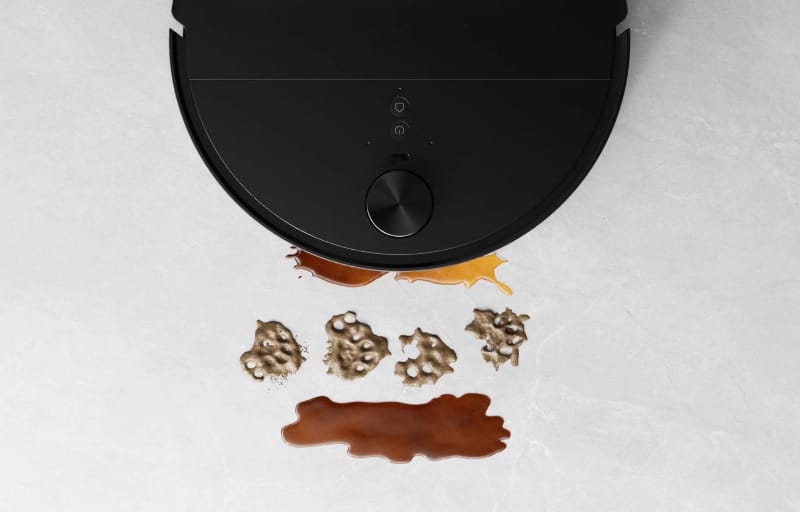
Stain-targeted AI cleaning uses the robot’s onboard RGB camera to identify specific types of mess, such as coffee grounds or cat litter, and automatically adjusts its cleaning strategy in response. Liquid spills can trigger a switch to mop-only mode, while drier, more granular messes prompt a boost in suction power instead.
Obstacle recognition is handled through reactive AI that can identify more than 300 common household objects, from charging cables to shoes and pet bowls, helping the robot route around them rather than getting stuck or dragging mess across the floor. This is particularly useful in busy households where the floor is rarely perfectly clear.
The Roborock app ties all of this together with one-tap tailored cleaning settings, letting owners choose a cleaning intensity and mopping preference without digging through multiple sub-menus. Live video is also available through the app, giving owners the ability to steer the robot remotely and check in on a room while away from home.
Smart home compatibility rounds out the feature set, with support for integration into broader connected home setups via common standards, plus a built-in voice assistant for hands-free commands directly to the robot. For households already running a smart home ecosystem, that flexibility means the Saros 20 Flow can slot into existing routines rather than operating as an isolated gadget.
Experience Using the Product and Performance
Setting up the Saros 20 Flow is a far smoother process than earlier Roborock models, with the app now walking new owners through all of the important settings rather than burying them in sub-menus. Instructions appear step by step, covering everything from Wi-Fi connection to initial mapping, which removes a lot of the guesswork that used to come with getting a new robot vacuum running.
Initial mapping is quick and largely accurate, with the robot building a usable floor plan of a typical home in a single pass. Room labelling is not always perfect straight out of the box, occasionally mixing up adjoining spaces, but renaming rooms inside the app’s map management section takes only a few taps to correct.
Map management goes well beyond simple room labels, allowing owners to set up no-go zones, virtual barriers and custom room borders with minimal fuss. Because this is largely a set-and-forget process, the time invested early on pays off every time the robot runs afterwards.
One small quirk worth knowing about is that editing a map after the fact can occasionally add odd extra sections onto the edges of certain rooms. Starting with clearly separated, correctly labelled rooms from the outset avoids most of this, and any stray sections tend to resolve themselves on the next cleaning run regardless.
On hard flooring, vacuuming performance is excellent, which is not surprising given the 36,000 Pa of suction on tap. Everyday dust, crumbs and pet hair are lifted cleanly in a single standard pass, making it well suited to households that want consistent daily maintenance rather than occasional deep cleans.
Carpets and rugs are handled confidently too, with the dual lifting side brushes retracting as expected to avoid bristle tangling while the main brush continues working through pile fibres. Deeper carpet cleans benefit from boosting suction and running an extra pass, particularly in high-traffic areas.
A deliberate breadcrumb test scattered across a mid-room section of carpet was cleared almost entirely after two passes on full power, showing the suction and brush combination genuinely does the job rather than just pushing crumbs around. Crumbs sitting hard against cabinetry proved trickier, which is a near-universal limitation of robot vacuums relying on small side brushes to reach tight corners rather than a specific flaw of this model.
Pet hair handling stood out as a genuine strength during testing, with the Dual Anti-Tangle System living up to its billing across multiple cleaning cycles. There was no need to manually cut hair free from the main brush roller, which is a common and tedious maintenance task with cheaper robot vacuums.
Mopping performance is where the Saros 20 Flow really separates itself from older pad-based designs. Sticky, stubborn messes such as dried sauce, jam and even thick condiment residue were put down deliberately to stress-test the system, and the roller mop cleared all of them convincingly on the highest mopping quality setting.
Solidified sugary residue and thick sauces disappeared quickly, with the continuous pressurised water flow doing most of the heavy lifting rather than simply dragging dried mess across the floor. Thicker, more stubborn spreads needed a couple of passes to fully clear, but left no smeared residue behind afterwards.
Edge mopping performance close to skirting boards is another highlight, with the roller able to extend slightly outward to clean right up against cabinetry rather than leaving an obvious untouched strip along the wall. This is a common weak point for robot mops generally, so seeing it addressed directly here is a welcome touch.
Threshold crossing lived up to the marketing claims during testing, with the AdaptiLift Traverse 3.0 system clearing raised door thresholds and uneven floor transitions without hesitation. The lift-and-climb motion is noticeably more deliberate than a simple ramp-style wheel design, giving it genuine confidence crossing taller obstacles rather than getting stuck halfway.
Navigating under low furniture showcased the benefit of the retractable LiDAR turret clearly, with the robot ducking beneath coffee tables, bed frames and low shelving units that taller robot vacuums simply cannot reach. Retracting the turret did not noticeably affect navigation accuracy, with the rear camera picking up the slack seamlessly.
Noise levels during standard cleaning cycles sit in a reasonable range for a robot of this suction capability, loud enough to notice in an open-plan living space but not disruptive enough to interrupt a video call from another room. Mopping cycles run noticeably quieter than full-power vacuuming passes.
Self-cleaning at the RockDock is where a lot of the hidden engineering becomes apparent, with the dock continuously spraying hot water onto the roller while simultaneously drawing dirty water away into a separate tank. That hot water wash is a significant part of how the system reaches its claimed 99.99 percent bacteria removal rate.
Warm water mopping noticeably improved results on greasy kitchen floor sections compared with earlier cold-water mopping systems, helping to break down grime more effectively rather than simply smearing it thin. It is a subtle feature on paper, but one that shows up clearly in day-to-day mopping quality.
Automatic dust emptying at the dock behaves exactly as expected, pulling debris from the robot’s bin into a larger bag inside the RockDock after each run. This is now a fairly standard feature across flagship robot vacuums, but it remains a genuinely useful one for anyone who would rather not empty a small onboard bin every few days.
Charging cycles are not the fastest on the market, so scheduling a clean to run while the household is out and about during the day works well in practice, with the robot typically finished and docked again well before anyone gets home. This rhythm suits most working households rather than feeling like a limitation.
Scheduling cleans through the app is straightforward, with the ability to set recurring times for specific rooms or the whole home, along with different mopping and suction presets for each session. Busy households can set this up once and largely forget about it.
The built-in voice assistant responded reliably to basic commands during testing, including starting and pausing cleaning cycles and directing the robot to specific rooms. It is a nice touch for hands-free control without needing to pull out a phone every time.
Live video steering through the app worked well for quick remote checks, such as confirming a pet had not knocked something over while the household was out. It is more of a convenience feature than a core cleaning function, but it adds genuine value for anyone who travels or works long hours away from home.
Obstacle avoidance handled everyday household clutter confidently, routing around charging cables, shoes and a pet water bowl without pushing them out of position or getting the brush tangled. This kind of real-world reliability matters far more than a spec sheet figure, and the Saros 20 Flow delivered consistently across multiple test runs.
Smart Water Level Adjustment showed its value moving between timber flooring and tiled areas, visibly reducing water output on timber to avoid leaving streaks while maintaining a heavier water flow on tile for more thorough cleaning. The transition between surfaces happened automatically without needing to flag it manually once the feature was switched on.
The Automatic Roller Shield feature worked exactly as intended when moving from hard flooring onto rugs, lifting the mop roller clear before the robot continued vacuuming the carpeted section. No damp patches or drips were left behind on rugs during any of the testing, which is a genuine concern with roller-mop designs that this system clearly addresses.
Multi-floor mapping support means the Saros 20 Flow can store separate maps for different levels of a home, switching automatically based on which dock or charging point it is returned to. For larger homes with more than one storey, this removes the need to manually reset mapping every time the robot changes floors.
Zone cleaning commands through the app allow for quick, targeted cleans of a single room or area without triggering a full-home run, which is handy for spot-cleaning a kitchen after dinner rather than waiting for the next scheduled whole-home clean. Selecting a zone and launching a clean takes only a couple of taps.
Fitting the Saros 20 Flow into a daily routine felt genuinely low-effort once the initial setup and mapping were done, with most ongoing interaction limited to occasionally emptying the dock’s water tanks and refilling detergent or clean water as needed. That low-maintenance rhythm is exactly what a flagship robot vacuum should deliver.
Households with pets and young kids stand to benefit the most from this particular combination of features, given the anti-tangle brush system, antibacterial mop certification and the stain-targeted AI cleaning working together to handle the kind of daily mess that comes with an active household. Spills, muddy paw prints and scattered pet hair are all squarely within its comfort zone.
Larger homes with multiple rooms and mixed flooring are equally well served, thanks to the combination of threshold climbing, multi-floor map storage and the Automatic Roller Shield managing transitions between rugs, tile and timber without manual intervention. Few single robots manage that breadth of surface adaptability this convincingly.
No single feature on the Saros 20 Flow is necessarily the best in its category when compared against vacuums or mops that specialise in one job alone. What stands out instead is how consistently strong it is across suction, mopping, navigation and hygiene simultaneously, which is arguably a harder balance to strike than excelling in just one area.
Conclusion
The Roborock Saros 20 Flow is best understood as a genuine all-rounder rather than a specialist in any single category. Its 36,000 Pa suction, SpiraFlow 2.0 mopping system and warm water hygiene cycle at the RockDock combine to deliver consistently strong results across carpet, tile and timber without demanding constant owner intervention.
Its ultra-slim 8.98 centimetre body and retractable navigation turret open up cleaning under low furniture that taller robots simply cannot reach, while AdaptiLift Traverse 3.0 handles the opposite challenge of climbing tall thresholds between rooms. Few robot vacuums manage both ends of that spectrum this comfortably in a single unit.
Households with pets, kids and mixed flooring stand to gain the most from this particular feature set, given how well the anti-tangle brush system, antibacterial mop and stain-targeted AI cleaning work together on everyday mess. It is a robot built around reducing daily cleaning effort rather than simply adding another gadget to manage.
Full specifications and further detail are available on the official Roborock Saros 20 Flow product page, and anyone comparing it against Roborock’s existing lineup may also find it worthwhile checking how it stacks up against the standard Saros 20 or the brand’s other Flow-equipped models before deciding which one suits their home best.
Frequently asked questions
How powerful is the Roborock Saros 20 Flow’s suction?
It uses a 36,000 Pa HyperForce digital motor, strong enough to lift embedded dust and pet hair from both hard floors and carpet in a single pass.
Can the Saros 20 Flow vacuum and mop at the same time?
Yes. Its SpiraFlow 2.0 pressurised roller mop continuously refreshes its water rather than dragging a static pad, so it clears sticky spills in one pass without leaving streaks.
Will it fit under low furniture?
Its ultra-slim 8.98cm body and retractable navigation turret let it slide under low couches and cabinets while keeping full LiDAR navigation.
Is it a good choice for homes with pets?
Yes. Dual anti-tangle brushes resist hair wrap, and the AdaptiLift Traverse 3.0 chassis climbs higher thresholds between rooms.