Modders have pulled Nvidia’s official DLSS 5 Neural Renderer out of NBA 2K27 and forced it into games that were never built to support it, and the early results are striking. Testing on unsupported titles shows the finished DLSS 5 Neural Renderer delivering performance gains of up to 90 percent over the earlier leaked version, while Nvidia says the production model also uses around 20 percent less VRAM and processes neural workloads up to twice as fast.
Key takeaways
- ✓Modders extracted the official DLSS 5 Neural Renderer from NBA 2K27 for a second time
- ✓The finished build runs up to 90% faster than the earlier leaked Neural Renderer model
- ✓Nvidia says the official version uses roughly 20% less VRAM than the leak
- ✓Neural workload processing is up to twice as fast in the production build
- ✓The Neural Renderer is being forced into games that do not officially support DLSS 5
That gap matters because the leaked build already looked like a meaningful step forward when it first surfaced. Seeing the finished version beat it by such a wide margin suggests Nvidia made substantial optimisations between the early leak and the official release, rather than just polishing the edges.
Table of Contents
How the DLSS 5 Neural Renderer leaked out of NBA 2K27 again
This is not the first time NBA 2K27 has acted as an accidental testbed for Nvidia’s unreleased upscaling tech. An earlier leak of the DLSS 5 Neural Renderer was reportedly extracted from the same basketball title before Nvidia had formally announced it, giving modders and enthusiasts their first look at the new architecture months ahead of schedule.
Now the official version has turned up in the same game, and the modding community has repeated the trick, pulling the finished DLL files and swapping them into other games that do not officially support DLSS 5. This kind of file swapping has been a common practice around DLSS updates for years, letting players test newer models in older or unsupported titles well before developers add proper support themselves.
Because NBA 2K27 keeps surfacing as the source of these early builds, it has effectively become an unofficial preview channel for Nvidia’s latest upscaling work, whether that is intentional or simply a byproduct of how the game’s engine integrates Nvidia’s SDK.
Performance gains over the leaked build
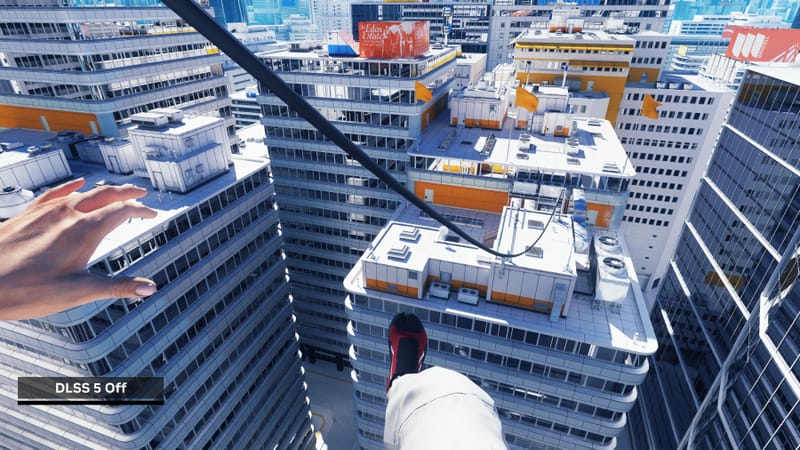
The numbers being reported from unsupported-game testing give a clear picture of how much the Neural Renderer changed between leak and release. The table below summarises the improvements modders and Nvidia have pointed to.
| Metric | Official DLSS 5 Neural Renderer vs leaked build |
|---|---|
| Frame-rate uplift in unsupported games | Up to 90% higher |
| VRAM usage | Around 20% lower |
| Neural workload processing speed | Up to 2x faster |
A 90 percent performance gain is a huge jump for what is essentially the same generation of upscaling model, just refined. Lower VRAM use is arguably just as important, since it means the Neural Renderer can run comfortably on cards with less memory headroom, and it leaves more VRAM free for textures, ray tracing buffers, and everything else a modern game needs to load.
What the Neural Renderer actually changes
DLSS has evolved considerably since its debut, moving from a relatively simple upscaler into a broader suite covering super resolution, frame generation, and ray reconstruction. DLSS 4 introduced a transformer-based model that replaced the older convolutional neural network approach, improving image stability and reducing artefacts in motion.
The Neural Renderer appears to push that architecture further again, restructuring how the model processes frame data so it can run with less overhead. Faster neural workload processing generally means the GPU spends less time on the upscaling and reconstruction step itself, leaving more headroom for rendering the actual game, which is where gains like these typically come from.
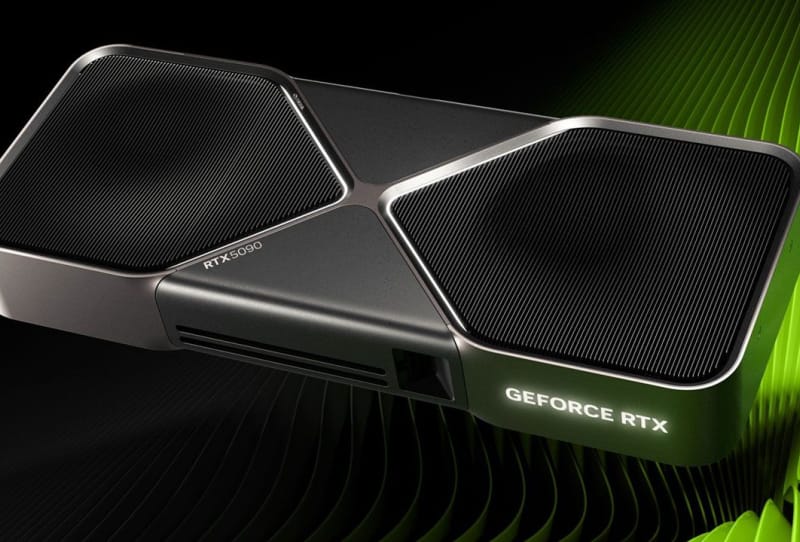
Lower VRAM usage also widens the pool of hardware that can realistically take advantage of the feature, particularly as ray tracing and frame generation continue to add their own memory overhead. Nvidia’s broader DLSS technology has always leaned on dedicated tensor cores in Nvidia’s GeForce RTX lineup to run these models efficiently, and a leaner Neural Renderer should make better use of that hardware across more of the current RTX range.
What it means for gamers right now
None of this is officially sanctioned by Nvidia for the games it is currently being tested in. Forcing DLSS 5 files into a title that was never designed around them can introduce visual glitches, instability, or inconsistent results, because the game’s renderer was not built with that specific model in mind. Anyone trying this should treat it as experimental rather than a reliable upgrade.
Even so, it offers a genuine preview of what official DLSS 5 support could look like once developers start integrating it properly. Players chasing every extra frame in demanding titles might find it worth revisiting how to optimise PC gaming settings for better performance while waiting for broader, officially supported rollout.
The episode also fits a wider trend of GPU makers being more transparent about real-world performance data, echoing Valve’s decision to share real Steam Deck performance data with developers. With competitors including Intel’s newly named Crescent Island GPU pushing further into AI-accelerated graphics, Nvidia has clear incentive to keep refining DLSS 5 quickly and make sure the gap between leaked and official builds stays firmly in its favour.
Frequently asked questions
What is the DLSS 5 Neural Renderer?
It is the latest upscaling model in Nvidia’s DLSS suite, designed to reconstruct and upscale game frames more efficiently than previous versions, using less VRAM and faster neural processing.
Can DLSS 5 be used in any PC game right now?
Not officially. Only titles that add proper DLSS 5 support will run it as intended. Modders have forced the files into unsupported games, but this is unofficial and can produce inconsistent results.
Why does NBA 2K27 keep leaking DLSS updates?
The game appears to receive early builds of Nvidia’s DLSS SDK ahead of a wider public release, and its files have twice been the source that modders extracted unreleased DLSS 5 components from.
Does the official DLSS 5 Neural Renderer need a specific GPU?
DLSS relies on tensor cores found in Nvidia’s RTX graphics cards, so benefits will vary by generation, with newer RTX hardware typically getting the most out of updated models like this one.