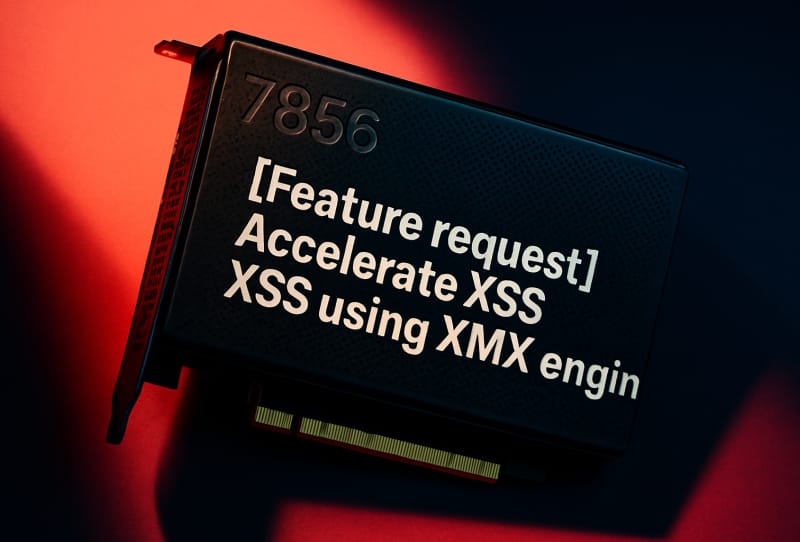
Intel is preparing to bring XMX-accelerated XeSS Proton support to Valve’s compatibility layer, a change that should meaningfully speed up upscaling for Arc graphics card owners gaming on Linux. The current Proton implementation of XeSS leans on a slower fallback method that ignores the dedicated matrix hardware built into Arc GPUs, so this update promises a real performance gain rather than a minor tweak.
Key takeaways
- ✓Intel is adding XMX-accelerated XeSS Proton support to Valve's compatibility layer.
- ✓Current Proton XeSS relies on a slower DP4a fallback instead of Arc's matrix hardware.
- ✓XeSS 3.0 adds multi frame generation, inserting up to three AI frames per rendered frame.
- ✓Intel's Panther Lake Xe3 cores double peak FP16 and INT8 throughput over Xe2.
- ✓The update should mainly benefit Arc GPU owners gaming on Linux and SteamOS devices.
Proton is the open source compatibility layer Valve built to let Windows games run on Linux based systems, including SteamOS and the Steam Deck. It already handles Intel’s XeSS upscaler, but only through a software path based on DP4a instructions instead of the XMX matrix engines that sit inside Arc hardware. That gap has meant Intel GPU owners running games through Steam Play have been missing out on performance that Windows users already take for granted.
Table of Contents
Why XeSS Proton Support Through XMX Matters
XMX cores are Intel’s purpose built matrix engines, designed specifically for the AI inference work that modern upscalers rely on. Shifting XeSS Proton support onto this hardware rather than the generic DP4a path should cut processing overhead considerably, freeing the rest of the GPU to focus on actual frame rendering. In practical terms, that means higher and steadier frame rates for the same visual quality setting.
This is not a cosmetic change. Arc owners on Windows already benefit from XMX acceleration, so bringing the same capability to Proton closes a long standing gap between the two platforms. For anyone who has switched to SteamOS or a Linux distribution and noticed XeSS underperforming compared to its Windows counterpart, this explains why.
XeSS 3.0 Adds Multi Frame Generation to the Mix
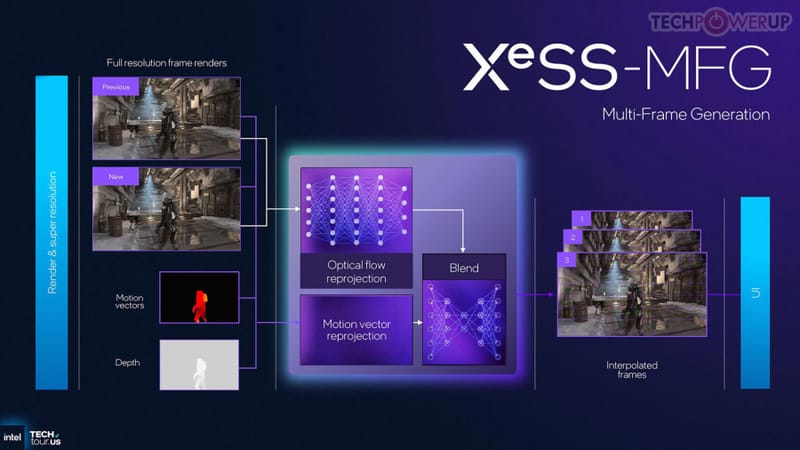
Intel is pushing this change alongside its newer XeSS 3.0 release, which introduces multi frame generation, or MFG. Rather than generating a single AI assisted frame between two rendered frames, XeSS 3.0 can insert as many as three generated frames in that gap. Intel claims this can lift frame rates by up to four times in supported titles, a figure broadly comparable to the multi frame generation NVIDIA offers through DLSS.
Frame generation remains a contentious topic among enthusiasts, since inserted frames do not reduce input latency the way genuinely rendered frames can. Even so, the approach has become an industry standard feature rather than a novelty, and Intel joining in signals how central AI frame insertion has become to competing with NVIDIA and AMD on perceived performance.
Panther Lake and the Xe3 Architecture Behind It
The hardware enabling this push is Intel’s latest Panther Lake system on chip, built around the Xe3 graphics architecture. Each Xe3 core combines eight vector engines, eight XMX matrix engines, and a dedicated ray tracing unit, all working with refined thread dispatch and load balancing compared to the previous Xe2 design.
| Feature | Xe2 (previous generation) | Xe3 (Panther Lake) |
|---|---|---|
| Vector engines per core | 8 | 8 |
| XMX matrix engines per core | 8 | 8 |
| Peak FP16 / INT8 throughput | Baseline | Up to 2x baseline |
| Ray tracing unit | Shared | Dedicated per core |
That doubling of peak FP16 and INT8 throughput benefits both traditional rendering and AI assisted tasks such as denoising, upscaling, and frame generation. It is also the reason Intel can credibly promise a noticeable uplift once XeSS Proton support actually lands, rather than a marginal improvement that gets lost in normal frame rate variance.
What It Means for Linux and Handheld Gamers
For Steam Deck owners and anyone running SteamOS on a handheld, this update is particularly relevant. Valve has been steadily improving Proton’s compatibility and performance, and real Steam Deck performance data shared with developers shows how seriously the company treats optimisation on its own hardware. XeSS Proton support slots into that broader effort, even though most Steam Decks ship with AMD graphics rather than Intel’s.
The bigger winners are likely to be handheld and laptop devices built around Intel’s Arc GPUs, plus desktop users who have adopted Arc cards for their value. Momentum is already building elsewhere in this space, with SteamOS finally gaining NVIDIA driver support and the latest SteamOS 3.9.2 beta expanding handheld compatibility more broadly. Adding proper XMX acceleration for XeSS fits neatly into that pattern of Valve widening hardware support beyond its own devices.
It also puts pressure on Intel to keep its Linux driver and compatibility work moving at the same pace as its Windows releases, something that has not always been the case. With Intel’s Crescent Island GPU and other upcoming products expanding its graphics lineup, consistent cross platform support for features like XeSS will matter more, not less, as Arc’s presence in the market grows.
Frequently asked questions
What is XeSS Proton support and why does it matter?
XeSS Proton support refers to Intel’s effort to let its XeSS upscaler run on Arc’s dedicated XMX matrix hardware inside Valve’s Proton compatibility layer, rather than a slower generic fallback. It matters because it should deliver a real performance boost for Arc GPU owners gaming on Linux.
Does this affect the Steam Deck?
Not directly, since most Steam Decks use AMD graphics rather than Intel Arc. The update is most relevant to Linux PCs, laptops, and handhelds built around Intel’s Arc GPUs, though it reflects a wider trend of SteamOS and Proton expanding hardware support.
What is the difference between XeSS and XeSS 3.0?
XeSS is Intel’s AI upscaling technology, while XeSS 3.0 adds multi frame generation, which can insert up to three AI generated frames between each rendered frame. Intel says this can boost frame rates by up to four times in supported games.
When will XMX-accelerated XeSS arrive on Proton?
Intel has not announced an official release date for XMX-accelerated XeSS Proton support, so the timing remains unconfirmed. The feature is understood to be in preparation rather than already available to users.