
CachyOS has confirmed it is building support for the EAC Linux V2 kernel, becoming one of the first Linux distributions to commit to Epic Games’ tightened Easy Anti-Cheat requirements. The move matters because it signals that at least part of the Linux gaming community is willing to adopt stricter security measures in exchange for access to anti-cheat protected multiplayer games that have historically been locked away from non-Windows players.
Key takeaways
- ✓CachyOS is among the first Linux distributions to commit to supporting the EAC Linux V2 kernel.
- ✓The feature, tracked as linux-cachyos-eac, will ship as a fully optional, opt-in kernel.
- ✓Epic Games recently outlined new Linux security standards that distros must adopt for EAC Linux v2 games to run.
- ✓Some required security features, likely including kernel lockdown mode, have proven controversial among Linux gamers.
- ✓CachyOS developers have not yet finished implementing the new kernel as of the announcement.
The announcement followed Epic Games revealing a new set of Linux-specific standards for Easy Anti-Cheat, often shortened to EAC. Those standards require distribution maintainers to implement native Linux security features before their users can play games protected by EAC Linux v2. Without that work, Linux players would simply be shut out of titles that adopt the newer anti-cheat tier.
Table of Contents
What Epic Games changed with Easy Anti-Cheat on Linux
Epic Games has previously supported Linux to varying degrees, but its latest plan goes further by laying out concrete technical requirements distributions must meet. These cover native Linux security features rather than relying purely on compatibility layers such as Proton, which has long been the backbone of Linux gaming through Valve’s Steam Deck and SteamOS.
For a distribution to be considered compatible with EAC Linux v2, its developers need to adopt specific kernel-level protections. That is a meaningfully different ask than simply running Windows games through a translation layer, because it means changing how the operating system itself behaves at a low level, not just how individual games are launched.
How the EAC Linux V2 kernel works in CachyOS
CachyOS, an Arch-based distribution known for chasing performance and being quick to adopt new technology, posted its plans through a discussion on its GitHub project rather than a formal press release. According to that thread, the work is being tracked under the name linux-cachyos-eac, and it is not yet finished.

Crucially, CachyOS maintainers have stressed that the new kernel will be entirely optional. Desktop users who do not need EAC Linux v2 compatibility will not be forced onto it, and those who do want to play games using the new standard can opt in without changing their entire system setup. That opt-in design is a deliberate choice, and it reflects awareness that not every Linux gamer wants the trade-offs that come with it.
Why some of these security features are controversial
Part of the reason CachyOS felt the need to spell out that the kernel is optional comes down to what EAC Linux v2 likely demands under the hood. Anti-cheat systems that want kernel-level trust typically rely on features such as lockdown mode, which restricts how much access even the system administrator has to kernel memory, module loading and debugging interfaces.
That kind of restriction sits awkwardly with a culture built around tinkering, open customisation and full control over one’s own machine. Many Linux users choose the platform specifically because it avoids the locked-down behaviour associated with console-style anti-cheat enforcement. Making the kernel opt-in gives CachyOS a way to serve both camps rather than picking a side.
What this means for the wider Linux gaming push
CachyOS moving quickly is consistent with its reputation. The distribution has built a following by being an early adopter of new kernel features and performance tweaks, and this announcement fits that pattern. Being first, or among the first, to support EAC Linux v2 could make CachyOS an attractive option for players chasing broader game compatibility without switching back to Windows.
The bigger picture matters too. Linux gaming has grown steadily thanks to Valve’s Steam Deck and ongoing Proton improvements, but anti-cheat support has remained one of the stubborn gaps stopping some multiplayer titles from running properly. If more distributions follow CachyOS’s lead and implement the features Epic Games is asking for, that gap could start closing, giving Linux users access to a wider slate of competitive games currently reserved for Windows.
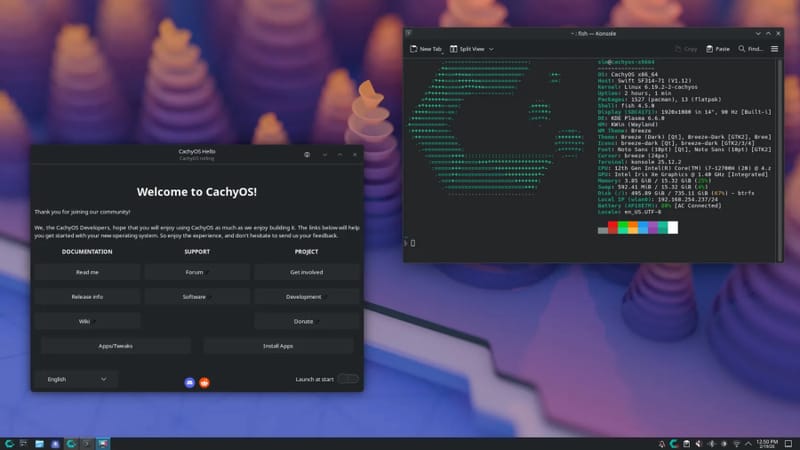
It is still early days. CachyOS’s own developers have acknowledged the implementation is incomplete, and Epic Games has not announced which games will require EAC Linux v2 on day one. What is clear is that the groundwork is now underway, and the choices distributions make about optional kernels and lockdown features will shape how smoothly that transition goes for everyday players.
Frequently asked questions
What is EAC Linux V2?
EAC Linux V2 is Epic Games’ updated version of its Easy Anti-Cheat system for Linux, built around a new set of native Linux security standards that distribution developers must implement before players on that distribution can access games using the stricter anti-cheat tier.
Will CachyOS force users onto the new kernel?
No. CachyOS developers have confirmed the linux-cachyos-eac kernel will be fully optional and opt-in, so only players who want EAC Linux v2 compatibility need to install it.
Why is kernel lockdown mode controversial among Linux gamers?
Lockdown mode restricts low-level access to the kernel, including module loading and debugging, which conflicts with the customisation and control many Linux users value. Making the feature optional lets distributions support anti-cheat requirements without imposing those restrictions on everyone.
Is CachyOS the only distribution supporting EAC Linux V2?
CachyOS appears to be among the very first, if not the first, to publicly commit to supporting EAC Linux v2, though the work is still in progress and other distributions may follow as Epic Games’ standards become clearer.