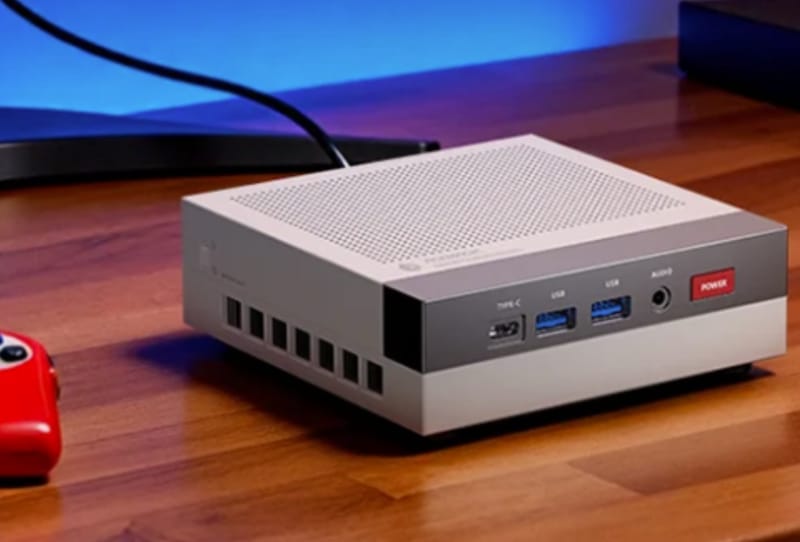
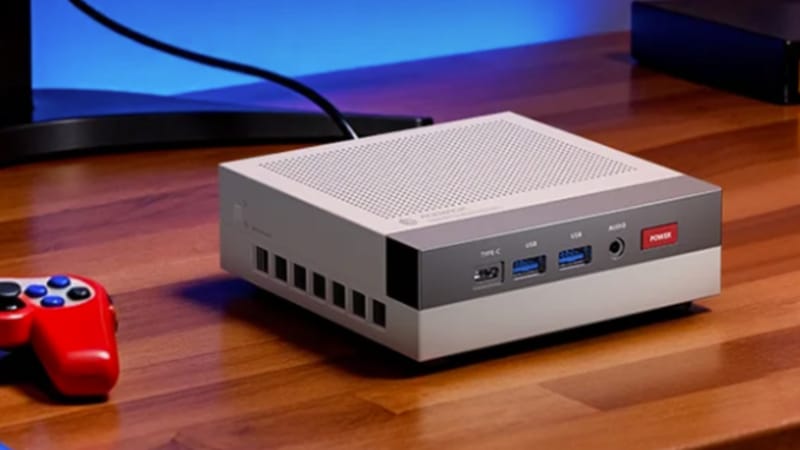
The Acemagic Retro X3 is a mini PC built around an AMD Ryzen 7 processor, wrapped in a grey shell styled after Nintendo’s original NES console. It’s a small desktop machine aimed at everyday tasks and lighter or older games, but the design is the part that actually turns heads.
Key takeaways
- ✓The Acemagic Retro X3 mini PC uses a grey shell styled after Nintendo's original NES console.
- ✓It runs on an AMD Ryzen 7 processor, aimed at everyday computing and older or lighter games.
- ✓Acemagic joins a growing trend of mini PC makers leaning into nostalgic, console-style designs.
- ✓The design choice sets it apart from the plain black or silver boxes that dominate the category.
- ✓Buyers wanting raw gaming power may still prefer larger, higher-spec mini PCs over the Retro X3.
Mini PCs have spent years looking almost identical: black or grey rectangles, maybe a splash of RGB if the maker wants to seem a bit sporty. Acemagic has taken a different route with the Retro X3, borrowing the boxy proportions, grey plastic and front-facing control-deck styling of the console that defined a generation of lounge rooms. It’s a deliberate nostalgia play, and for a certain kind of buyer, it works.
Table of Contents
A mini PC dressed like a classic console
The Retro X3’s case isn’t just a colour swap. It leans into the NES aesthetic with chunky edges, a front panel reminiscent of the console’s cartridge slot, and the same muted two-tone grey finish that made the original hardware instantly recognisable. Sitting it next to a modern monitor and keyboard looks almost like a deliberate throwback display rather than a working computer.
That styling matters more than it might sound. Most mini PCs are designed to disappear, tucked behind a monitor or hidden under a desk. The Retro X3 is built to be seen, which puts it closer to a lifestyle object than a pure productivity tool. Acemagic clearly understands that a sizeable chunk of PC buyers grew up with an NES under the TV and will pay attention to something that evokes it.
What’s inside the Acemagic Retro X3
Underneath the retro shell, the Acemagic Retro X3 runs on an AMD Ryzen 7 chip, part of the same processor family AMD uses across laptops and compact desktops. That puts it in a sensible middle ground: enough multi-core performance for spreadsheets, browser tabs, video calls and general office work, with sufficient graphics capability to handle older or less demanding games without needing a dedicated graphics card.

| Mini PC | Processor | Design focus | Best suited for |
|---|---|---|---|
| Acemagic Retro X3 | AMD Ryzen 7 | NES-inspired grey shell | Everyday work, light and older games |
| GIGABYTE BRIX | Intel Core Ultra 7 | Compact, functional case | Work and play in a standard footprint |
| FEVM FA80G | Ryzen 9 9950X3D | Performance-first chassis | High-end gaming and content creation |
That table only tells part of the story, since Acemagic hasn’t published every detail of the Retro X3’s configuration options, including exact memory and storage tiers. What’s clear is that the Ryzen 7 platform positions it as a capable daily driver rather than a gaming powerhouse, and the emphasis on design suggests Acemagic expects buyers to care as much about how it looks on the desk as what benchmark numbers it posts.
How it stacks up against other mini PCs
Compared with something like GIGABYTE’s BRIX mini PC, which uses a more conventional case and leans on raw processing grunt to earn its keep, the Retro X3 is selling an experience as much as a spec sheet. GIGABYTE’s approach suits buyers who want a tidy, no-fuss machine for work and the occasional game. Acemagic’s pitch is different: buy this one because it makes a statement next to the monitor.
At the other end of the spectrum sit mini PCs built for serious gaming grunt, packing flagship processors and discrete graphics cards into a shoebox-sized chassis. Those machines chase frame rates and ray tracing performance. The Retro X3 isn’t trying to compete there, and buyers expecting modern AAA gaming performance from it will be disappointed. It’s built for word processing, web browsing, media playback and retro or indie titles that don’t need a graphics card to run smoothly.
There’s also a growing niche of mini PCs chasing a specific identity rather than pure performance, similar to the crowdfunded dual-boot mini PC that promised console-like gaming in a tiny box. Acemagic’s retro styling fits that same pattern: smaller manufacturers differentiating through design and concept, since matching the biggest brands on raw specifications alone is a losing game.
Why the retro design matters
Nostalgia-driven hardware isn’t new, but it’s becoming a more common strategy in the mini PC market specifically. Buyers shopping in this category are often weighing several very similar black boxes, and a design like the Retro X3’s gives Acemagic an easy way to stand out on a crowded shelf or storefront listing without having to win on benchmarks.
For anyone considering a small desktop for general use, the Retro X3 is a reasonable option if the Ryzen 7 performance tier covers their needs and the design genuinely appeals. Shoppers after a machine for a home server or network-attached storage setup should weigh it against the broader advice in a guide to picking a mini PC for a home server, since server duty often prioritises expandability and storage options over case design.
Ultimately, the Acemagic Retro X3 is a reminder that not every mini PC needs to chase the top of the performance charts to find an audience. A chip like AMD’s Ryzen 7 handles daily tasks comfortably, and wrapping that hardware in a shell that nods to the NES gives Acemagic a genuine point of difference in a category that badly needed one.
Frequently asked questions
What processor does the Acemagic Retro X3 use?
The Acemagic Retro X3 runs on an AMD Ryzen 7 processor, a chip family built for solid everyday performance across work tasks, media and lighter gaming.
Can the Acemagic Retro X3 run modern games?
It’s built for general computing and older or less demanding games rather than current AAA titles, since it relies on integrated graphics rather than a dedicated graphics card.
What makes the Retro X3’s design different from other mini PCs?
Its grey, boxy shell is styled after Nintendo’s original NES console, a deliberate departure from the plain black or silver cases most mini PCs use.
Is the Acemagic Retro X3 suitable as a home server?
It can handle light server duties, but buyers focused on storage and expandability should compare it against mini PCs specifically designed for that role before deciding.