Bluetooth LE Audio is quietly solving problems that wireless headphone owners have put up with for more than two decades. Anyone who has fought with crackly calls, mismatched earbuds, or a battery that drains after a single flight has run into the limits of Classic Bluetooth audio. The newer standard, now shipping in a growing number of phones, earbuds and hearing devices, was built specifically to close those gaps.
Classic Bluetooth audio has barely changed since it first appeared on headsets in the early 2000s. It was designed for phone calls, not high-fidelity music or the kind of multitasking modern listeners expect from a single pair of earbuds. LE Audio, developed by the Bluetooth Special Interest Group, rebuilds the audio pipeline from the ground up rather than patching around the old one.
Table of Contents
Why Classic Bluetooth audio struggled
Classic Bluetooth relies on the SBC codec as its baseline, a format that compresses audio in a way that noticeably strips detail, especially at lower connection strengths. Manufacturers layered proprietary codecs such as aptX or LDAC on top to improve things, but that created a fragmented mess where quality depended entirely on which chipset was in the phone and which was in the headphones.
Battery life was another compromise. Streaming stereo audio to two earbuds independently, rather than treating one as a relay for the other, has always demanded more power than the format was efficient at delivering. That is part of why some wireless earbuds struggle to clear five or six hours of playback on a single charge, despite steady improvements in battery chemistry elsewhere.
Shared listening never worked properly either. Pairing two sets of headphones to one source, or broadcasting audio to an entire room of compatible devices, sat outside what Classic Bluetooth was ever engineered to do.
What Bluetooth LE Audio actually changes
The new LC3 codec at the heart of Bluetooth LE Audio delivers comparable or better sound quality than SBC at roughly half the bitrate. That matters because a lower bitrate means less power draw, which translates directly into longer listening times from the same battery cell. It also gives manufacturers headroom to shrink batteries in true wireless earbuds without sacrificing runtime.
Multi-stream audio is arguably the most practical fix. Instead of one earbud acting as a relay to the other, Bluetooth LE Audio lets a phone or laptop send separate, synchronised streams to each earbud directly. That should mean fewer dropouts, tighter left-right sync, and the option to use either earbud independently for calls without breaking the connection.
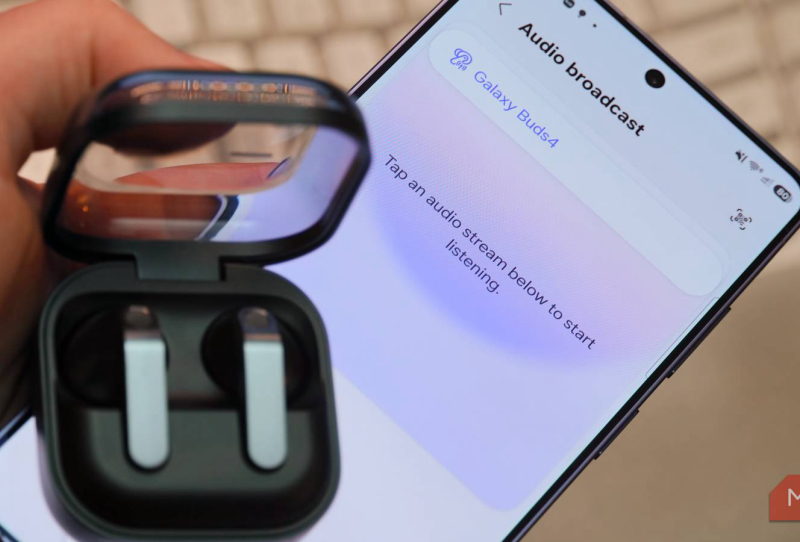
Then there is Auracast, the broadcast feature Bluetooth SIG has pushed hardest in its marketing. It allows a single audio source, a television, a gym sound system, or an announcement at an airport gate, to broadcast to an unlimited number of nearby LE Audio devices simultaneously. Anyone with compatible headphones or earbuds could tune into that stream the same way they would join a Wi-Fi network, rather than needing a physical pairing process.
Accessibility gets a genuine upgrade too. Bluetooth LE Audio was designed with modern hearing aids in mind, supporting direct low-power streaming that does not chew through a hearing aid’s much smaller battery the way older Bluetooth connections could. Latency also drops meaningfully, which benefits gamers and anyone watching video where audio sync has historically lagged behind Classic Bluetooth’s typical 150 to 200 millisecond delay.
Classic Bluetooth versus LE Audio at a glance
| Feature | Classic Bluetooth | Bluetooth LE Audio |
|---|---|---|
| Default codec | SBC (lower quality, higher bitrate) | LC3 (better quality, lower bitrate) |
| Power efficiency | Moderate, shorter battery life | Improved, longer battery life |
| Multi-device streaming | Relay-based, prone to dropouts | Independent multi-stream to each earbud |
| Shared/broadcast listening | Not supported | Auracast broadcast to unlimited listeners |
| Hearing aid support | Limited, power-hungry | Native low-power support |
What this means for buyers right now
Adoption is the catch. Bluetooth LE Audio needs support baked into both the source device and the headphones, so older phones and existing earbuds will not gain these features through a software update alone. Newer flagship phones and a growing range of earbuds already include the hardware, and Bluetooth SIG has been encouraging venues, from gyms to airports, to trial Auracast broadcasts as public infrastructure.
For anyone shopping for wireless earbuds or a headset in the near future, it is worth checking whether Bluetooth LE Audio and Auracast are listed as supported features, since that will determine whether a device can take advantage of the standard as more venues and gadgets adopt it. Products such as affordable Bluetooth audio adapters are already bringing the newer codecs to older gear, while categories like wireless gaming headsets like the Beyerdynamic MMX 150 and premium wireless headsets built for low-latency audio show how much manufacturers have been chasing the exact problems LE Audio now solves at the protocol level.
It will take a few years before Bluetooth LE Audio becomes the default rather than a listed feature on a spec sheet. In the meantime, anyone weighing up a new pair of earbuds, or even wireless headsets aimed at console gamers, has good reason to check for it, since the improvements to battery life, sound quality and shared listening are the kind of upgrades that are genuinely noticeable in daily use rather than just numbers on a box. Full technical detail on how the standard works is available through Bluetooth SIG’s own LE Audio overview.