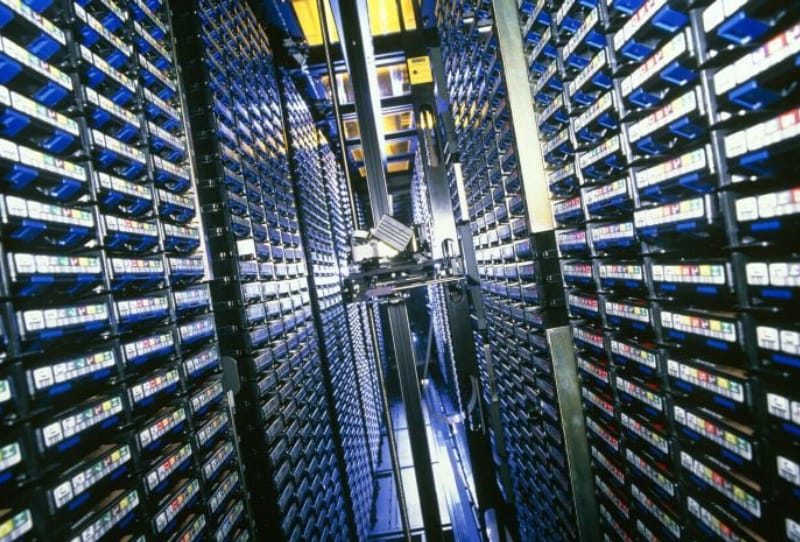
Fujifilm is spending about ¥10 billion, roughly $63.3 million, to expand its magnetic tape storage production fivefold by fiscal 2028. The investment, aimed at its Odawara manufacturing plant in Japan, marks the company’s largest injection of capital into tape manufacturing in two decades, and it is happening because artificial intelligence has created an unexpected data storage problem that tape is uniquely suited to solve.
Key takeaways
- ✓Fujifilm is investing roughly ¥10 billion ($63.3 million) to expand magnetic tape storage production.
- ✓The plan aims to lift output fivefold by fiscal 2028 at its Odawara plant in Japan.
- ✓It is Fujifilm's largest tape manufacturing investment in two decades.
- ✓AI training and inference data are driving renewed demand for cheap, long-term archival storage.
- ✓Industry roadmaps point toward tape cartridges holding up to 365TB, far beyond today's flash drives.
It sounds like an odd move for a format many assumed was fading into history. Solid-state drives and dense flash arrays have dominated headlines for years, and most consumers have not thought about tape since the last VHS was replaced by a streaming subscription. Yet behind the scenes, hyperscalers and data centre operators are quietly rediscovering why tape never actually went away.
Table of Contents
Why Fujifilm is betting big on magnetic tape storage
Training large AI models and storing the inference data they generate requires holding onto enormous volumes of information for years, sometimes indefinitely. Deleting old training sets or logs is rarely an option anymore, because future model improvements often depend on reprocessing historical data. That creates a problem: keeping petabytes of cold data spinning on disks or sitting in flash arrays around the clock is expensive and energy-hungry.
Magnetic tape storage solves that by sitting offline until it is needed. A tape cartridge draws no power while archived, and because it is disconnected from active networks, it is also far less vulnerable to ransomware and cyberattacks than live storage systems. For Fujifilm, which has manufactured tape media for decades through its long-running partnership with IBM on the LTO Ultrium standard, the AI boom has turned a mature, slow-growth business into one worth pouring fresh capital into.
How tape capacity now stacks up against flash and disk
Current LTO tape generations and barium ferrite media already pack extraordinary amounts of data onto a single cartridge, and the roadmap only gets more ambitious from here. Some development efforts are targeting capacities approaching 100TB per cartridge in the near term, with longer-range plans reportedly charting a path toward 365TB per cartridge.
| Storage medium | Typical use case | Relative cost per terabyte | Power draw when idle |
|---|---|---|---|
| Enterprise SSD/flash | Active, frequently accessed data | Highest | Continuous |
| Enterprise HDD | Warm storage, moderate access | Moderate | Continuous |
| Magnetic tape (LTO) | Cold archival storage | Lowest | None when offline |
Enterprise solid-state storage can cost two to three times more per terabyte than tape, which makes the economics straightforward for data that does not need instant access. Some research has also suggested magnetic tape storage carries a smaller environmental footprint than flash or disk arrays running continuously, a detail that matters as communities push back against the energy demands of nearby data centres.
The AI data boom behind the tape rebound
Global tape shipments actually dipped in recent years before rebounding sharply, a pattern that tracks closely with the rise of generative AI. Enterprises realised that discarding historical datasets was short-sighted once it became clear how much value lingers in old training text, synthetic outputs, and system logs.
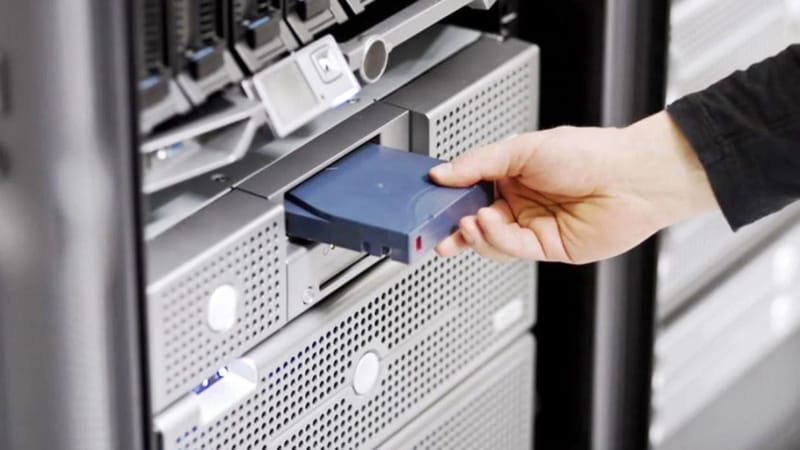
That shift matters because AI development is cumulative by nature. Every model iteration tends to build on prior data rather than replace it outright, so organisations are retaining far more than they used to. With flash and silicon storage pricing unlikely to fall dramatically soon, tape has become the practical answer for holding onto that growing mountain of information without blowing out infrastructure budgets.
What it means for the storage industry
Fujifilm’s investment is a signal to the rest of the storage industry that tape is no longer a niche afterthought. Expect rival manufacturers and data centre operators to follow with their own commitments, particularly as AI workloads push total global data volumes higher year after year. It also suggests buyers of enterprise storage systems, including the kind of multi-bay network-attached setups used by smaller businesses, will likely see tape positioned more aggressively as a companion to disk and flash rather than a replacement for either.
For everyday consumers, the shift is mostly invisible, but it says something about where the real cost pressure in AI sits. It is not only about faster chips or bigger GPUs; the quieter, less glamorous challenge of simply keeping all that data somewhere affordable is just as critical to how the AI industry scales.
Frequently asked questions
Why is Fujifilm investing in magnetic tape storage now?
AI training and inference generate enormous volumes of data that need to be archived long-term rather than deleted, and tape offers a far cheaper, lower-energy way to store it compared with keeping flash or disk arrays running continuously.
How much data can a magnetic tape cartridge hold?
Current development is pushing toward roughly 100TB per cartridge, with longer-term industry roadmaps targeting capacities as high as 365TB as the technology continues to improve.
Is magnetic tape storage cheaper than SSDs?
Yes. Enterprise solid-state storage typically costs two to three times more per terabyte than tape, making tape the more economical option for data that does not need to be accessed instantly.
Does tape storage use less power than flash or hard drives?
Tape cartridges draw no power while sitting offline in archival storage, unlike flash and hard drive arrays that typically need to stay powered and connected to remain accessible.