HIFIMAN has spent the last few years folding its Goldenwave acquisition into a dedicated line of audiophile desktop gear, and the HIFIMAN Serenade Wireless is the newest result of that effort. It replaces the original Serenade while adding network streaming and a refined take on the brand’s R2R DAC architecture. This review looks at how it’s built, what it offers on paper, and how it actually sounds once headphones are plugged in.
Review summary
HIFIMAN Serenade Wireless
The HIFIMAN Serenade Wireless delivers versatile connectivity and refined R2R DAC technology in a thoughtfully designed desktop component that works as a headphone amp, preamp, or system hub. It produces warm, detailed sound with controlled bass and natural midrange presentation that complements a variety of headphones without imposing excessive colouration. Network streaming unlocks high-resolution playback up to 768kHz, whilst discrete Class A amplification provides sufficient power for demanding planar magnetic headphones.
Highlights
- ✓R2R DAC with low distortion and network streaming up to 768kHz
- ✓Versatile connectivity as headphone amp, preamp, or system control point
- ✓Warm, balanced sonic character with strong bass control
- ✓Discrete Class A amplification with 4000mW balanced output
- ✓Compact, durable build with logical rear panel layout
Goldenwave’s design language has always leaned toward understated luxury rather than flashy styling, and HIFIMAN has kept that identity intact while swapping in its own Hymalaya Pro R2R chip. That chip is the same technology found in scaled-down form in cheaper HIFIMAN DAC/amps like the EF499 and EF500, but here it gets the full treatment alongside a proper discrete Class A amplifier stage. The Serenade Wireless sits as the entry point into the Goldenwave range, making it the most approachable way to experience that combination.
What follows covers the unit’s design and connectivity, the technology packed into its DAC and amp sections, and extended listening impressions across a few different headphones. By the end, readers should have a clear picture of whether this networked DAC and amplifier deserves a spot on their desk.
Table of Contents
Design and Functionality
The Serenade Wireless carries over the matte black finish and white lettering of its predecessor, giving it a look that’s distinct from HIFIMAN’s own sleeker DAC/amp designs. It feels properly substantial in the hand and on a desk, with a weight that signals quality rather than hollow bulk.
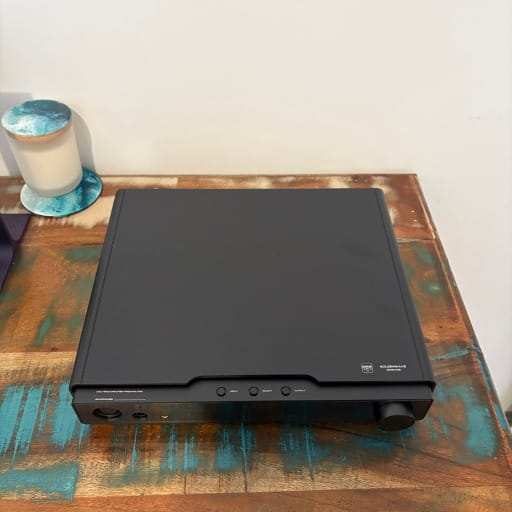
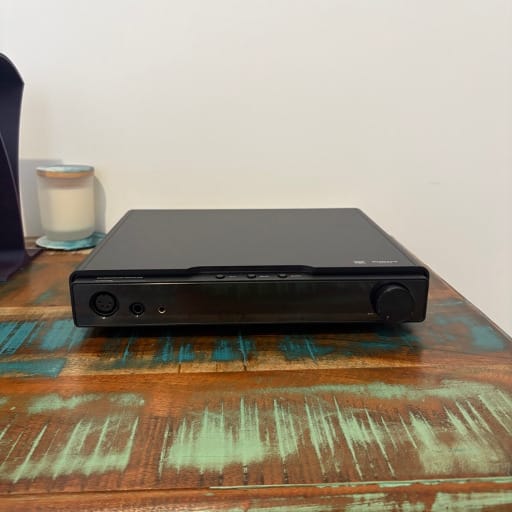
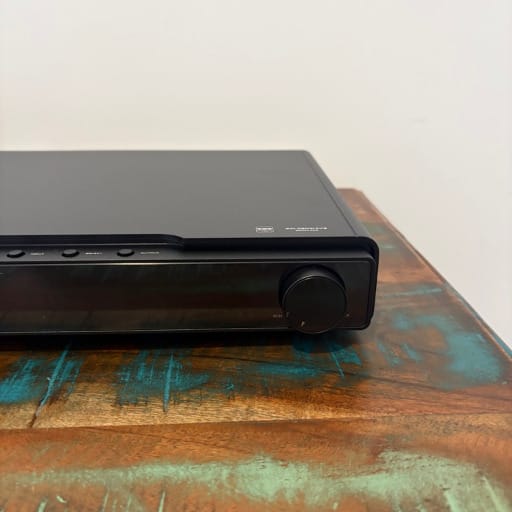
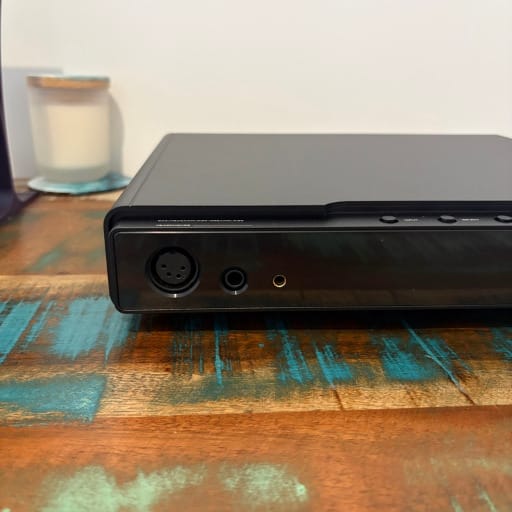
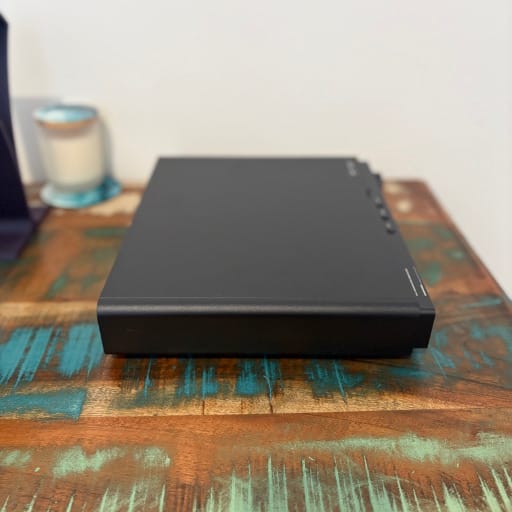
Its front section sits on a smaller panel that protrudes slightly from the main chassis, housing the controls, outputs and display. This layout keeps the unit looking tidy while still putting everything a listener needs within easy reach.
Headphone connectivity on the front includes balanced XLR, a balanced 4.4mm port, and a single-ended quarter-inch jack. That spread covers the vast majority of headphone cables without requiring extra adapters.
Three physical buttons handle input, output and selection duties, keeping the interface simple rather than buried in menus. A small LCD screen displays relevant information at a glance, which is handy when switching between sources.
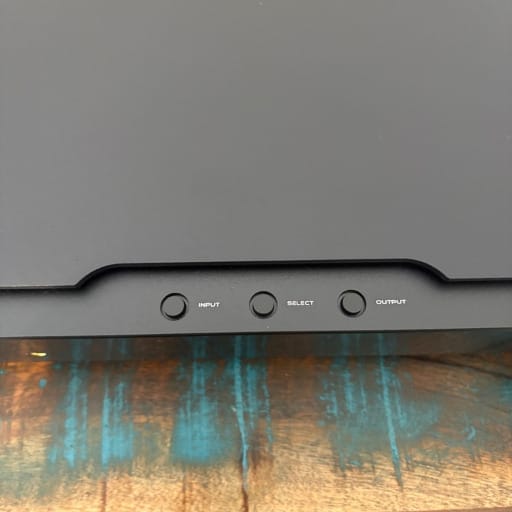
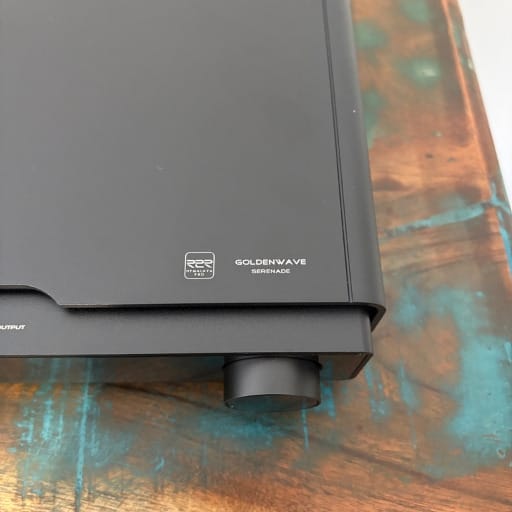
The volume pot deserves a specific mention, as it has a tactile, damped feel that suits a device in this price bracket. Small details like this contribute to the sense that the Serenade Wireless has been built with care rather than cost-cutting.
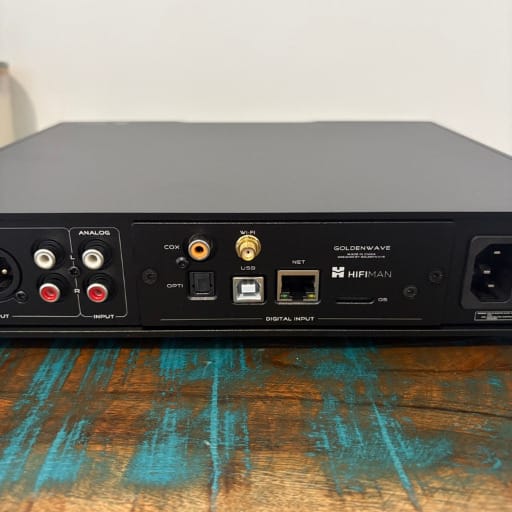
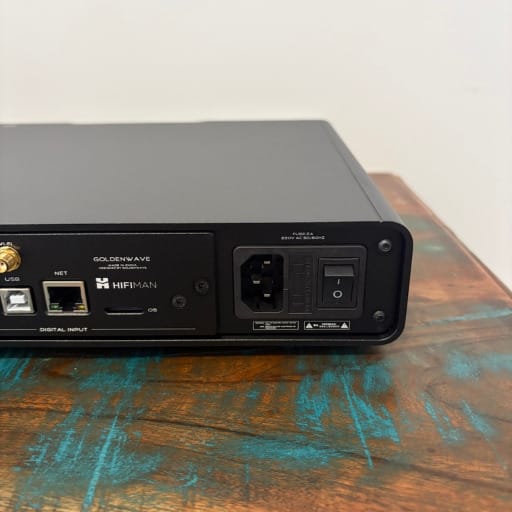
Flip to the rear and the connectivity options expand considerably. There’s a power input, a dedicated port for operating system upgrades, an Ethernet socket for wired network connections, and a socket for the WiFi antenna.
Digital inputs on the back include USB, optical and coaxial, giving plenty of flexibility for connecting a computer or disc transport. Each of these inputs has its own playback ceiling, which is covered in more detail in the next section.
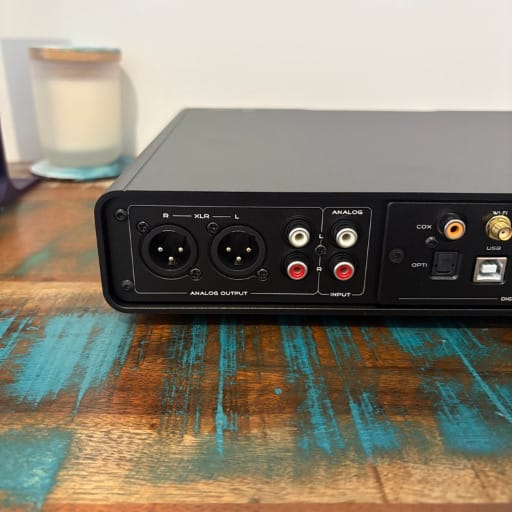
One particularly useful inclusion is an unbalanced RCA input, which lets the Serenade Wireless function purely as a headphone amplifier or preamp for an external source. This effectively turns one box into several different pieces of equipment depending on how it’s wired.

Output options mirror this flexibility, with balanced XLR and unbalanced RCA outputs available for feeding power amps or active speakers. Combined with the RCA input, this makes the Serenade Wireless a genuine preamp option for a stereo system, not just a headphone-focused device.
That range of inputs and outputs means the unit can slot into almost any setup. It works as a standalone headphone amp for someone who already has a DAC, as a networked DAC and preamp feeding a separate amplifier, or as the single hub tying an entire desktop or living room system together.
The footprint remains compact enough to sit comfortably on a desk without dominating the space, yet the build feels durable enough for daily use over years rather than months. That balance between size and sturdiness is something HIFIMAN has clearly prioritised with this release.
Build quality extends to the finish on the chassis panels, which resist fingerprints and show no obvious flex when handled. It’s the kind of construction that suggests longevity rather than a device designed to be replaced in a year or two.
Setting it up as a desktop centrepiece is straightforward, since the rear panel groups inputs and outputs logically rather than scattering them. Cable management becomes much simpler as a result, particularly for anyone running multiple source devices into it.
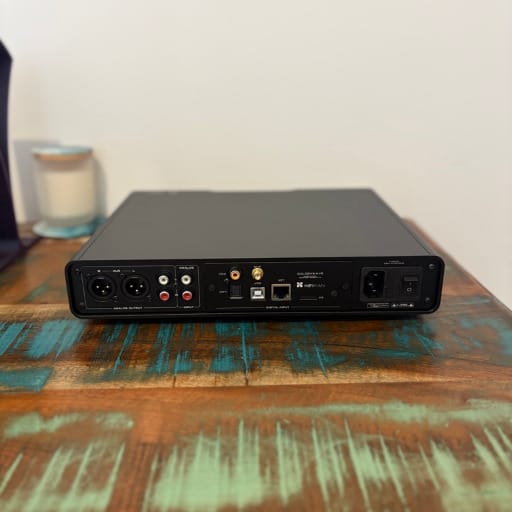
For listeners who care about aesthetics as much as sound, the minimalist black-on-black look with white accents will likely appeal more than busier designs from rival brands. It reads as professional studio gear rather than a flashy consumer product.
The combination of a protruding control panel and a recessed main chassis also helps with heat dissipation, since the Class A amplifier section does generate some warmth during extended sessions. Airflow around the unit never felt restricted during testing.
Taken together, the design choices here support genuine versatility rather than just looking good on a shelf. Every port and button seems to have a clear purpose, which is refreshing in a category where some products pile on features without much thought to usability.
Key Features
At the core of the Serenade Wireless sits HIFIMAN’s Hymalaya Pro R2R DAC, now running a new FPGA algorithm designed to reduce distortion further. HIFIMAN quotes a total harmonic distortion figure of 0.0012% at minus 6dB, which is a genuinely strong result for a resistor-ladder DAC design.
R2R DACs are prized by many audiophiles for their natural, analogue-like presentation compared to delta-sigma alternatives, and HIFIMAN has built its reputation partly on refining this approach. The Serenade Wireless represents one of the more accessible ways to access that technology within the Goldenwave lineup.
Playback capability varies depending on which input is used, which is worth understanding before setting up a system around this unit. The USB input supports 32-bit PCM up to 384kHz along with DSD64 through DSD256, which covers the overwhelming majority of digital music files in circulation.
Coaxial and optical inputs step down slightly, handling 32-bit audio up to 192kHz and DSD via DoP64. These are still perfectly capable specifications for everyday listening, even if they fall short of the USB ceiling.
The real highlight is what happens over WiFi or a wired LAN connection. Network streaming unlocks playback up to 768kHz PCM and DSD64 through DSD512, figures that comfortably exceed what the wired digital inputs can manage.
This means getting the absolute best resolution out of the Serenade Wireless involves connecting it to a network-attached storage device or a PC over the local network rather than relying on a direct USB cable. It’s a slightly unusual setup for newcomers, but one that rewards anyone with a serious high-resolution music library.
On the amplification side, HIFIMAN has fitted a Class A circuit built from fully discrete transistors rather than an integrated chip solution. Discrete designs like this are typically chosen for their sonic character and lower noise floor, both of which show up clearly in how the amp performs.
A 50W toroidal transformer powers the whole unit, and toroidal designs are generally favoured in high-end audio gear for their quiet operation and reduced electromagnetic interference. That choice pays off directly in how clean the background noise floor sounds during use.
Power output is rated at up to 4000mW through the balanced outputs and 2800mW through the unbalanced quarter-inch jack. Those figures put it comfortably ahead of many desktop amps in this category, giving it enough headroom for demanding planar magnetic headphones.
The breadth of headphone compatibility this unlocks is significant, since many high-end planar designs need serious current to perform at their best. Rather than struggling with power-hungry headphones, the Serenade Wireless treats them as well within its comfort zone.
Its ability to double as a preamp thanks to the RCA input and output pairing effectively adds a second use case on top of its headphone duties. Someone building a desktop speaker setup around powered monitors or an external power amp can use the Serenade Wireless as the central control point.
Network streaming support also brings it into the same conversation as HIFIMAN’s other wireless-enabled gear, including the Arya WiFi and HE1000 Wifi headphones, both of which push the brand’s broader shift toward cable-free high-resolution listening. The Serenade Wireless extends that philosophy to the source and amplification side of a system rather than just the headphones themselves.
A dedicated port for operating system upgrades means the unit can receive firmware improvements over time rather than being locked to its day-one feature set. This is a sensible inclusion given how quickly streaming standards and file formats continue to evolve.
The LCD display rounds out the feature set by giving clear feedback on input selection, sample rate and format, which takes the guesswork out of confirming that high-resolution files are actually being decoded at their full resolution. It’s a small but genuinely useful inclusion for anyone who likes to verify what their system is doing.
Experience Using the Product and Performance
Testing the Serenade Wireless across several headphones made it clear fairly quickly that this is a device with a distinct sonic personality rather than a neutral, clinical tool. The most rewarding pairing during this review came from matching it with HIFIMAN’s own Arya Unveiled headphones.
That combination worked so well because the Arya Unveiled leans neutral-to-bright on its own, and the Serenade Wireless brings a warmth that nicely balances that character without smothering its detail retrieval. The result felt genuinely synergistic rather than like two components simply tolerating each other.
Bass performance stood out as one of the amp’s strongest traits throughout testing. Low end notes carried real punch and slam while still staying under control, never tipping into bloated or boomy territory.
Rather than adding bass purely for impact, the Serenade Wireless uses it to fill in warmth where brighter headphones can sometimes feel thin. With the Arya Unveiled specifically, this gave tracks a fuller, more relaxed low end without compromising the headphone’s natural transparency.
Switching to the Meze 109 Pro, which already leans warmer by design, produced a slightly different but equally enjoyable result. Bass textures were lush and detailed, and the overall tonality sat a touch darker, yet there was never any sense of muddiness creeping into the mix.
This consistency across two headphones with quite different natural tunings says a lot about how well-judged the Serenade Wireless’s bass character is. It adapts to complement whatever is plugged into it rather than forcing the same signature regardless of the source headphone.
Midrange reproduction carries a similar gentle warmth, though it never strays far enough to sound coloured or inaccurate. Vocals came through with good detail and a natural sense of space around them, which made solo voices and small ensembles particularly enjoyable to listen to.
Acoustic folk recordings benefited noticeably from this midrange character, with instruments given room to breathe rather than feeling compressed together. Full classical arrangements fared just as well, holding their structure even as the number of instruments increased.
Timbre accuracy through the midrange impressed throughout testing, avoiding the overly dry or overly forward presentation that some detail-focused amps fall into. Instead, music felt balanced, letting detail emerge gradually rather than being thrust at the listener all at once.
That gradual, considered approach to detail extends into how the Serenade Wireless handles treble information. There’s clearly plenty of resolution on tap, especially evident when paired with a brighter headphone like the Arya Unveiled, but the amp chooses to relax that information rather than push it forward aggressively.
Long listening sessions benefited from this treble tuning, since fatigue never became an issue even after hours of continuous use. Cymbals and higher-pitched instruments stayed smooth and controlled without losing their sense of presence in the mix.
Listeners who prefer a more forward, energetic top end should keep this relaxed treble character in mind when choosing a headphone to pair with the Serenade Wireless. Matching it with an already warm or dark-sounding headphone may result in a combination that feels a little too soft for some tastes.
Soundstage width turned out to be a genuine highlight, holding up impressively well despite the amp’s overall warmer tonality. Even with darker headphones in the mix, the stereo image felt expansive rather than narrow or closed in.
With the Arya Unveiled specifically, the soundstage felt wider than it has sounded with other amplifiers tested previously, giving tracks a genuinely immersive quality. Instruments and vocal layers spread naturally across that wide image rather than clustering toward the centre.
This spaciousness paired well with the relaxed treble presentation, preventing the overall sound from ever feeling boxed in or veiled. The combination of width and smooth top end created a listening experience that felt open rather than closed off.
Background noise, or rather the lack of it, was another consistent strength throughout testing. With no music playing, the Serenade Wireless produced a completely silent background, a clear benefit of its toroidal transformer and discrete Class A design.
That silent noise floor made quiet passages and low-level details genuinely audible rather than getting lost in hiss or hum. Classical recordings with wide dynamic swings particularly benefited from this, as the transition from near-silence to full orchestral swell came through cleanly.
Power delivery never felt like a limiting factor across the range of headphones used during testing. Demanding planar magnetic designs that typically need serious current to reach their full potential were driven with apparent ease.
This headroom suggests the Serenade Wireless will comfortably handle whatever a listener throws at it moving forward, including future headphone upgrades that might demand even more power. It’s reassuring to know the amp section has this much capability in reserve.
Setting up the network streaming side proved relatively painless, with the unit connecting to a home network over WiFi without any significant fuss. Pointing it at files stored on a NAS unlocked the higher resolution playback figures that the wired digital inputs simply can’t match.
That gap between network streaming and USB playback is worth highlighting again from a practical standpoint, since it changes how a listener might want to set up their library. Those chasing the absolute highest resolution playback will want to prioritise network storage over a direct USB connection from a computer.
Day-to-day use benefited from the clear LCD display, which made it simple to confirm exactly what format and sample rate was being decoded at any given moment. This removed any guesswork about whether high-resolution files were actually being played back at their intended quality.
The physical controls also made daily listening more enjoyable than expected, with the input and output buttons responding predictably and the volume pot offering smooth, precise adjustment. These are small ergonomic touches, but they add up over repeated use.
Using the Serenade Wireless purely as a preamp for a pair of active speakers also proved successful during testing, confirming its versatility beyond headphone duties. The same warm, controlled character translated well into a speaker-based listening environment.
Genre versatility stood out as another strength throughout extended listening. Electronic music benefited from the controlled low end and spacious imaging, while jazz recordings showcased the amp’s talent for natural timbre and instrument separation.
Dense rock mixes also came through cleanly, with the Serenade Wireless managing to keep busy arrangements organised rather than letting instruments blur together. This organisational ability says a lot about the quality of the underlying DAC and amp design working in tandem.
Vocal-centric tracks, whether solo singer-songwriter recordings or layered harmonies, consistently sounded natural and well-placed within the stereo image. This reinforced the earlier impression that midrange reproduction is one of the unit’s genuine strong suits.
Comparing the experience of listening over an extended session against shorter test runs didn’t reveal any fatigue or listener ear-strain, which speaks well to the relaxed treble tuning discussed earlier. This makes the Serenade Wireless a strong option for long listening marathons rather than just quick critical listening checks.
The amp’s character does favour a specific type of listener, namely someone who values warmth, control and a relaxed top end over an ultra-analytical, forward presentation. Those chasing a razor-sharp, bright-leaning signature may want to pair it carefully with the right headphones to get their preferred balance.
For most listeners exploring the Goldenwave line for the first time, though, the Serenade Wireless offers a genuinely inviting entry point into HIFIMAN’s R2R sound philosophy. It manages to balance technical capability with a musical, easy-to-enjoy character that doesn’t demand perfect source material to sound good.
Conclusion
The HIFIMAN Serenade Wireless succeeds at bringing Goldenwave’s refined R2R sound to a more accessible point in HIFIMAN’s lineup without feeling like a stripped-down compromise. Its build quality, flexible input and output options, and genuinely capable amp section make it suitable for a wide range of setups beyond simple headphone listening.
Its warm, musical sound signature won’t suit every listener, particularly those chasing an ultra-forward, analytical presentation. But for anyone who values a relaxed, non-fatiguing listen with plenty of detail underneath that warmth, it’s a genuinely compelling choice.
The ability to use it purely as a headphone amp, as a networked DAC and preamp, or as the single hub tying together an entire desktop system adds real long-term value. Few products in this category offer that level of flexibility without compromising on sound quality to achieve it.
Paired thoughtfully with the right headphones, particularly brighter or more neutral designs like the Arya Unveiled, the Serenade Wireless delivers a genuinely immersive and enjoyable listening experience. It stands as a strong recommendation for anyone looking to step into HIFIMAN’s Goldenwave range for the first time.
Frequently asked questions
What headphones pair best with the HIFIMAN Serenade Wireless?
Brighter or more neutral headphones tend to pair best, since the amp’s warm, relaxed character balances out that extra energy. HIFIMAN’s own Arya Unveiled proved to be a particularly strong match during testing, though warmer headphones like the Meze 109 Pro also sounded enjoyable.
Does the Serenade Wireless support high-resolution streaming?
Yes, connecting it to a network over WiFi or Ethernet unlocks playback up to 768kHz PCM and DSD64 through DSD512, well beyond what the USB, optical or coaxial inputs can achieve on their own. Listeners chasing the highest possible resolution should prioritise streaming from a networked source such as a NAS.
Can the Serenade Wireless be used with speakers instead of headphones?
It can, thanks to its unbalanced RCA input and output along with its balanced XLR output, which allow it to function as a preamp in a speaker-based system. This makes it suitable as a central hub for both headphone listening and a desktop or living room speaker setup.
How does it differ from HIFIMAN’s other DAC/amps like the EF499 or EF500?
Those entry-level models use a scaled-down version of HIFIMAN’s Hymalaya Pro R2R architecture, while the Serenade Wireless delivers the full implementation alongside a discrete Class A amplifier design and network streaming support. It represents the most accessible way to access the complete Goldenwave experience within HIFIMAN’s current range.