JDS Labs has built a strong reputation by focusing on desktop audio products that feel purposeful, refined, and genuinely practical. The Element IV continues that approach with a familiar design, but it brings meaningful internal upgrades that make it far more flexible than a simple visual refresh would suggest. It still has the clean, understated feel that the Element series is known for, while adding smarter control, stronger output, and a more advanced tuning system.
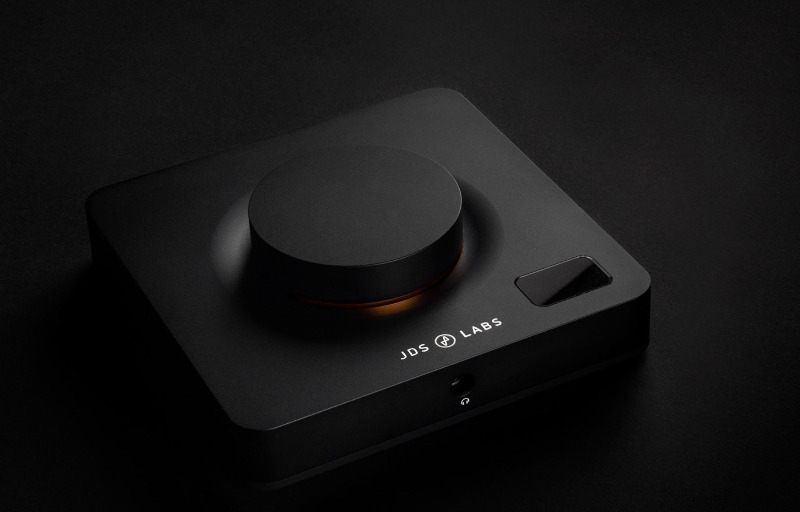
At first glance, the Element IV keeps things beautifully simple, with its compact aluminium body, large central volume knob, front headphone output, and small integrated display. The real changes become obvious once you start using it, especially through the new JDS Labs Core web app and its 12-band parametric EQ. Instead of relying on installed software or awkward menu navigation, the Element IV gives you browser-based access to detailed sound shaping, device settings, and persistent hardware storage.
What makes the Element IV especially appealing is how well it balances power, precision, and ease of use. It is capable enough for demanding headphones, transparent enough for critical listening, and clean enough in its interface to suit everyday desktop setups without feeling complicated. For anyone wanting a compact DAC and amplifier that feels modern, responsive, and built with long-term usability in mind, the Element IV makes a very strong first impression.
Table of Contents
Design and Functionality
The JDS Labs Element IV keeps the same design philosophy that has made the Element line so recognisable. It is compact, clean, and intentionally minimal, with a square aluminium chassis that feels solid without taking over the desk.
The front panel is kept almost completely free of clutter, which gives the unit a very polished and functional look. Instead of surrounding the user with buttons, switches, and indicators, JDS Labs continues to rely on a large central volume knob as the main point of interaction.
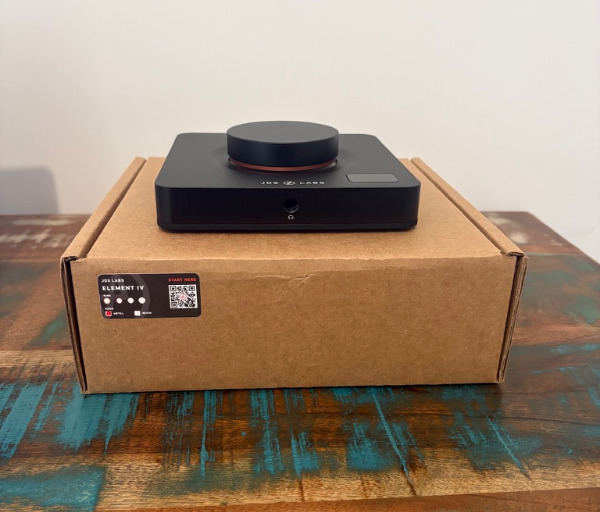
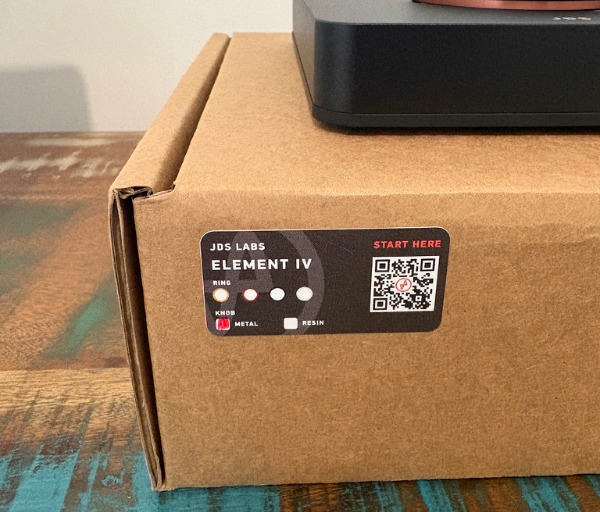
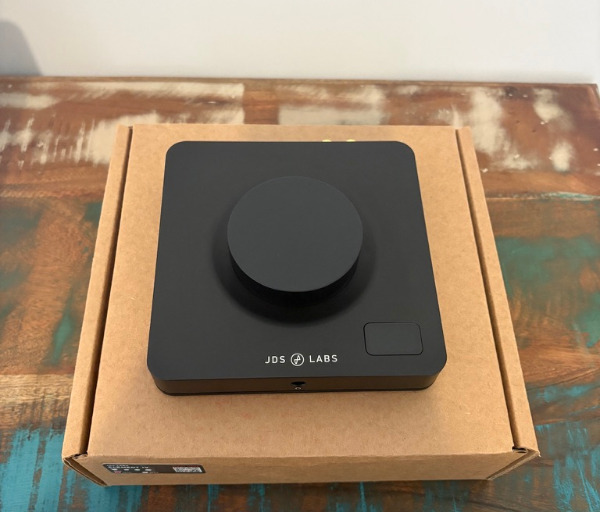
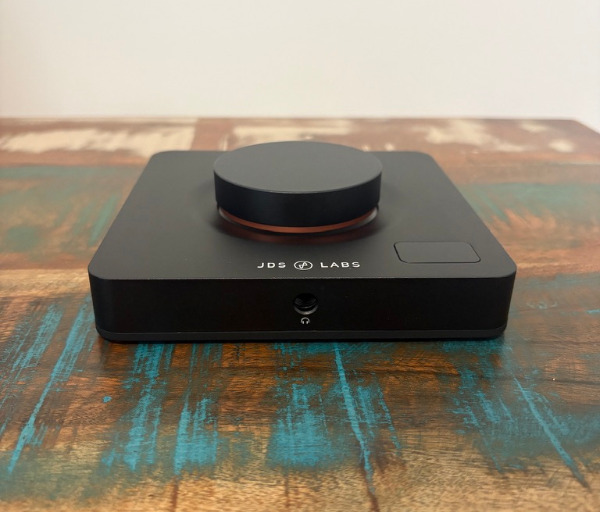
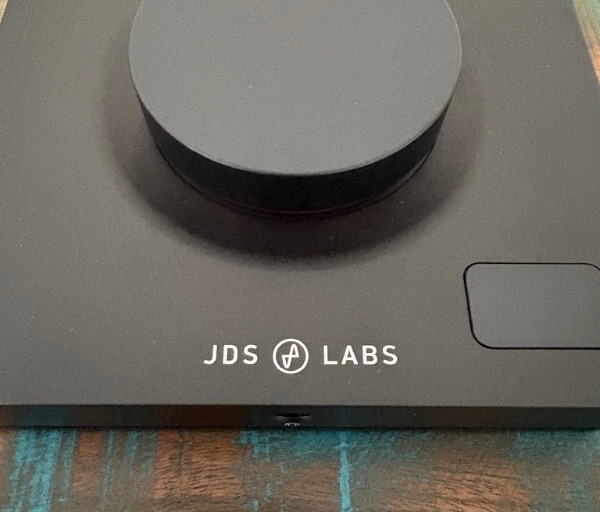
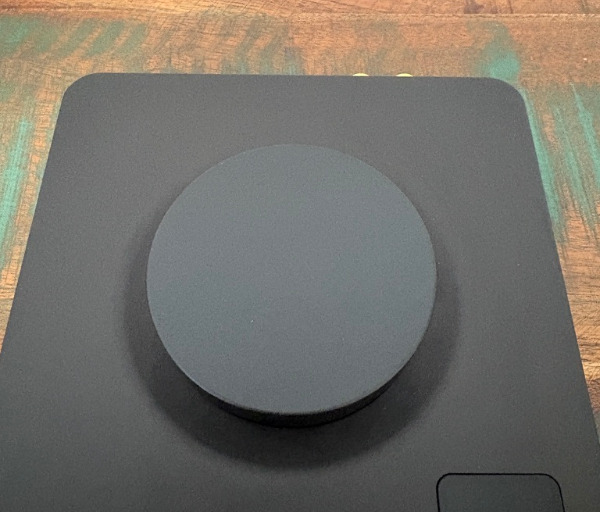
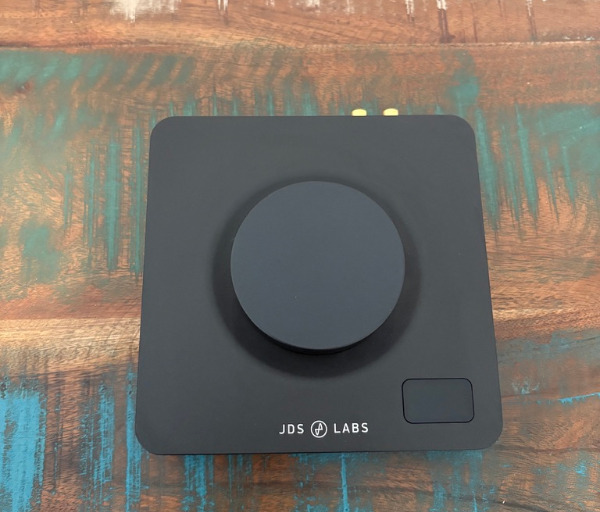
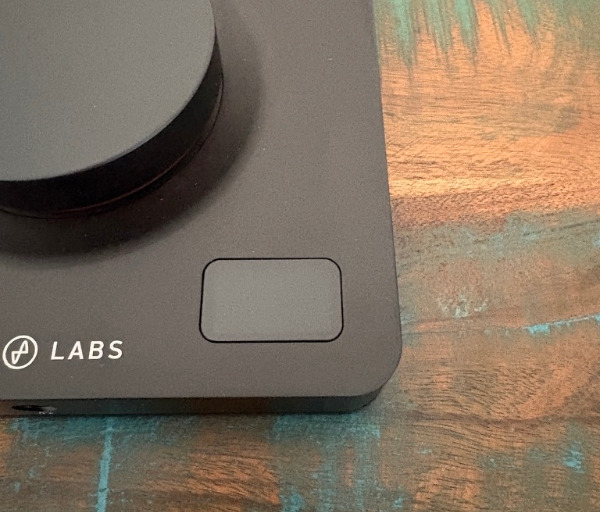
That large knob remains one of the defining parts of the Element experience. It gives the device a very approachable feel, because most day-to-day control happens through a single physical interface that is easy to understand within seconds.
For the Element IV, JDS Labs has upgraded the encoder behind the volume wheel, and that refinement is noticeable in use. The second-generation optical encoder feels smoother, quicker, and more precise, making small adjustments feel controlled while larger changes happen without lag or fuss.
The knob is also more than just a volume control, which helps preserve the clean front-facing design. Pressing it can switch between headphone and RCA preamp output, while longer presses open the device menu for deeper settings and adjustments.
The OLED display is another important part of the user experience, even though it remains visually subtle. It gives useful feedback such as input mode, output mode, gain status, sample rate, and stream format without making the front of the unit look busy.
JDS Labs has also placed the display beneath tinted Gorilla Glass, which gives the Element IV a more refined finish. The screen blends more naturally into the chassis and looks cleaner when inactive, while still being easy to read when information is needed.
The display behaviour has been thoughtfully handled as well. It can fade away when not in use, helping the Element IV maintain its minimalist appearance and reducing distractions during listening, gaming, or work.
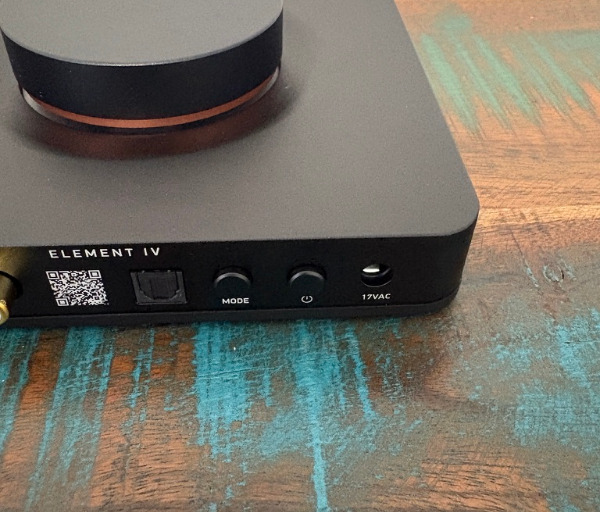
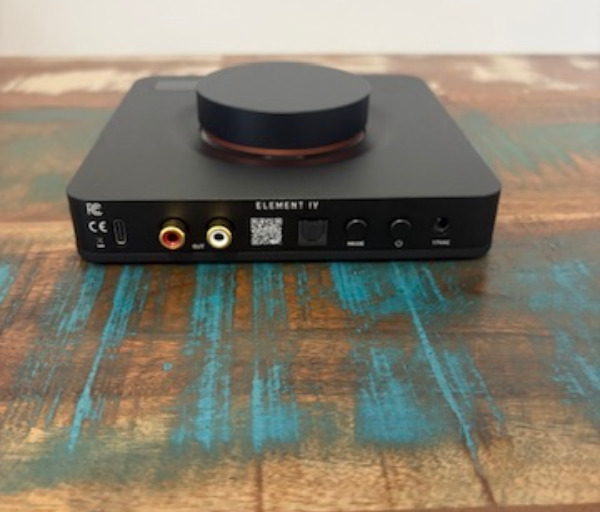
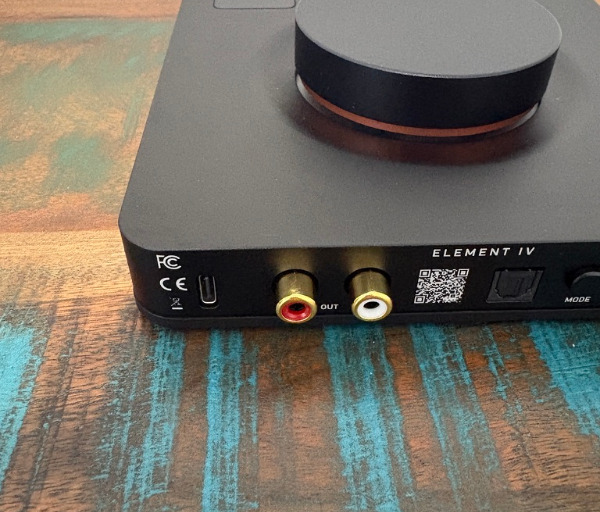
Around the back, the Element IV is designed to suit a focused desktop audio setup. The USB-C input feels more modern and convenient than older USB connector styles, while the optical input and RCA preamp outputs give it useful flexibility across different sources and speaker arrangements.
The RCA preamp output adds a lot of practicality for users who switch between headphones and powered speakers. Having separate volume and EQ memory for different outputs makes the unit feel more considered, especially for people who use one setup during the day and another for more focused listening.
Build quality is exactly where it needs to be for a compact desktop DAC and amplifier. The chassis has enough weight to stay planted, the materials feel durable, and the finish gives the impression of a product made to be used for years rather than replaced quickly.
The Element IV does not try to impress through visual excess, and that is part of its appeal. Its design works because it is simple, sturdy, and functional, while the upgraded controls, glass-covered display, and smarter interface make it feel more polished than the familiar shape might first suggest.
Key Features
One of the biggest upgrades in the JDS Labs Element IV is the move to a full 12-band parametric EQ. This gives users far more control over their sound than a basic tone adjustment system, allowing each band to be shaped with frequency, gain, and Q factor settings.
The EQ is managed through JDS Labs Core, a browser-based control platform that avoids the need for traditional desktop software. You connect the Element IV through USB, open a supported browser, and adjust the device from a clean interface that feels straightforward and responsive.
A major advantage of this system is that EQ changes are stored directly on the hardware. Once a profile is configured, the Element IV can retain those settings across restarts, input changes, and different connected devices, making it much more practical than software-only tuning.
The Element IV also extends DSP support across both USB and optical input. This is especially useful for users connecting consoles, streamers, CD transports, or other sources where standard computer-based EQ tools would not normally apply.
Power output is another standout feature, with the Element IV offering a strong level of drive for a compact desktop unit. It has the headroom needed for demanding headphones while still maintaining the clean, controlled presentation that JDS Labs is known for.
The automatic gain system helps make that power easier to live with. Instead of forcing the user to constantly think about gain settings, the Element IV can move between low and higher gain behaviour in a way that keeps volume control practical across sensitive earphones and harder-to-drive headphones.
The updated OLED display adds useful real-time information without cluttering the design. It can show details such as sample rate, input source, output mode, stream format, and gain state, giving you quick confirmation of what the device is doing at any moment.
The Element IV also supports high-resolution audio playback through its XMOS USB implementation. With support for PCM up to 32-bit/384kHz and DSD128, it is equipped for serious desktop listening while still remaining simple enough for everyday use.
For users running powered speakers, the RCA preamp output is a very practical inclusion. It allows the Element IV to act as the central control point for both headphones and speakers, with separate volume and EQ memory helping each output feel properly configured.
JDS Labs has also paid attention to protection, isolation, and long-term reliability. Relay muting, DC protection, full mains isolation, and a very low output impedance all contribute to a product that feels not only powerful and flexible, but carefully engineered for clean and dependable daily use.
JDS Labs Synapse
JDS Labs Synapse is a useful companion for users who want to keep their USB audio chain as clean and reliable as possible. While the Element IV already performs strongly on its own, Synapse is designed to help in setups where USB noise, longer cable runs, ground loops, or electrically noisy source devices may become an issue.
The idea behind Synapse is simple, but the execution is very practical. It sits between your computer or source device and the DAC, acting as an isolated USB bridge that helps preserve signal integrity before the audio reaches the Element IV.
It is especially relevant for desktop audio users who run powered monitors, multiple connected peripherals, laptops, hubs, or studio equipment from the same system. In those environments, unwanted noise can sometimes travel through USB and create audible interference, and Synapse is designed to reduce that risk.
Synapse is UAC2 compliant and supports Hi-Speed USB data at 480 Mbps, making it suitable for modern USB audio devices without forcing a major compromise in capability. It is built to maintain strong USB audio support while focusing on isolation, clean power delivery, and improved signal handling.
One of its key benefits is galvanic isolation, which separates connected audio equipment from the host computer. This can help eliminate ground loop noise, which is particularly useful when optical input is not being used or when the audio system includes powered speakers.
JDS Labs has also designed Synapse to supply clean, transformer-isolated power to compatible connected devices. That makes it more than just a passive adapter, as it actively helps protect the audio chain from some of the electrical noise that can come from computers, laptops, and shared power environments.
In use, Synapse is refreshingly simple. You connect your source device to Synapse, then connect Synapse to the Element IV using the short shielded USB cable, with no driver installation or complicated configuration required.
The compact form factor also suits the Element IV well, because it does not add unnecessary bulk to the desk. It can sit neatly inline with the rest of the setup and feels like a functional accessory rather than another large box competing for space.
For users with straightforward desktop setups, Synapse may not feel essential from day one. However, for anyone chasing a cleaner signal path, dealing with stubborn USB noise, or running a more complex audio chain, it adds another layer of confidence.
Paired with the Element IV, Synapse reinforces the same engineering-first approach that defines JDS Labs products. It is practical, compact, and designed to solve a real problem without making the listening setup harder to use.
Experience Using the Product and Performance
Using the JDS Labs Element IV day to day feels very natural, largely because the device never tries to make simple tasks feel complicated. The large volume knob remains the centre of the experience, and it gives the unit an immediate sense of control that is easy to appreciate from the first session.
The updated encoder makes a meaningful difference during regular use. Small adjustments feel precise when listening at lower levels, while faster turns respond quickly enough that you can move through larger volume changes without feeling like the interface is lagging behind.
The auto gain system also makes the Element IV easier to live with across different headphones and earphones. Sensitive IEMs can be used with fine volume control, while harder-to-drive headphones still have the headroom needed to sound full, open, and confident.
With demanding headphones, the Element IV feels composed and effortless. It delivers strong power without making the presentation feel forced, giving music room to breathe while maintaining a clean and stable sound.
The sound character is impressively neutral, which is exactly what you want from a DAC and amplifier designed around accuracy. It does not add obvious warmth, brightness, or artificial weight, instead allowing the connected headphones and the recording itself to define the final presentation.
That transparency makes the Element IV a strong match for users who like to hear their equipment honestly. If a pair of headphones is spacious, detailed, or intimate, the Element IV lets those qualities come through without trying to reshape them unnecessarily.
Bass performance is tight and controlled, with enough authority to give low frequencies proper presence. It avoids sounding bloated or heavy-handed, which helps bass lines, drums, and electronic tracks remain articulate rather than muddy.
Midrange clarity is another strength, especially with vocals, acoustic instruments, and dialogue-focused content. Voices sound clean and well separated, making the Element IV just as enjoyable for music listening as it is for podcasts, video editing, gaming, and general desktop use.
Treble is presented with good detail and refinement. It brings out texture and space without becoming sharp or tiring, which is important for longer listening sessions where overly aggressive top-end energy can quickly become fatiguing.
The upgraded power output is one of the most noticeable improvements when moving between easier and more demanding headphones. There is a sense of control that helps headphones feel properly driven, particularly when listening to dynamic tracks that need both volume and composure.
Despite the stronger output, the Element IV remains pleasant to use over extended sessions. It runs cooler than you might expect for something this capable, which makes it well suited to long days at a desk.
The 12-band parametric EQ adds a completely different level of flexibility to the experience. Rather than being locked into the natural tuning of your headphones, you can make precise adjustments that suit your preferences, your room, or the type of content you are enjoying.
JDS Labs Core makes those adjustments feel approachable rather than intimidating. The browser-based interface is clean, responsive, and far easier to work with than navigating complex settings from a tiny screen.
The ability to save EQ changes directly to the Element IV is particularly useful. Once configured, the device keeps those adjustments in place, so your sound profile can remain active even when changing inputs or using the Element IV outside a traditional computer setup.
Optical input support with DSP adds even more value in real-world use. It means the Element IV can bring its EQ tools to sources such as consoles, streamers, and other digital devices, giving it broader flexibility than many desktop DAC and amplifier units.
Switching between USB and optical feels smooth, and the screen provides clear feedback so you always know what input and format are active. This helps the Element IV feel polished rather than technical, even though there is a lot happening underneath.
The RCA preamp output is excellent for users who also run powered speakers on their desk. Being able to move between headphones and speakers from the same unit keeps the setup clean and reduces the need for extra controllers or volume devices.
Separate volume and EQ memory for headphone and preamp output makes this feature much more practical. You can keep one tuning profile for headphones and another for speakers, which helps the Element IV adapt to different listening situations without constant manual adjustment.
The OLED display is small, but it contributes nicely to the overall experience. It provides enough information to be useful, then fades away so the device does not become a visual distraction during work or relaxed listening.
The Element IV also feels very dependable from a usability perspective. Input changes, gain behaviour, menu navigation, and output switching all feel quick and deliberate, which gives the impression of a product that has been refined through practical use rather than only designed around specifications.
Adding JDS Labs Synapse can further improve confidence in more complex USB setups. While not every user will need it, it is a smart pairing for anyone dealing with longer USB runs, powered monitors, laptop noise, or environments where clean signal isolation matters.
As a complete desktop audio solution, the Element IV delivers a very satisfying blend of power, clarity, control, and simplicity. It feels serious enough for critical listening, flexible enough for modern mixed-source setups, and straightforward enough to enjoy every day without feeling like a piece of studio equipment that needs constant attention.
Conclusion
The JDS Labs Element IV is a confident evolution of an already respected desktop DAC and amplifier design. It keeps the clean styling, compact footprint, and simple control layout that made the series so appealing, while adding meaningful improvements that make it feel more capable and modern.
Its combination of stronger output power, refined volume control, browser-based configuration, and full 12-band parametric EQ gives it excellent flexibility for a wide range of headphones and listening preferences. The fact that settings can be stored directly on the device also makes it far more practical across different inputs and systems.
What stands out most is how easy the Element IV is to live with. It offers serious tuning depth and strong technical performance, yet it still feels simple, clean, and approachable on the desk.
For anyone wanting a compact desktop DAC and amplifier that prioritises transparency, usability, and long-term refinement, the JDS Labs Element IV is an excellent choice. It feels thoughtfully engineered from the hardware through to the software, making it a highly polished option for everyday listening, gaming, work, and more focused audio sessions.