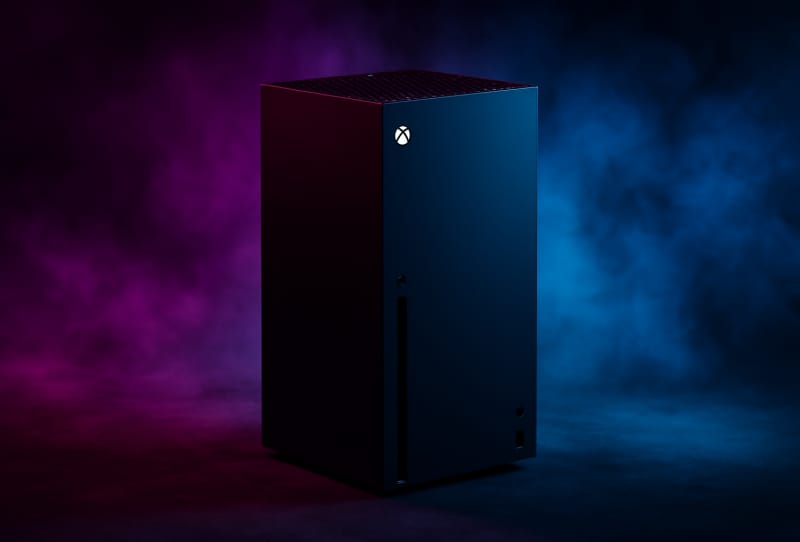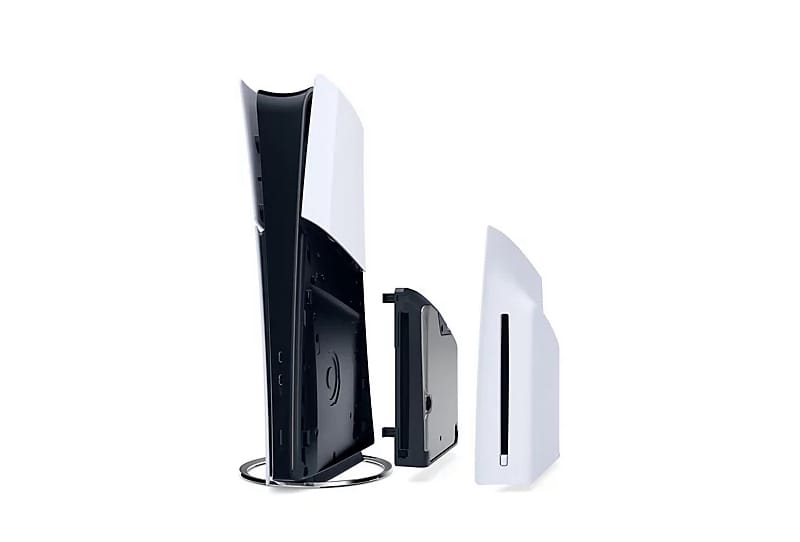
Next-gen disc drives might be running out of road before either Sony or Microsoft even confirms their next console. A new report suggests the components needed to physically build optical disc drives are becoming so scarce that manufacturing them at any scale is turning into a genuine engineering headache, regardless of whether either company still wants to offer one.
The issue is not corporate reluctance. Sony has already made its digital-first intentions clear for future PlayStation hardware, and earlier this year confirmed that the factory responsible for pressing physical PS5 discs had begun retooling itself for other products, backed by fresh investment from Sony. That decision looked like a business choice at the time. It now looks like it was also a response to a supply chain that was already thinning out.
Table of Contents
Why next-gen disc drives are becoming harder to build
According to industry sources cited by Windows Central, the small pool of suppliers still producing the specialised components used in optical disc drives is shrinking fast, with several pivoting toward other markets entirely. As fewer companies keep making these parts, the cost of sourcing them for a disc drive climbs sharply, because there is no longer enough volume to keep production cheap.
That account was later backed up on a Digital Foundry podcast, where the outlet’s analysts described a component shortage severe enough that producing disc drives at any meaningful scale has become genuinely impractical. Disc drives used to be near-commodity hardware, cheap enough to bundle into PCs and consoles almost as an afterthought. That is no longer the case. They are increasingly niche components with a shrinking manufacturing base behind them, and niche components rarely stay affordable.
Physical media was already on shaky ground
Even before this supply chain problem surfaced, physical discs were losing their usefulness as a truly standalone format. A study from Does It Play found that a large share of current-generation console discs cannot function fully offline, because they still require mandatory day-one downloads to work properly.
| Console | Discs that work fully offline |
|---|---|
| PS5 | 66 percent |
| Xbox Series X/S | 50 percent |
Those figures matter because they undercut one of the main arguments in favour of keeping discs around at all: the idea that a physical copy guarantees a playable game without an internet connection. If half of Xbox discs and a third of PS5 discs cannot deliver on that promise already, the case for propping up an increasingly expensive manufacturing pipeline gets weaker with every passing year.

What a disc drive shortage means for PlayStation and Xbox
The practical problem for Sony and Microsoft is straightforward. Even if either company wanted to include a disc drive with its next console, or offer one as an optional add-on the way Sony did with the digital-only PS5, the rising cost of sourcing scarce components could add hundreds of dollars to that hardware. What was once a low-cost accessory is turning into a boutique product nobody can price sensibly.
That leaves platform holders in an awkward spot. Building a disc-drive edition of next-gen hardware becomes a much harder sell if it pushes the price far above a digital-only equivalent. Consumers who value physical ownership, resale value, or offline backups would effectively be asked to pay a premium simply to keep a legacy format alive, and it is not clear how many would accept that trade-off.
The pressure is coming from both directions at once. Disc manufacturing itself is winding down, as shown by Sony’s factory shift, while the hardware needed to read those discs is becoming prohibitively expensive to produce. Squeezed from both ends, physical media on consoles may not survive the transition to the next generation, not because anyone decided to kill it off, but because the supply chain underneath it is disappearing.
Could disc support survive in any form?
There is still a narrow path where disc drives hang around as a premium accessory, sold separately at a much higher price than gamers are used to paying. That would mirror how some enthusiast PC components remain available despite shrinking demand, just at a steeper cost. Whether either company judges that worth the manufacturing complexity is another question entirely, and nothing has been confirmed publicly by either firm.
For now, the direction of travel looks clear even without an official announcement. Physical media has survived on consoles for decades through changing formats and shrinking margins, but a genuine component shortage is a different kind of threat, one that pricing decisions and marketing cannot easily solve. Anyone hoping to buy a disc-equipped PS6 or next Xbox may want to watch this story closely, because the decision may ultimately be made by suppliers rather than by Sony or Microsoft themselves.