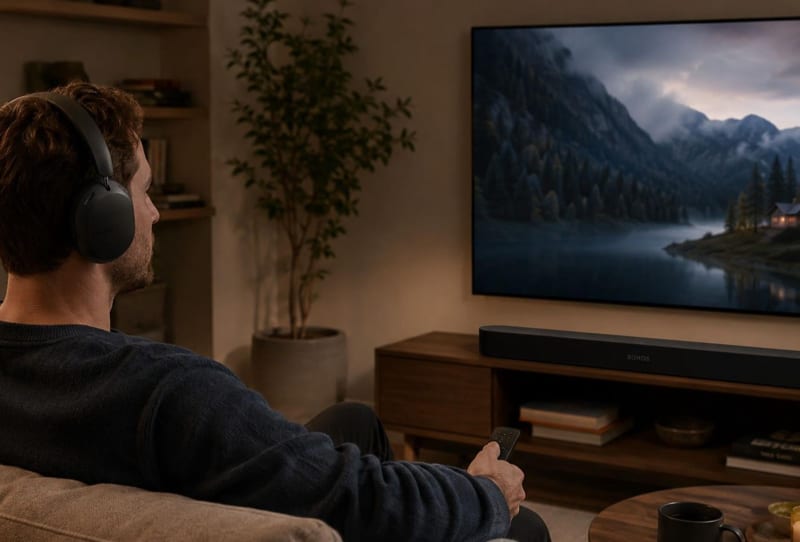
The Sonos Beam Ultra has arrived as the centrepiece of the biggest hardware and software refresh Sonos has attempted in years. Alongside it, the company introduced the Ace Ultra headphones and a renamed, AI-infused platform called Sonos 27, marking a clear attempt to rebuild trust with a fan base still wary after the company’s troubled app relaunch two years ago.
Rather than a single product drop, this is a coordinated push across speakers, headphones and software. Sonos is betting that tighter integration between hardware and a smarter operating system will win back buyers who felt burned by earlier missteps, while also giving the brand a fresh pitch to households upgrading their home theatre or personal audio setup.
Table of Contents
Sonos Beam Ultra brings true Atmos to a compact soundbar
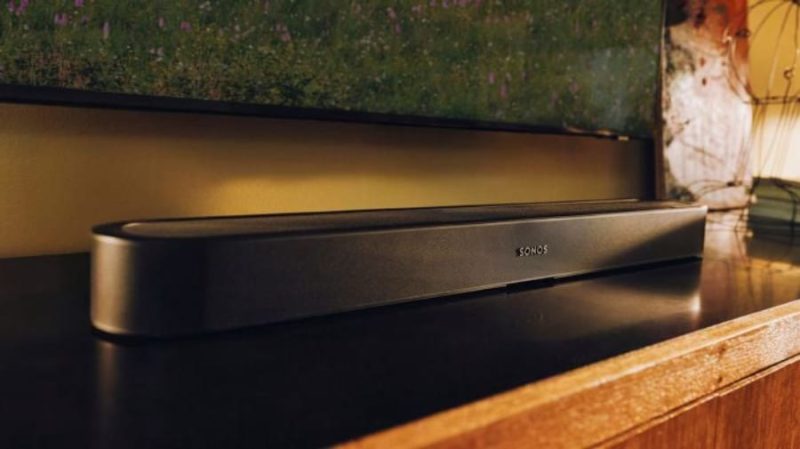
The Sonos Beam Ultra squeezes nine drivers into a mid-sized cabinet, a notable jump from the standard Beam lineup. Two of those drivers fire upward, delivering what Sonos describes as genuine 7.1.2 Dolby Atmos surround format sound rather than a virtualised approximation.
Dialogue clarity gets specific attention too. An upgraded centre channel is paired with four selectable levels of AI Speech Enhancement, letting viewers dial in how much emphasis is placed on voices over background effects and music. It is a practical feature for anyone who has ever reached for the remote mid-movie because dialogue got lost under an explosion.
For a soundbar of its size, packing true height channels and adaptive dialogue processing into one unit is a meaningful step up from the outgoing Beam generation, and it puts the Sonos Beam Ultra in more direct competition with larger, pricier home theatre bars from rival audio brands.
Ace Ultra headphones add seamless handoff to the mix
The Ace Ultra headphones refine Sonos’s first-generation personal audio hardware with a redesigned 40mm driver and a 10-microphone array that handles both active noise cancellation and phone calls. Battery life is rated at up to 35 hours, putting it in the same territory as other long-life options in the category, including noise-cancelling headphones like JLab’s JBuds Lux ANC.

The standout addition is Headphone Engine 2. It lets a listener push audio from a nearby Sonos speaker straight to the Ace Ultra, and pull it back again, with a single physical button press on the earcup. There is no need to fumble with Bluetooth pairing menus or unlock a phone first. For households that already run multiple Sonos speakers, that kind of frictionless handoff could be more valuable day to day than any spec bump.
Sound quality ambitions aside, the driver redesign puts Sonos in a segment where competitors have pushed hard on materials and diaphragm technology, from dynamic drivers to planar magnetic designs like the Fosi i5. Sonos is not chasing audiophile bragging rights so much as convenience within its own ecosystem, which is arguably where it has always tried to differentiate itself from headphone specialists.
Sonos 27 ties everything together with AI and spatial awareness
Underpinning both products is Sonos 27, the newly branded generation of the company’s software platform. Its headline feature is Sonos Fabric, which uses high-frequency ultrasonic positioning so connected speakers can detect where other units physically sit in a room.
That spatial awareness powers what Sonos calls portable surrounds. Portable speakers sold in pairs, such as the Move 2 or Sonos Play, can automatically configure themselves as rear home theatre channels the moment they are placed behind a listener, then revert to standalone speakers once moved away again. It is a clever bit of automation that removes a manual setup step many owners never bother with.
Sonos 27 also introduces two distinct AI tools rather than a single do-everything assistant. Sonos 27voice is tuned for open-ended music requests and mood-based curation, while Sonos 27mcp is an open protocol that lets external AI models interface directly with any product running the current Sonos app. That second piece signals Sonos wants third-party AI tools plugging into its hardware, not just its own assistant.
| Feature | Sonos Beam Ultra | Ace Ultra headphones |
|---|---|---|
| Audio format | 7.1.2 Dolby Atmos, nine drivers | Redesigned 40mm driver |
| Key feature | Four-level AI Speech Enhancement | Headphone Engine 2 handoff |
| Microphones | Upgraded centre channel array | 10-microphone ANC and call array |
| Battery life | Not applicable | Up to 35 hours |
What the refresh means for existing Sonos owners
The app itself has not been ignored either. Following widespread criticism of the earlier redesign, Sonos is restoring tabbed navigation, adding quick-pinning for multi-room groups, and bringing back lock-screen media controls. These are the kinds of basic usability features users expect by default, and their return says as much about the company listening to complaints as it does about new functionality.
For anyone already invested in Sonos speakers, the appeal of the Sonos Beam Ultra and Ace Ultra lies less in raw specifications and more in how tightly they lock into the wider system. Buyers weighing up premium headphones such as the HIFIMAN Arya Stealth against the Ace Ultra should note that Sonos is selling ecosystem convenience first and audiophile credentials second.
Both the Beam Ultra and Ace Ultra are open for preorder now, with general availability and the wider Sonos 27 feature rollout expected through September. Whether this refresh restores confidence lost during the app controversy will likely come down to how reliably Sonos Fabric and the new AI tools perform once they reach ordinary living rooms, rather than how impressive they sound on paper.
Australian buyers watching the Sonos rollout should expect local pricing and availability details to follow the same September timeline flagged for other regions, though exact dates for local stock have not been confirmed.