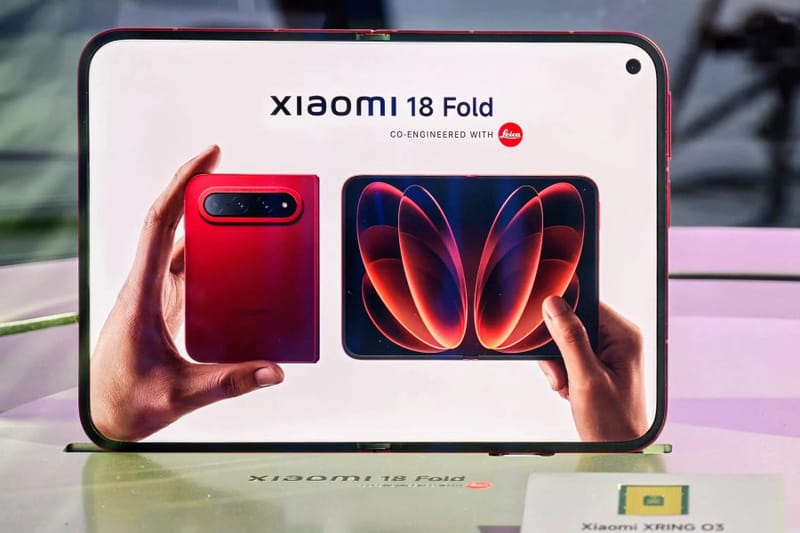
The Arm Mali G2-Ultra NX has just made its debut, and it could mark the biggest shift in mobile gaming graphics in years. The new chip is built into the Xring O3, a custom processor developed by Xiaomi, and it powers the Xiaomi 18 Fold, which has gone on sale in mainland China. Behind the announcement sits five years of development work from Arm, the British chip designer whose technology already underpins the vast majority of smartphone processors worldwide.
What makes this release different from a routine spec bump is the addition of an AI-driven graphics accelerator inside the GPU itself. Rather than simply rendering more pixels with brute force, the Mali G2-Ultra NX uses machine learning techniques to boost frame rates, sharpen image quality and improve lighting effects, all while keeping power draw in check. It is, in effect, Arm’s answer to the upscaling and frame generation tools that have transformed PC gaming over the past several years.
Table of Contents
What the Arm Mali G2-Ultra NX actually does
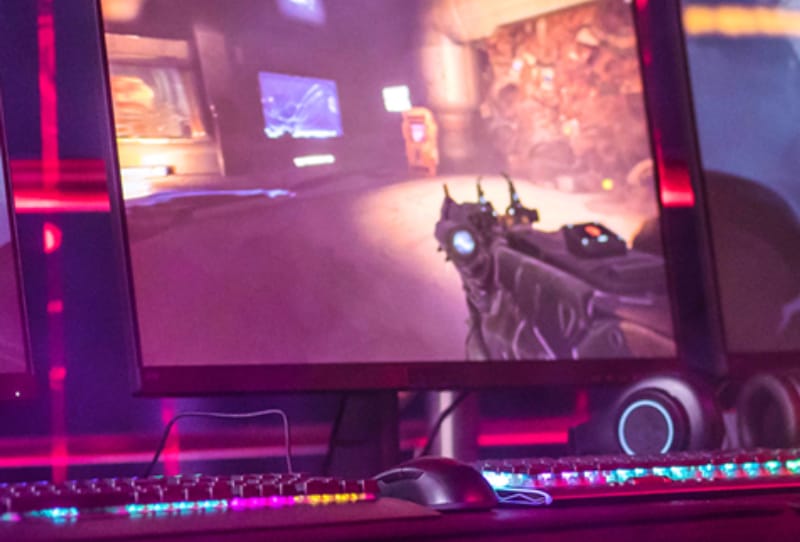
For years, mobile GPUs have chased better graphics mostly by adding more processing cores and pushing clock speeds higher. That approach works, but it comes with a cost: battery drain and heat, both of which are already tight constraints inside a slim phone chassis. The Mali G2-Ultra NX takes a different route by leaning on dedicated AI hardware to do some of the heavy lifting that would otherwise fall to traditional rendering pipelines.
This is broadly the same idea behind Nvidia’s DLSS technology, which has become a standard feature on gaming PCs. Rather than rendering every frame at full resolution, the system generates a lower-resolution image and then uses a trained neural network to fill in detail, effectively faking a sharper, smoother picture without the full computational cost. Arm has spent years building a mobile-friendly version of that concept, and the Mali G2-Ultra NX is the first chip built to run it.
Chris Bergey, Arm’s executive vice president of Edge AI, described the ambition in blunt terms, telling reporters the company believes the technology “is going to be huge.” Given how much mobile gaming has grown as a category, that is not an idle claim. Titles that once looked noticeably rougher on phones than on consoles or PCs could start closing that visual gap, particularly on high-refresh-rate foldables and tablets where jagged edges and low frame rates are most noticeable.
Neural rendering arrives on Android
The comparison to DLSS is not incidental. Arm’s approach effectively brings neural rendering, AI-assisted image reconstruction, to the Android ecosystem for the first time at this level of sophistication. Game developers who want to take advantage of it will need to build support into their titles, much as PC studios had to add DLSS support individually rather than getting it for free.
That means the benefits will not be instant or universal. Early adoption is likely to be limited to flagship titles and studios with the resources to optimise for the new hardware path. Still, the underlying hardware capability now exists inside a shipping chip, which is the necessary first step before any software ecosystem can build around it.

Xring O3 and the Xiaomi 18 Fold
Xiaomi’s Xring O3 is the company’s second custom flagship chip, following its earlier Xring O1, and folding the Mali G2-Ultra NX into it signals how seriously Xiaomi is taking gaming performance on its premium foldable hardware. The Xiaomi 18 Fold is currently exclusive to the Chinese market, giving Xiaomi and Arm a controlled environment to test the new graphics stack before it reaches a global audience.
| Detail | Information |
|---|---|
| GPU | Arm Mali G2-Ultra NX |
| Host chip | Xiaomi Xring O3 |
| First device | Xiaomi 18 Fold (mainland China) |
| Key feature | AI-assisted neural rendering, similar in concept to DLSS |
| Development time | Around five years |
| Expected wider rollout | Additional phones and larger-screen devices in 2027 |
Where the chip is heading next
According to Bergey, the Mali G2-Ultra NX will not stay locked to Chinese devices for long. He has confirmed that phones using the chip will be available more broadly next year, alongside larger devices such as tablets and Chromebooks. Arm has not named specific partners for those future products, but the comment suggests other phone makers and possibly Google’s Chromebook hardware could adopt the same graphics silicon.
That broader rollout matters because Arm’s designs are licensed out to a wide range of chipmakers rather than being exclusive to any single manufacturer. If the Mali G2-Ultra NX proves successful in the Xring O3, there is a reasonable chance it appears in future chips from other vendors that license Arm’s GPU designs, extending the benefits of neural rendering well beyond Xiaomi’s lineup.
Why it matters for gamers and manufacturers
Mobile gaming has become a genuinely serious business, with some titles generating revenue that rivals traditional console blockbusters. Yet visual fidelity has long lagged behind PC and console equivalents, largely due to the physical constraints of a phone’s battery and thermal envelope. AI-assisted rendering offers a way to close that gap without requiring bigger batteries or thicker phones, which is precisely the kind of trade-off manufacturers have been chasing for years.
For readers who follow the PC space, the parallels are obvious. Nvidia’s DLSS upscaling technology on desktop graphics cards proved that AI-driven rendering can meaningfully change how games look and perform, and graphics card sales have remained strong despite high prices, showing how much demand exists for better real-time graphics. Arm’s move suggests that same appetite is now spreading to phones, tablets and lightweight laptops, echoing Nvidia’s own attempt to blend work and gaming silicon in a single chip.
Whether the Mali G2-Ultra NX lives up to Arm’s ambitions will depend on developer adoption and how convincingly the technology performs outside controlled demos. But the direction is clear. Phone gaming graphics are heading toward the same AI-assisted playbook that reshaped PC gaming, and the Xiaomi 18 Fold is simply the first stop on that journey.