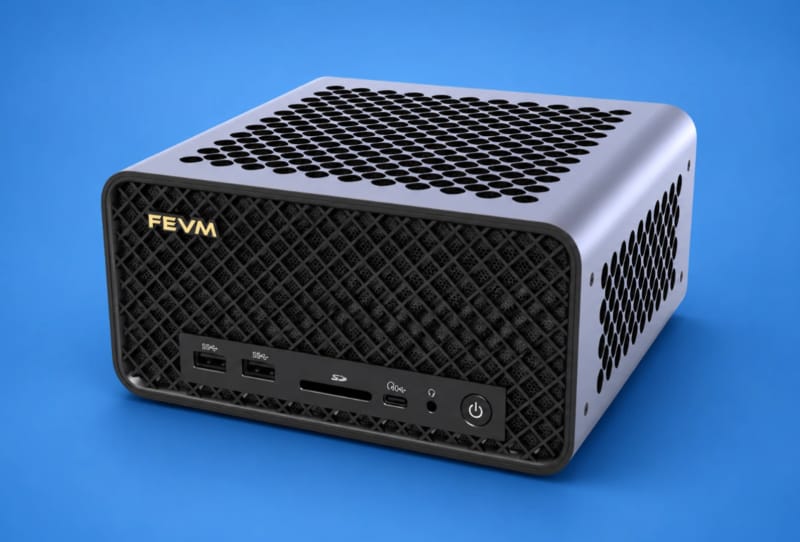
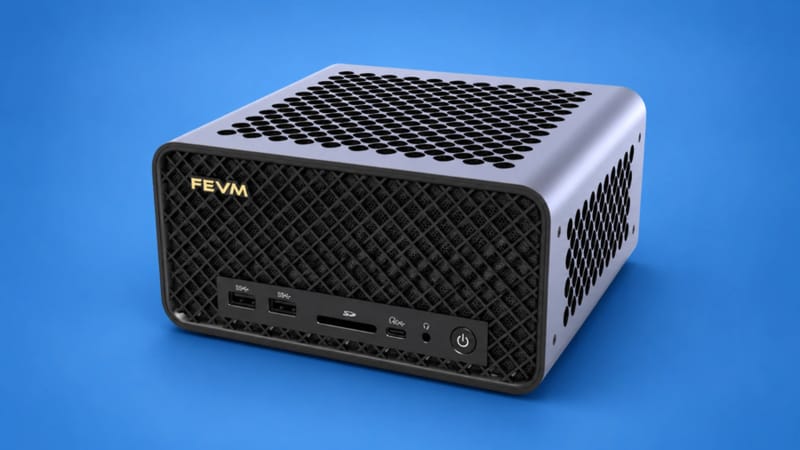
The FEVM FA80G mini PC pairs an AMD Ryzen 9 9950X3D processor with a 24GB Nvidia RTX 5090 Laptop GPU, squeezing both into a chassis of just 2.6 litres. FEVM claims this combination can outperform Apple’s M5 Ultra Mac Studio in gaming, a bold statement given the size difference between the two machines.
Key takeaways
- ✓The FEVM FA80G mini PC combines a Ryzen 9 9950X3D CPU with a 24GB RTX 5090 Laptop GPU.
- ✓The entire system fits inside a 2.6-litre chassis, far smaller than a typical gaming tower.
- ✓FEVM claims the FA80G can outperform Apple's M5 Ultra Mac Studio in gaming benchmarks.
- ✓The RTX 5090 Laptop GPU carries 24GB of VRAM, matching the desktop card's memory capacity.
- ✓It follows FEVM's earlier mini PCs that already paired desktop-class CPUs with RTX 5090 graphics.
That claim matters because mini PCs have traditionally traded performance for compactness. Buyers accepted weaker chips in exchange for a machine that fit on a desk shelf rather than under it. The FA80G appears designed to break that trade-off entirely, cramming desktop-class silicon into a footprint smaller than most game consoles.
Table of Contents
What the FEVM FA80G mini PC actually offers
At the heart of the FA80G sits AMD’s Ryzen 9 9950X3D, a 16-core chip built on the Zen 5 architecture with 3D V-Cache stacking for extra gaming performance. It is the same processor found in several enthusiast desktop builds, not a laptop-derived variant with reduced clock speeds or core counts.
Graphics duties fall to Nvidia’s RTX 5090 Laptop GPU, carrying 24GB of GDDR7 memory. That memory allocation matches the desktop RTX 5090 card, which is unusual for a mobile-class GPU and suggests FEVM has prioritised memory bandwidth for demanding games and creative workloads alike. Cooling this pairing inside such a small enclosure is the real engineering challenge, since both components generate substantial heat under load.
FEVM has not published full pricing or availability details yet, and the company has a track record of iterating quickly on its mini PC lineup rather than sticking with a single flagship model for long.
Specifications at a glance
| Component | Detail |
|---|---|
| Processor | AMD Ryzen 9 9950X3D (16-core, Zen 5 with 3D V-Cache) |
| Graphics | Nvidia RTX 5090 Laptop GPU, 24GB GDDR7 |
| Chassis volume | 2.6 litres |
| Form factor | Compact mini PC |
How it stacks up against rivals
FEVM is not new to this space. The company’s earlier mini PCs that packed desktop CPUs and RTX 5090 power already demonstrated that squeezing flagship components into a small chassis was possible, and the FA80G reads as a refinement of that formula with a stronger CPU.
The comparison to Apple’s M5 Ultra Mac Studio is worth unpacking rather than accepting at face value. Apple’s chip excels at efficiency and sustained workloads thanks to its unified memory architecture, but Nvidia’s discrete GPUs still generally hold an advantage in raw gaming frame rates, particularly in titles optimised for DirectX or Vulkan rather than Metal. If FEVM’s benchmarks hold up under independent testing, the FA80G would represent a meaningful shift in what a small-form-factor machine can deliver against Apple’s best.
Against traditional desktop towers, the calculus is different again. Full-size prebuilt desktops like the CyberPowerPC SLC8500WST pair similarly potent components with more generous airflow and easier upgrade paths, since a mini PC’s compact cooling and soldered components make later upgrades harder. Buyers choosing between the two are really weighing desk space against long-term flexibility, not raw performance alone.
What this means for buyers and the mini PC market
The FA80G lands at a moment when small-form-factor gaming hardware is becoming genuinely competitive rather than a novelty. Machines like FEVM’s, alongside other compact gaming mini PCs such as the Piston V, suggest manufacturers see real demand for high-end gaming rigs that don’t dominate a room.
For enthusiasts weighing a build like this against a custom tower, it is worth revisiting the basics of picking the right processor for a gaming build, since a mini PC locks in its CPU and GPU choices at purchase with little room to change course later. That permanence is the real cost of a 2.6-litre chassis, even when the components inside are as capable as AMD’s Ryzen 9 9950X3D and Nvidia’s RTX 5090 Laptop GPU.
Whether the FA80G actually beats Apple’s M5 Ultra Mac Studio in practice will depend on independent benchmarks once units reach reviewers. FEVM’s internal claims are a starting point, not a verdict, and thermal throttling in such a small chassis remains the biggest unknown until the machine is tested outside controlled conditions.
Frequently asked questions
What CPU and GPU does the FEVM FA80G mini PC use?
It uses AMD’s Ryzen 9 9950X3D processor alongside Nvidia’s RTX 5090 Laptop GPU with 24GB of GDDR7 memory, both housed in a 2.6-litre chassis.
Can a mini PC really beat a Mac Studio in gaming?
FEVM claims the FA80G can outperform Apple’s M5 Ultra Mac Studio in gaming, largely because Nvidia’s discrete GPU architecture tends to outperform Apple’s unified memory design in traditional PC gaming titles, though independent testing will confirm the real gap.
Is the FEVM FA80G upgradeable later?
Mini PCs of this design generally offer limited upgrade paths compared with full desktop towers, since compact cooling and tight internal layouts make swapping the CPU or GPU far harder down the line.
When will the FEVM FA80G be available to buy?
FEVM has not confirmed a release date or regional availability for the FA80G, and details are expected to follow as the company finalises the design.