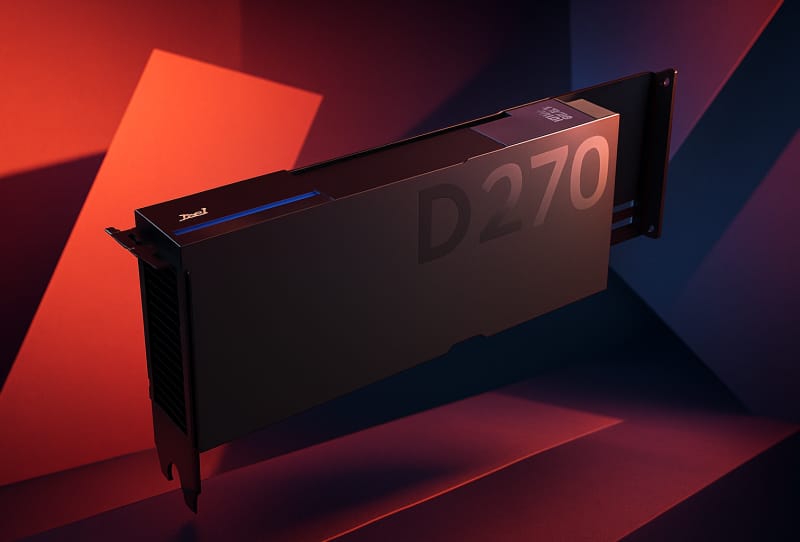
The Intel 480GB GPU is a reported AI accelerator carrying more onboard memory than most laptop SSDs hold in storage, and it is built for AI data centres rather than gaming rigs. According to details circulating about the chip, it pairs that huge memory pool with 1.5TB/s of bandwidth, 1.3 petaflops of FP8 compute performance, and a 350W power envelope, though Intel has not confirmed pricing or a release date.
Key takeaways
- ✓Intel's reported 480GB GPU carries more memory than most laptop SSDs hold in storage.
- ✓The chip reportedly uses LPDDR5X memory instead of the GDDR7 found in gaming GPUs.
- ✓Memory bandwidth is rated at 1.5TB/s with 1.3 petaflops of FP8 compute performance.
- ✓Power draw sits at 350W, and Intel has not confirmed pricing or a launch date.
- ✓The design targets AI inference and training workloads rather than gaming or graphics.
What makes the reported design stand out is not just the sheer capacity but the memory type behind it. Rather than reaching for GDDR7, the memory standard found in current high-end gaming graphics cards, Intel has apparently opted for LPDDR5X, the low-power memory more commonly associated with laptops and smartphones. That is an unusual choice for a chip built to chew through demanding AI workloads, and it says a lot about where Intel believes the real battle for AI hardware will be fought.
Table of Contents
What the Intel 480GB GPU reportedly offers
Specifications attached to the chip point to a part designed purely for throughput and capacity rather than gaming performance. A memory pool of 480GB dwarfs anything seen in consumer graphics cards, and it exists because large language models and other AI workloads increasingly live or die by how much data a chip can hold in memory at once without shuffling it back and forth from slower storage.
| Specification | Reported detail |
|---|---|
| Memory capacity | 480GB |
| Memory type | LPDDR5X |
| Memory bandwidth | 1.5TB/s |
| Compute performance | 1.3 petaflops (FP8) |
| Power consumption | 350W |
| Target workload | AI training and inference |
| Pricing and availability | Not disclosed |
A 350W power budget is relatively modest for a chip pushing this much memory and compute, especially compared with flagship AI accelerators from rivals that often draw well over 700W. That efficiency angle could matter a great deal to data centre operators who are already struggling with power and cooling costs as AI clusters scale up.
Why LPDDR5X instead of GDDR7
GDDR7 memory, the standard found in cards built around gaming, is fast but power hungry and expensive to deploy at massive scale. LPDDR5X trades some peak bandwidth for much lower power draw and a cheaper path to huge capacities, which explains why Intel might favour it for a chip whose entire purpose is holding enormous AI models in memory rather than rendering frames.
This mirrors a broader shift happening across the AI hardware industry, where chip designers are rethinking memory choices that were previously locked in by gaming requirements. Capacity and efficiency now matter more than raw bandwidth for many AI inference tasks, and LPDDR5X fits that brief neatly, even if it would be a poor fit for a graphics card aimed at gamers.
How it fits Intel’s AI GPU ambitions
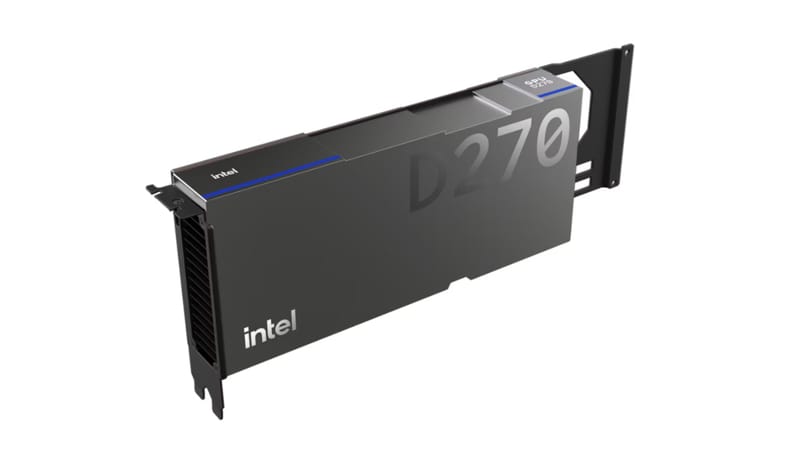
This reported 480GB chip does not exist in isolation. Intel has been steadily building out a dedicated AI and data centre GPU lineup, including Intel’s Crescent Island GPU, which recently picked up an official D-series naming scheme as part of the company’s push to carve out a bigger share of the AI accelerator market currently dominated by Nvidia and AMD.
On the consumer side, Intel continues to refine its Arc graphics division too, with Intel’s Arc GPU driver updates adding game-ready support and fixes. The split is telling: Intel’s gaming GPUs are chasing frame rates and driver polish, while its data centre silicon is chasing memory capacity and efficiency for AI, a sign of how differently the two markets are now being engineered.
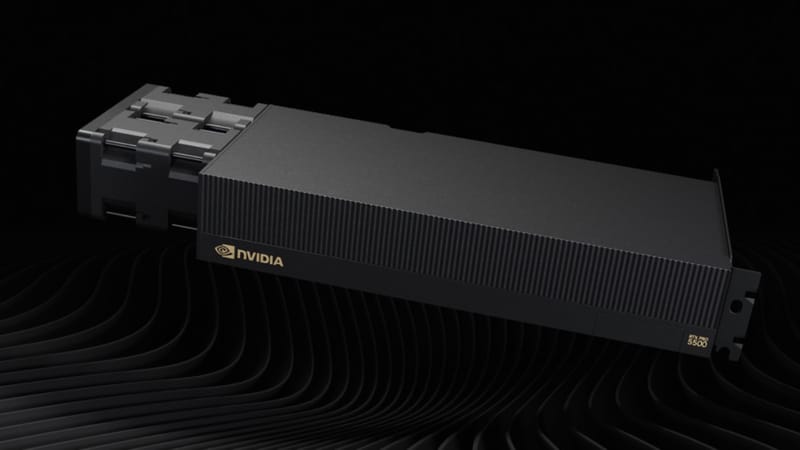
Rivals are making similar trade-offs. Nvidia’s RTX Pro 5500 workstation GPU also leans toward AI memory capacity over gaming refinement, and memory makers are adjusting too, as seen in Micron’s work on near-GPU memory for AI chips designed to feed large language models faster. The industry-wide pattern is clear: memory, not raw compute alone, has become the bottleneck AI chipmakers are racing to solve.
What it means for the AI hardware race
For enterprise buyers and cloud providers, a chip like this matters because it could reduce the number of GPUs needed to host very large AI models. Fewer chips per model means lower infrastructure costs and simpler system design, even if the unconfirmed pricing on each unit remains high.
For everyday consumers and gamers, none of this changes much directly. This is a server-class part with no gaming ambitions, and nothing about it suggests Intel plans to bring LPDDR5X or 480GB memory pools to its consumer Arc lineup. However, the broader direction Intel is taking with its data centre silicon offers a clue about where chip design generally is headed as AI workloads keep growing in scale.
Until Intel confirms specifications, pricing, or a release window officially, these details should be treated as reported rather than finalised. Chip specifications sometimes shift between early disclosure and actual product launch, so anyone planning around this hardware should wait for an official announcement before treating any of these figures as locked in.
Frequently asked questions
What is the Intel 480GB GPU for?
It is reportedly designed for AI training and inference workloads in data centres, not gaming or general graphics rendering.
Why does the Intel 480GB GPU use LPDDR5X instead of GDDR7?
LPDDR5X offers lower power consumption and a cheaper path to very high memory capacity, both priorities for AI workloads that need huge memory pools rather than peak gaming bandwidth.
When will the Intel 480GB GPU be available?
Intel has not confirmed pricing or an availability date, so the chip’s release timeline remains unknown.
Will the Intel 480GB GPU affect Intel’s gaming graphics cards?
No direct impact is expected. This chip targets data centre AI customers, while Intel’s Arc gaming GPUs continue to be developed separately with their own driver and performance roadmap.