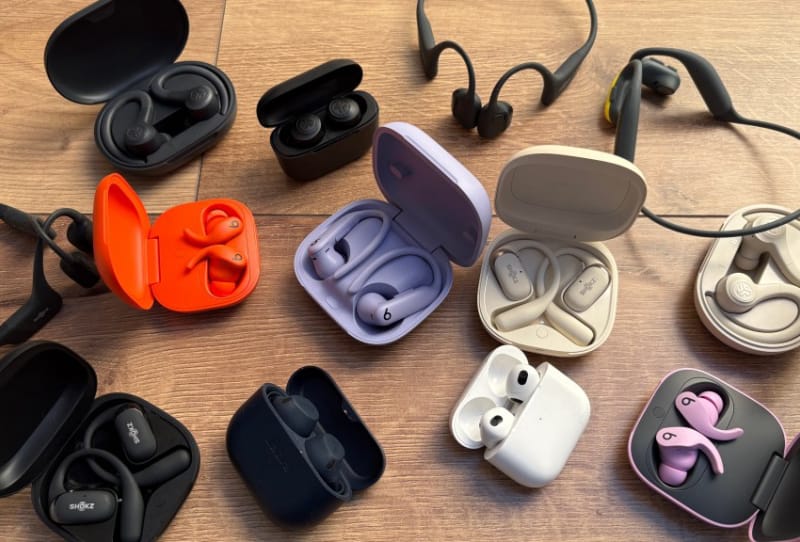
The best wireless earbuds for running are the ones that stay put through sweat, impact and changes of pace, without you ever having to reach up and adjust them. Fit matters more than any spec sheet, followed closely by water resistance, battery life and how easy the controls are to use while your hands are busy pumping along a route. This guide walks you through how to choose wireless earbuds for running, what to look for in the wild, and how some well-tested options stack up against each other.
Key takeaways
- ✓Look for at least an IPX4 water resistance rating for sweat protection on runs
- ✓Earhook designs generally stay more secure than standard in-ear tips during fast or long runs
- ✓Battery life of 8 to 12 hours per charge suits most training blocks without constant top-ups
- ✓Noise cancelling adds comfort on treadmills but can reduce road awareness outdoors
- ✓Button controls tend to be easier to use mid-run than touch panels
This is written for anyone training for a race, running regularly for fitness, or simply tired of earbuds that fall out on the first kilometre. It applies whether you run on footpaths, trails or a treadmill.
Table of Contents
What you’ll need
- A phone or music player with Bluetooth, plus whatever running apps or playlists you use
- A sense of your usual run length, so you know how much battery life you actually need
- A few runs scheduled to properly test fit, since five minutes in a shop never tells the full story
- A cleaning cloth or wipe to keep buds and tips free of sweat and earwax buildup
How to choose wireless earbuds for running
- Check the water and sweat resistance rating first. Look for at least an IPX4 rating, which covers splashes and sweat from most angles. Ratings like IP55 or IP68 offer extra protection for heavy sweaters or rainy runs.
- Decide on a fit style that suits your ears and running intensity. Earhook designs tend to lock in place best for interval sessions, hill sprints or trail running, while standard in-ear tips with wingtips can work fine for steady, lower-impact jogs.
- Match battery life to your longest sessions. Buds offering roughly 8 to 12 hours per charge, with a case that adds several more full charges, will comfortably cover long runs and training blocks without needing daily top-ups.
- Weigh up active noise cancelling against awareness. ANC is genuinely useful on a treadmill or in a noisy gym, but outdoor runners near traffic often prefer leaving it off, or choosing buds with a strong transparency or ambient mode instead.
- Test the controls before committing to a pair. Physical buttons are generally easier to operate accurately mid-run than touch-sensitive panels, which can trigger accidentally when you’re sweaty or moving quickly.
- Check what the companion app offers. Some running-focused earbuds include dedicated running EQ presets or automatic mode switching between indoor and outdoor use, which can be a genuine convenience rather than a gimmick.
- Confirm the charging case is pocket or armband-friendly if you plan to carry it, and check whether the cable or charging method suits your setup at home or at the gym.
Tested picks worth comparing
Independent run-focused testing has highlighted a few standout options across different budgets and fit styles. The table below summarises how they compare on the factors that matter most for runners.
| Model | Fit style | Battery (buds/case) | Water resistance | Best for |
|---|---|---|---|---|
| Beats Powerbeats Pro 2 | Earhook | 10 hrs / 45 hrs | IPX4 | Secure fit on long or sweaty runs |
| JLab Go Air Sport+ | Earhook | 9 hrs / 26 hrs | IP55 | Reliable performance on a lower budget |
| JBL Endurance Peak 4 | Earhook | 12 hrs / 36 hrs | IP68 | Customisable sound with a dedicated running mode |
| Bose QuietComfort Ultra Earbuds (2nd Gen) | In-ear | 6 hrs / 24 hrs | IPX4 | Strong noise cancelling for gym and treadmill sessions |
Earhook designs dominate this list for good reason. That extra point of contact around the ear noticeably reduces movement compared with standard tips, which matters most once you start running fast or covering trail terrain. If you already own a pair of general-purpose wireless earbuds for gym workouts, it’s worth testing them on an actual outdoor run before assuming they’ll perform the same way, since gym movement and running impact are quite different.
Tips and troubleshooting
If buds keep slipping during runs, try a different ear tip size before giving up on the pair entirely, and consider switching to an earhook model if your ear canal shape makes standard tips unreliable. Buds that cut out intermittently are often suffering from a Bluetooth connection issue rather than a hardware fault, so check for firmware updates in the companion app first.
Running ANC constantly will drain battery faster than advertised, so turn it off for easy recovery runs if you’re trying to stretch a charge. Sweat buildup around the charging contacts is a common cause of buds refusing to charge properly, so wipe both the buds and the case regularly. Wind noise can also be mistaken for a fault when it’s simply a limitation of exposed microphones, which affects call quality more than music playback.
Frequently asked questions
Do noise cancelling earbuds work well for running?
Active noise cancelling can be comfortable for treadmill sessions and noisy gyms, but many outdoor runners prefer switching it off or using a transparency mode so they can hear traffic and other people. If you’re specifically after Apple’s official AirPods page for current AirPods 5 noise cancelling details, that’s the best place to confirm exact features, since Apple updates specifications across its lineup over time.
What’s the difference between earhook and standard in-ear running buds?
Earhook buds wrap around the top of the ear for a second contact point, which generally keeps them far more secure during fast running, hill work or trail sessions. Standard in-ear buds rely on the tip alone, which can be fine for steady, lower-impact running but is more prone to shifting as you pick up pace or sweat increases.
Are high-end audiophile in-ear monitors like the 64 Audio Ocean suitable for running?
Not really. The 64 Audio Ocean sits in a different category altogether, built as a premium in-ear monitor aimed at critical listening and stage use rather than sport. It isn’t designed around sweat resistance or a secure running fit, so it’s better suited to home listening than to a workout bag. For exercise, dedicated sport earbuds with a proper water resistance rating are the safer choice.
How do I put together custom audio for my running playlists?
If you record your own training audio cues, podcasts or interval timers and want to trim or clean them up before loading them onto your phone, a free audio editor like Audacity handles basic trimming, noise reduction and format conversion without needing paid software.