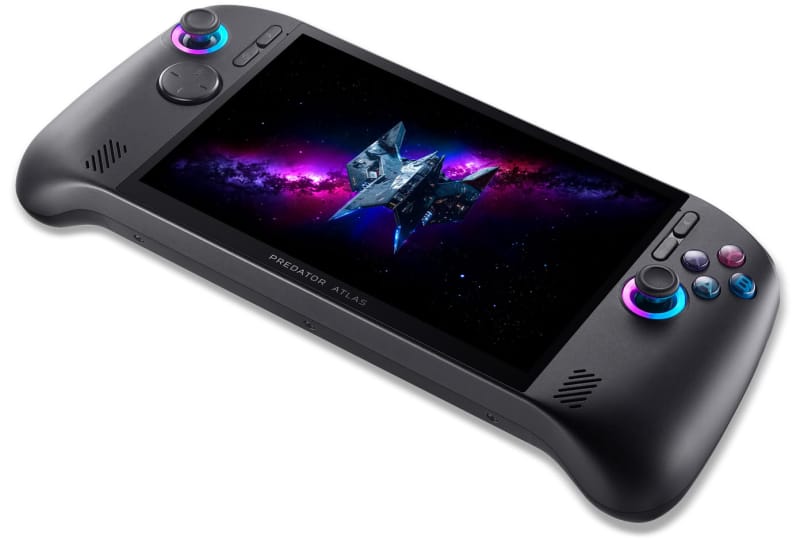
The Acer Predator Atlas 8 gaming handheld is officially rolling out, confirming that Intel’s new Arc G3 Extreme chip has found its first major home in a portable gaming device. Acer has moved the device from “register your interest” status to genuine availability, starting with a single configuration that pairs the top-tier Arc G3 Extreme silicon with 24GB of memory and a 512GB SSD.
Key takeaways
- ✓Acer has confirmed the Predator Atlas 8 gaming handheld is now reaching buyers
- ✓The launch configuration pairs Intel's Arc G3 Extreme chip with 24GB of memory and a 512GB SSD
- ✓It features an 8-inch WUXGA touchscreen with a 120Hz refresh rate
- ✓Intel rates the chip at 159 AI TOPS, reflecting a strong on-device AI focus
- ✓Acer first revealed the Atlas 8 at Computex in June 2026 before confirming its autumn release window
It’s a notable moment for both companies. Acer gets a flagship handheld to sit alongside its established Predator gaming brand, while Intel gets a visible showcase for Arc G3, its latest attempt to prove that its graphics architecture can compete in a space long dominated by AMD-powered handhelds like the ROG Ally and Legion Go. The launch follows months of anticipation that began when the Atlas 8 was first shown publicly.
Table of Contents
From Computex reveal to real availability
Acer and Intel first showed off the Predator Atlas 8 at Computex in June 2026, giving attendees an early look at a handheld built specifically around Intel’s then-unreleased Arc G3 chips. At the time, benchmark leaks had already hinted that the Arc G3 Extreme variant would deliver strong performance, fuelling speculation about how the finished handheld would be positioned against rivals.
That speculation proved accurate in one respect: this is clearly being pitched as a premium device rather than an entry-level handheld. Acer later updated its UK product page to let shoppers register interest, and that listing quietly revealed pricing tiers for several different Atlas 8 configurations, all sitting well above the budget end of the handheld market. The company has now moved past that registration phase into actual availability for at least one version of the device.
The timing lines up with what Acer originally flagged, an “autumn” release window spanning roughly September through December. The specific configuration now reaching buyers wasn’t among the variants originally listed on Acer’s product page, suggesting the company introduced this particular memory and storage combination later, likely as a way to offer a more accessible entry point given how much SSD prices have climbed this year.
What’s inside the Predator Atlas 8
The headline feature is Intel’s Arc G3 Extreme chip, the most powerful variant in Intel’s new Arc G3 lineup for handhelds and thin laptops. It’s paired here with 24GB of memory and a 512GB SSD, a combination aimed at squeezing solid 1080p-class gaming performance and reasonable storage headroom into a portable form factor. Intel rates the chip’s AI performance at 159 TOPS, a figure that reflects how much of this generation’s design focus has gone into on-device AI features alongside raw graphics throughput.
The handheld itself is built around an 8-inch WUXGA touchscreen running at a 120Hz refresh rate, giving it a noticeably larger and smoother display than many existing handhelds that top out around 7 inches. It’s finished in a Shale Black colourway, matching the aesthetic of Acer’s wider Predator range. Acer hasn’t yet detailed when configurations with less memory, which appeared on its earlier UK listing, will reach the market.
| Spec | Predator Atlas 8 (launch configuration) |
|---|---|
| Chip | Intel Arc G3 Extreme |
| Memory | 24GB |
| Storage | 512GB SSD |
| Display | 8-inch WUXGA touchscreen, 120Hz |
| AI performance | 159 TOPS (Intel rating) |
| Colour | Shale Black |
How it stacks up against the competition
Acer isn’t alone in betting on Intel’s new silicon. GPD’s own Win Mini Ultra handheld is also built around the Arc G3 Extreme chip, confirming that Intel has managed to get more than one manufacturer on board for this generation. That matters because previous Intel-powered handhelds have struggled to gain the traction that AMD’s chips enjoy in devices from Asus, Lenovo and Valve.
The bigger screen and higher refresh rate on the Atlas 8 set it apart from most rivals, which tend to favour smaller panels to conserve battery life. Whether that trade-off pays off for Acer will depend heavily on real-world battery testing once reviewers get hands-on units, something that hasn’t been independently verified yet. Intel’s broader Arc ecosystem has also been maturing quickly, with Intel’s ongoing Arc driver updates steadily improving game compatibility and stability, which should benefit the Atlas 8 directly.
Intel’s momentum in mobile silicon more broadly has been strong this year, with Intel’s budget Wildcat Lake chips selling out and attention already turning to Intel’s next-generation Nova Lake chips expected further down the road. The Atlas 8 fits into that wider push to establish Intel as a credible alternative in categories AMD has dominated for years.
What it means for handheld gaming buyers
For shoppers watching the handheld gaming space, the Predator Atlas 8’s arrival confirms that Intel’s Arc G3 platform has moved from benchmark leaks and trade show demos into shipping hardware. That’s a meaningful step, since handheld gaming PCs live and die on real-world driver support and battery efficiency rather than spec sheets alone.
Buyers considering the Atlas 8 should keep an eye on independent reviews once units start reaching reviewers, particularly around battery life and frame-rate consistency in demanding titles. The fact that Acer launched with a single configuration, rather than the fuller range teased earlier, also suggests component costs, especially storage, are still shaping how these devices get built and released. Anyone weighing it against Arc-powered or AMD-powered alternatives will want to compare real performance data rather than relying on the specs alone.
Frequently asked questions
What chip powers the Acer Predator Atlas 8?
The launch configuration of the Acer Predator Atlas 8 uses Intel’s Arc G3 Extreme chip, the top-tier variant of Intel’s latest Arc G3 lineup for handhelds and thin laptops.
When was the Acer Predator Atlas 8 released?
Acer first showed the Predator Atlas 8 publicly at Computex in June 2026 and had targeted an autumn launch window. The handheld has since moved into genuine availability with its initial configuration.
What display does the Predator Atlas 8 use?
It features an 8-inch WUXGA touchscreen with a 120Hz refresh rate, larger than the roughly 7-inch displays found on many competing gaming handhelds.
Will there be other Predator Atlas 8 configurations?
Acer previously listed additional memory and storage variants on an earlier product page, but hasn’t confirmed when those versions will become available beyond the current launch configuration.