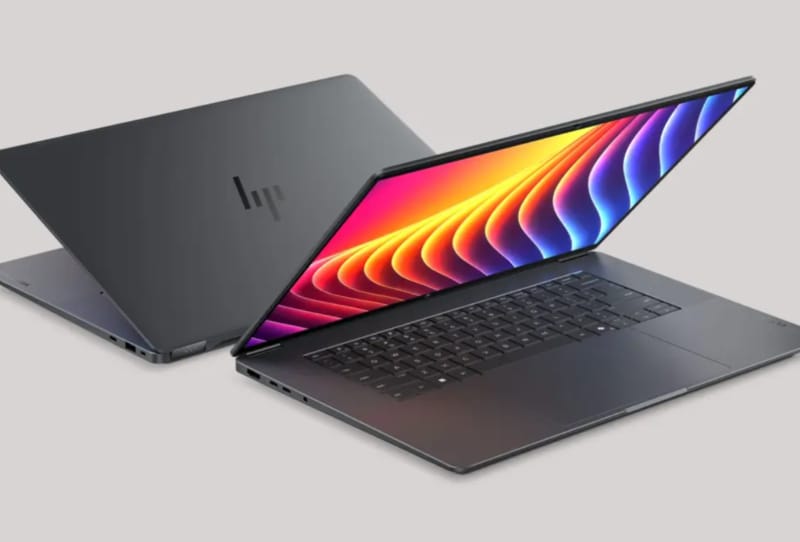
The HP ZBook Ultra G3a is a new mobile workstation built around AMD’s Ryzen AI Max+ PRO 495 processor, and it ships with up to 192GB of unified memory, a 512GB SSD, and enough grunt to run local AI models with as many as 300 billion parameters. That last figure is the headline detail: most laptops choke on models anywhere near that size, but HP is positioning this machine as a genuine alternative to renting cloud compute for serious AI work.
The ZBook name has long been HP’s banner for mobile workstations aimed at engineers, creative professionals, and data scientists who need desktop-class performance in a portable chassis. The Ultra G3a extends that lineage into the AI era, swapping the usual CPU-plus-discrete-GPU formula for a single chip designed from the ground up to handle memory-hungry AI workloads without needing a server rack nearby. For anyone comparing HP ZBook models or weighing up a ZBook against rival mobile workstations, the Ultra G3a is the clearest sign yet of where the range is headed.
Key takeaways
- ✓HP's ZBook Ultra G3a runs AMD's Ryzen AI Max+ PRO 495 processor with integrated Radeon graphics
- ✓The laptop can be configured with up to 192GB of unified memory and a 512GB SSD
- ✓HP says the machine can run local AI models with as many as 300 billion parameters
- ✓Unified memory lets the CPU and GPU share the same pool, avoiding typical laptop VRAM limits
- ✓The ZBook Ultra G3a targets professionals who need to run large AI workloads without cloud servers
That kind of capability usually lives in a server rack, not a laptop bag. HP’s pitch here is straightforward: give engineers, researchers, and data scientists a machine that can run demanding large language models directly on the device, without shipping sensitive data off to a third-party server.
Table of Contents
What’s inside the HP ZBook Ultra G3a
At the heart of the machine sits the Ryzen AI Max+ PRO 495, a chip from AMD’s Ryzen AI Max lineup that combines a high core count CPU with integrated Radeon graphics on a single package. Unlike a typical laptop where the GPU has its own dedicated slice of video memory, this architecture uses a unified memory pool shared between the CPU and GPU cores.
That distinction matters more than it sounds. It means the graphics side of the chip can draw on the same 192GB of system memory as the processor, rather than being capped at whatever dedicated VRAM a discrete graphics card carries. For AI inference, where model size is often limited by available memory rather than raw processing speed, that shared pool is the difference between a model loading at all and one that simply won’t fit.
Storage comes courtesy of a 512GB SSD, which is respectable but not enormous for a workstation aimed at handling large model files. Buyers working with especially large datasets or multiple models will likely want to lean on external or network storage to supplement it, and it’s worth checking at purchase time whether HP offers higher-capacity SSD configurations for this particular ZBook model, since storage needs tend to scale quickly once multiple large language models and datasets are involved.
As with other machines in HP’s ZBook range, the Ultra G3a is pitched as a workhorse rather than a showpiece, with the kind of build quality, driver support, and professional-grade reliability that mobile workstation buyers expect when they’re relying on a laptop for billable, mission-critical work. That positioning is part of why the ZBook name carries weight with IT procurement teams and engineering departments, even as the underlying hardware shifts towards AI-specific tasks.
Where the Ultra G3a fits in HP’s ZBook lineup
HP’s ZBook family has traditionally split into a few distinct tiers, and understanding where the Ultra G3a sits helps explain why it’s generating so much attention. At the entry level, models like the ZBook Power pair a workstation-grade CPU with a mid-range discrete GPU for buyers who need certified reliability without a flagship price tag. Further up the range, the ZBook Fury and ZBook Studio lines have historically targeted heavy 3D rendering, video editing, and CAD work, relying on powerful discrete NVIDIA or AMD graphics cards paired with their own dedicated video memory.
The Ultra G3a, by contrast, drops the discrete GPU entirely in favour of AMD’s unified memory architecture. That’s a meaningful departure from how HP has built ZBook laptops in the past, and it signals a new sub-category within the range: workstations optimised specifically for on-device AI inference rather than traditional GPU-bound workloads like rendering or video encoding. Buyers who need the latter are still better served by a Fury or Studio model with a discrete GPU, while those whose priority is running or fine-tuning large language models locally are the intended audience for the Ultra G3a.
Why 192GB of RAM changes what a laptop can do
Most consumer and even prosumer laptops top out well short of 192GB of memory, and for good reason: few everyday tasks need it. Running a large language model locally is a different story. Model size is typically measured in parameters, and every additional billion parameters demands more memory to hold the model’s weights during inference.
HP’s claim that the ZBook Ultra G3a can handle models up to roughly 300 billion parameters puts it in territory normally reserved for multi-GPU server setups. It won’t match a rack of dedicated AI accelerators for raw throughput, but for professionals who need to prototype, fine-tune, or simply run inference on a large model without cloud latency or data governance concerns, having that capability in a laptop is a meaningful shift.
It also reflects a broader trend across the AMD Ryzen AI Max ecosystem, which has already turned up in devices built around the same Ryzen AI Max+ PRO 495 chip found in Acemagic’s mini workstation. AMD has been pushing this platform hard as part of AMD’s wider Ryzen AI Halo push, aiming squarely at the growing appetite for on-device AI processing.
How it stacks up against other AMD-powered machines
The ZBook Ultra G3a isn’t the only laptop chasing this niche, but its memory ceiling sets it apart from most rivals. HP’s own lineup includes HP’s OmniBook 3 16, which made a similar case for prioritising RAM over surface-level polish, albeit at a more mainstream tier. Elsewhere, GEEKOM’s GeekBook X16 Pro shows how quickly AMD’s mobile AI chips are spreading beyond premium workstation brands into more accessible laptops.
What separates the ZBook line is HP’s workstation pedigree, including ISV certifications and build quality aimed at professional users who need reliability under sustained workloads, not just a fast benchmark result. That pedigree is also what tends to justify the premium pricing of ZBook devices compared with general-purpose laptops carrying similar silicon, since buyers are paying for validated performance and support as much as raw specifications. It’s also why IT departments evaluating a fleet purchase tend to default to ZBook over a consumer-grade equivalent, even when the underlying chip is identical, because of the extended warranty options, driver validation, and support channels that come bundled with HP’s workstation range.
HP ZBook Ultra G3a specifications at a glance
| Component | Detail |
|---|---|
| Processor | AMD Ryzen AI Max+ PRO 495 |
| Graphics | Integrated AMD Radeon graphics (shared unified memory) |
| Memory | Up to 192GB unified RAM |
| Storage | 512GB SSD |
| Claimed AI capability | Local models up to approximately 300 billion parameters |
| Category | Mobile workstation |
| Target buyer | AI researchers, developers, and enterprise teams running local LLMs |
| ZBook tier | Ultra (AI-focused, unified memory architecture) |
What it means for buyers and the AI hardware race
For most people shopping for a laptop, this machine is overkill. It’s built for a specific audience: developers, researchers, and enterprise teams who need to run or fine-tune large AI models without depending on cloud infrastructure. Keeping that work local also sidesteps data privacy concerns that come with sending proprietary information to third-party AI services.
The broader significance is what it signals about where laptop hardware is heading. Chipmakers like AMD are betting that unified memory architectures, rather than simply adding more discrete GPU power, are the more practical way to bring serious AI capability to portable machines. As that approach matures, expect to see it trickle down from workstation-tier laptops like the ZBook Ultra G3a into more mainstream machines over the next generation or two, and potentially into future ZBook models positioned below the Ultra tier as well.
Frequently asked questions
What is the AMD Ryzen AI Max+ PRO 495?
It’s a mobile processor from AMD’s Ryzen AI Max family that combines a high-performance CPU with integrated Radeon graphics, using a unified memory architecture that lets both share the same pool of system RAM rather than splitting it between separate CPU and GPU memory pools.
Can the HP ZBook Ultra G3a really run a 300 billion parameter AI model?
HP states the machine can handle local AI models up to roughly that size, largely thanks to its 192GB of unified memory. Performance will still depend on the specific model and how it’s optimised, but the memory capacity is what makes running models of that scale possible at all on a laptop.
Who is the HP ZBook Ultra G3a designed for?
It targets professionals such as AI researchers, developers, and enterprise teams who need to run or fine-tune large language models locally, rather than everyday users or gamers.
Does the HP ZBook Ultra G3a have a discrete graphics card?
No. It relies on the integrated Radeon graphics built into the Ryzen AI Max+ PRO 495 chip, which draws on the same unified memory pool as the CPU instead of using separate dedicated video memory.
How does the ZBook Ultra G3a compare with other HP ZBook models?
Where other ZBook models in HP’s range typically pair a CPU with a discrete mobile GPU and a smaller, separate pool of video memory, the Ultra G3a’s unified memory design allows it to allocate far more memory to AI workloads than a conventional ZBook configuration, making it the standout choice within the lineup for local AI inference specifically.