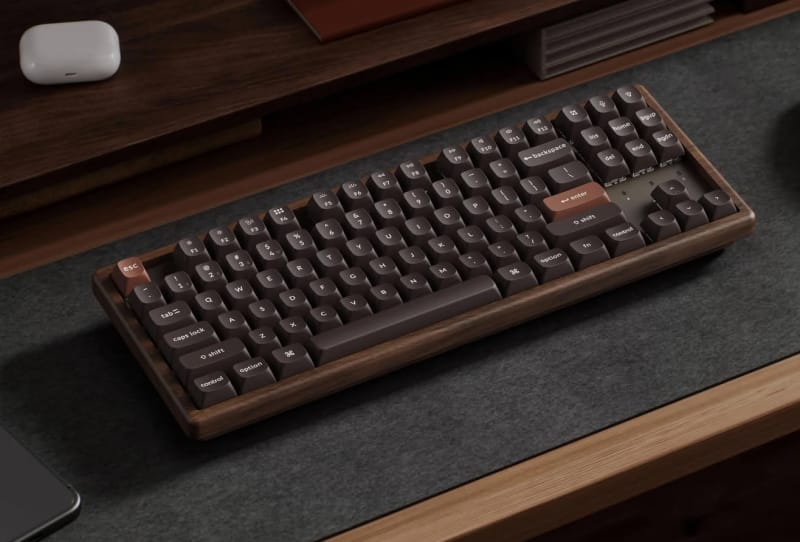
Keychron K8 HE All-Wood is a limited special edition of the brand’s K8 HE gaming keyboard that swaps the usual plastic bottom case for a solid walnut wood shell. The change is more than cosmetic, since a wood base typically deepens and warms a keyboard’s sound compared with the hollow plastic cases most boards ship with. Keychron has paired the new base with a brown metal side panel, giving the keyboard a distinctly steampunk look that stands apart from the rest of its lineup.
Key takeaways
- ✓Keychron K8 HE All-Wood replaces the standard plastic base with a solid walnut wood case
- ✓It keeps the same aluminium plate and Gateron Double-Rail Magnetic Nebula switches as the regular K8 HE
- ✓A new brown metal side panel adds a steampunk-style finish to the keyboard
- ✓It follows the same all-wood treatment Keychron already applied to the K2 HE compact keyboard
- ✓The tray-mount design sits inside the wood shell, which should noticeably change the typing sound
The company has been busy reworking familiar models with unusual materials lately, and the K8 HE All-Wood is the latest example. It arrives not long after Keychron showed off a concrete-finished K2 HE at CES 2026, suggesting the brand is keen to give its higher-end keyboards a more distinctive identity beyond the usual anodised aluminium look.
Table of Contents
What changes on the Keychron K8 HE All-Wood
Under the hood, the K8 HE All-Wood keeps almost everything that made the standard K8 HE work well. It still uses an aluminium plate, a tray-mount design, and Gateron Double-Rail Magnetic Nebula switches as the stock option. Those switches use magnetic Hall effect sensing rather than a physical metal contact, which allows for adjustable actuation points and rapid trigger features that competitive gamers tend to favour.
The headline change is that tray mount now sits inside a walnut wood bottom case instead of a plastic one. Wood absorbs vibration differently to plastic, and enthusiasts in the custom keyboard community have long favoured timber cases for a deeper, more muted sound signature. Combined with the new brown metal side panel, the overall effect pushes the K8 HE further from a standard gaming peripheral and closer to a display piece for a desk setup.
How the specs compare to the standard K8 HE
Aside from the case material and side panel, Keychron has not changed the core hardware that defines the K8 HE range. The table below summarises where the All-Wood edition lines up with the standard model and its closest sibling, the K2 HE All-Wood.
| Feature | K8 HE (standard) | K8 HE All-Wood | K2 HE All-Wood |
|---|---|---|---|
| Bottom case material | Plastic | Walnut wood | Walnut wood |
| Side panel | Standard finish | Brown metal | Brown metal |
| Plate | Aluminium | Aluminium | Aluminium |
| Stock switches | Gateron Double-Rail Magnetic Nebula | Gateron Double-Rail Magnetic Nebula | Gateron Double-Rail Magnetic Nebula |
| Mounting style | Tray-mount | Tray-mount | Tray-mount |
| Layout | Tenkeyless / full-size options | Same as standard | 65 percent compact |
The main difference between the two All-Wood editions, then, comes down to size and layout rather than technology. The K2 HE is a compact 65 percent board, while the K8 HE gives typists a larger footprint with dedicated function and navigation keys, making it the better pick for anyone who relies on those extra keys for productivity work alongside gaming.
Why a wood case matters for sound and feel
Case material is one of the biggest levers a keyboard maker has over how a board sounds, arguably more so than the switches themselves. Plastic cases tend to produce a higher-pitched, sometimes hollow clack, while aluminium cases sharpen that sound further. Wood sits at the other end of the spectrum, typically producing a lower, rounder tone that many enthusiasts describe as more pleasant for long typing sessions.
Because the K8 HE All-Wood keeps the same aluminium plate and magnetic switches as the standard version, the wood case becomes the single variable responsible for any change in acoustics. That makes it a useful example of how much a case swap alone can shift a keyboard’s character without touching the switches, plate, or internals that most buyers focus on first.
What it means for buyers considering a magnetic switch keyboard
Special editions like this one are as much about differentiation as function. Keychron already has a broad catalogue of Hall effect keyboards, and unusual finishes such as concrete or walnut wood give the brand a way to stand out in a market where other magnetic switch keyboards from the same company already compete for attention. It also puts pressure on rivals building premium boards, since it shows there is appetite for materials well beyond the usual plastic and aluminium choices.
For anyone weighing up whether the material swap is worth chasing, it helps to look at how rival magnetic switch boards like the ASUS ROG Azoth 96 HE stack up on typing feel and customisation, since the underlying Hall effect technology is broadly similar across brands even when the case design differs wildly. Buyers who care primarily about competitive performance may find the standard K8 HE delivers identical rapid trigger behaviour without paying for the finish. Those who want a keyboard that looks and sounds distinct on a desk, however, get a genuinely different object rather than a simple colourway change.
The wider keyboard market has also been experimenting with unconventional designs lately, from HP’s own full-size mechanical keyboard to Turtle Beach’s gesture-controlled gaming keyboard, suggesting brands across the industry are looking for ways to make mechanical keyboards feel less like commodity hardware. Keychron’s timber experiment fits that trend, giving an established board a fresh identity without touching the switch technology that already earned it a following. More details on the full range, including specifications and availability windows, sit on Keychron’s official site.
Frequently asked questions
What switches come standard on the Keychron K8 HE All-Wood?
It ships with Gateron Double-Rail Magnetic Nebula switches, the same magnetic Hall effect switch used in the standard K8 HE, so actuation point adjustment and rapid trigger support carry over unchanged.
Does the wood case actually change how the keyboard sounds?
Wood generally produces a deeper, less hollow tone than plastic, and since the plate and switches stay the same as the standard K8 HE, the case material is the main factor behind any difference in sound.
How is the K8 HE All-Wood different from the K2 HE All-Wood?
Both use the same walnut wood case, brown metal side panel and magnetic switch technology, but the K8 HE keeps a larger tenkeyless-style layout while the K2 HE is a compact 65 percent board.
Is the aluminium plate still used inside the All-Wood edition?
Yes, the internal aluminium plate and tray-mount design are unchanged from the standard K8 HE, with only the bottom case material and side panel finish updated for this special edition.