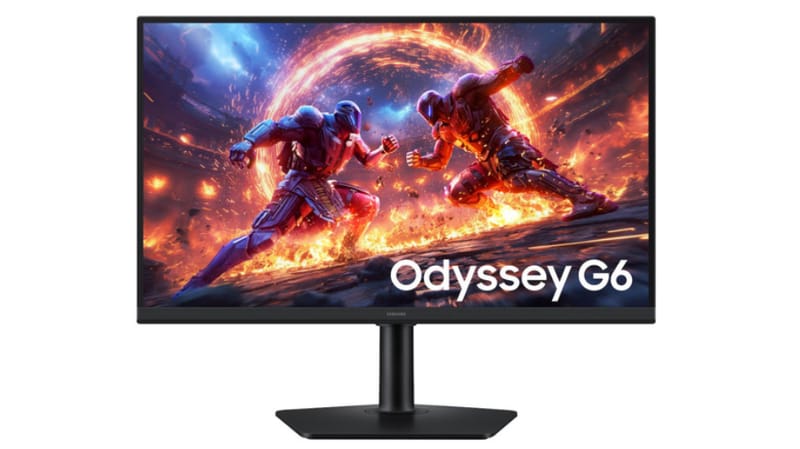
Samsung has unveiled the Odyssey G6 G60H, a 27-inch gaming monitor that becomes the first in the world to hit a 1,100Hz refresh rate. The catch is that the speed only arrives when the screen is dropped down to a reduced HD resolution, so buyers chasing that headline number need to understand exactly what they are trading away to get it.
Key takeaways
- ✓The Samsung Odyssey G6 G60H is the first monitor to reach a 1,100Hz refresh rate.
- ✓That top speed only applies in a reduced HD (1,280 x 720) resolution mode.
- ✓In its native QHD (2,560 x 1,440) mode, the panel still manages 600Hz.
- ✓It uses a dual-mode IPS panel with a 1ms gray-to-gray response time and HDR10+ support.
- ✓Samsung has not confirmed pricing or a release date for the 27-inch monitor.
The announcement lands less than a year after displays first crossed the 1,000Hz mark, and it shows just how quickly panel makers are pushing refresh rates even though most games and most players will never notice the difference past a few hundred hertz. For competitive shooter fans, though, this kind of spec race keeps delivering genuine, if marginal, gains.
Table of Contents
Samsung Odyssey G6 G60H specifications explained
The Odyssey G6 G60H is built around a dual-mode IPS panel, meaning it can switch between two native resolutions rather than just running one fixed grid with interpolation. In QHD mode it outputs a sharp 2,560 x 1,440 image, while flipping into HD mode drops that down to a much coarser 1,280 x 720.
That resolution switch is precisely what unlocks the extra speed. Samsung rates the panel at 600Hz in its native QHD mode, which already beats the vast majority of monitors sold today, and 1,100Hz once it steps down to HD. A 1ms gray-to-gray response time, HDR10+ certification and around 400 nits of typical brightness round out the core spec sheet.
| Spec | Detail |
|---|---|
| Panel type | Dual-mode IPS |
| Resolution (QHD mode) | 2,560 x 1,440 at up to 600Hz |
| Resolution (HD mode) | 1,280 x 720 at up to 1,100Hz |
| Response time | 1ms gray-to-gray |
| Brightness | 400 nits typical |
| HDR | HDR10+ |
| Adaptive sync | AMD FreeSync Premium and NVIDIA G-Sync compatible |
The dual-mode trade-off every buyer needs to understand
Here lies the obvious limitation with the Samsung Odyssey G6 G60H: nobody gets the full 1,100Hz refresh rate alongside the sharper QHD image at the same time. Pick the detail of 1,440p and the ceiling drops to 600Hz. Pick the blistering 1,100Hz speed and the resolution falls to something closer to a decade-old HD television.
Samsung has added a few features to make the compromise easier to live with day to day. Odyssey Clear Motion uses a custom algorithm aimed at cutting down motion blur regardless of which mode is active, and a black equalizer automatically lifts brightness in dark scenes so shadowy corners of a map stay visible rather than swallowing enemy players whole.
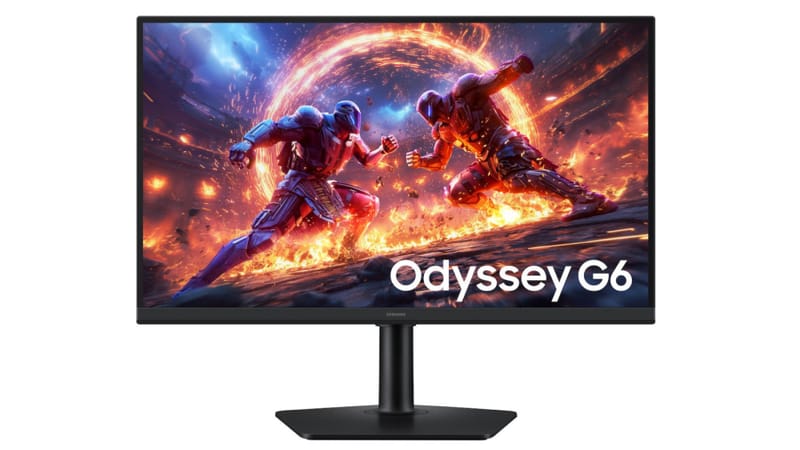
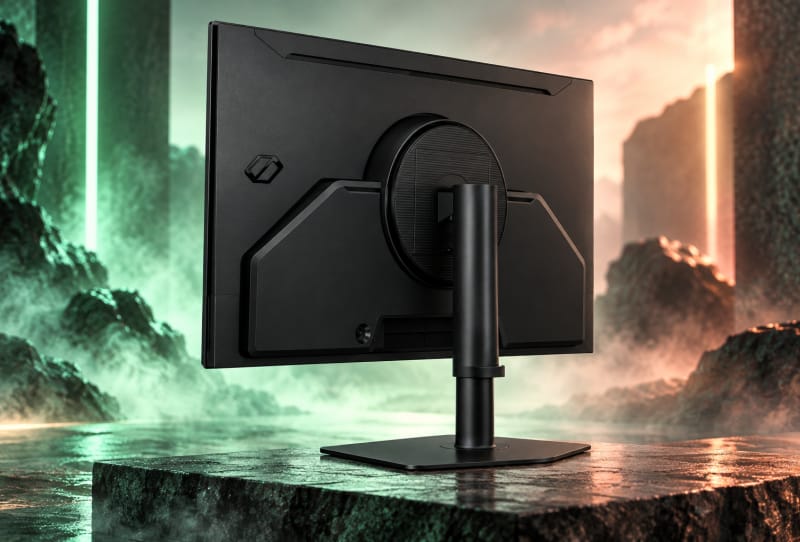
There is also a smaller but genuinely useful addition called Auto Source Switch+, which lets the monitor detect and jump to a newly plugged-in device automatically instead of forcing someone to dig through the joystick-controlled on-screen menu. The stand supports height adjustment, tilt and swivel, though it stops short of rotating fully into portrait orientation.
How it stacks up against the rest of the high-refresh pack
The Odyssey G6 G60H arrives into a market that has moved fast. LG already sells an UltraGear panel built around a 1,000Hz refresh rate, and LG’s 1,000Hz UltraGear monitor has been available in the US for some time, giving competitive players a taste of what sits beyond the usual 240Hz and 360Hz tiers.
Panel supplier TCL CSOT has also been showing off its own ambitions in this space, with TCL CSOT’s 1,250Hz QHD prototype panel pointing to where the next generation of these displays could land without the same HD-mode compromise. Samsung itself is no stranger to chasing extreme numbers either, having previously detailed Samsung’s earlier Odyssey 1,100Hz announcement as part of the same broader Odyssey push.
What sets the G60H apart from most of that competition is the dual-mode design rather than a single fixed resolution. It is a practical engineering compromise: rather than forcing a choice between a high-resolution monitor or an extreme-refresh one, Samsung lets a single screen do both, just not simultaneously.
Who actually needs this kind of speed
Realistically, 1,100Hz is overkill for almost everyone, and Samsung’s own framing acknowledges as much. Most human reaction times, most GPUs, and most games simply cannot produce or perceive a meaningful difference once refresh rates climb much past 360Hz, let alone four figures.
Where it genuinely matters is at the sharp end of competitive first-person shooters, where professional and high-ranked players chase every fraction of a millisecond of reduced latency and motion blur. For that narrow audience, a panel like this can offer a small but real edge, and it pairs naturally with the sort of setup discussed in a guide to choosing the best gaming monitor for competitive FPS play.
Samsung has not yet confirmed pricing or a release date for the Odyssey G6 G60H, and monitors in this performance bracket have typically landed well above the US$1,000 mark. Anyone keen on owning the world’s fastest gaming monitor should expect to pay a serious premium once it does reach shelves.
Frequently asked questions
What resolution does the Samsung Odyssey G6 G60H use at 1,100Hz?
The monitor only reaches 1,100Hz in its HD mode, which runs at 1,280 x 720. Its native QHD mode caps out at 600Hz.
Is the Samsung Odyssey G6 G60H an OLED panel?
No. It uses a dual-mode IPS panel rather than OLED technology, paired with HDR10+ support and 400 nits of typical brightness.
When will the Odyssey G6 G60H go on sale?
Samsung has not confirmed a release date or pricing for the 27-inch monitor at this stage.
Does the Odyssey G6 G60H support FreeSync and G-Sync?
Yes, it is compatible with both AMD FreeSync Premium and NVIDIA G-Sync, alongside a 1ms gray-to-gray response time.