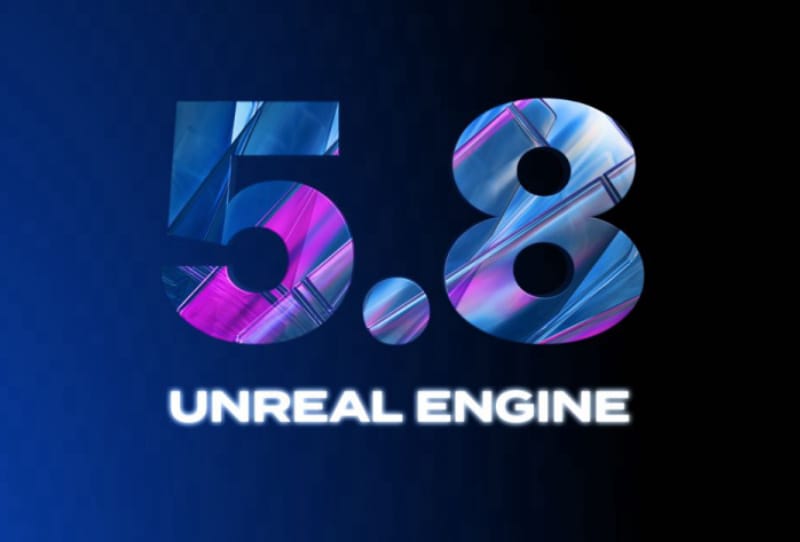
Unreal Engine 5.8 introduces a fix for one of PC gaming’s most persistent annoyances: shader compilation stutter. Epic Games has built Microsoft’s DirectX Advanced Shader Delivery (ASD) into the engine, moving the job of compiling shaders off the player’s own hardware and onto the cloud before the game even reaches their disk.
Key takeaways
- ✓Unreal Engine 5.8 adopts Microsoft's DirectX Advanced Shader Delivery (ASD) system
- ✓Shader compilation shifts from the player's device to the cloud before launch
- ✓Shaders are packaged into a State Object Database and converted into a Precompiled Shader Database
- ✓Pre-compiled shaders can ship with the game for ready-to-use loading on first run
- ✓Developers must actively support ASD for players to see reduced stuttering
For anyone who has sat through a brand new release only to watch frame rates lurch every time a new effect or enemy appears on screen, this is a meaningful change. Shader stutter happens when a game has to compile graphics instructions on the fly, mid-session, because the right shader hasn’t been prepared in advance. It is one of the most common complaints levelled at modern PC releases, and Unreal Engine, despite powering some of the industry’s biggest titles, has not been immune.
Table of Contents
How Unreal Engine 5.8 changes shader handling
Rather than leaving a player’s CPU and GPU to compile shaders during gameplay, ASD shifts that workload to a cloud-based compilation pipeline before launch. Epic Games packages a title’s shader data into what it calls a State Object Database, or SODB. That database is then run through cloud compilation to produce a Precompiled Shader Database, or PSDB.
The PSDB can be shipped alongside the game itself, meaning a copy of ready-to-use shaders is already sitting on the player’s device the first time they launch it. Instead of compiling shaders in real time, the engine simply calls up the pre-built ones it needs. That difference, compiling once in the cloud versus compiling repeatedly on millions of individual PCs, is the core of what Advanced Shader Delivery is trying to fix.
| Step | What happens |
|---|---|
| Shader data capture | Game’s shader instructions packaged into a State Object Database (SODB) |
| Cloud compilation | SODB processed off-device into a Precompiled Shader Database (PSDB) |
| Distribution | PSDB shipped with the game files to the player’s device |
| First run | Engine finds ready-to-use shaders instead of compiling locally |
Why shader stutter has been such a stubborn problem
Unreal Engine’s 5.x branch is already one of the most demanding engines available, leaning hard on powerful graphics cards to deliver the lighting, geometry detail and effects it is known for. Even a high-end GPU can stutter badly if shaders aren’t compiled and cached properly ahead of time, because the hardware is suddenly forced to do extra work mid-frame rather than simply rendering what it already knows how to draw.
That has made shader compilation stutter a recurring talking point around major Unreal Engine releases over the past few years, regardless of how capable the underlying hardware is. Previous mitigation attempts, including pre-caching shaders during loading screens or the first few minutes of play, have helped in some titles but never solved the issue outright. ASD approaches it differently by removing much of the compilation burden from the player’s machine altogether, rather than just rescheduling when that burden gets paid.
Games built on Unreal Engine 5, including high-profile projects like RuneScape 4, which Jagex is rebuilding in Unreal Engine, and CD Projekt Red’s decision to build Witcher 4 on Unreal Engine 5, are exactly the kind of large, visually ambitious releases where stutter has historically been most noticeable. A fix that genuinely reduces it has implications well beyond any single title.

What it means for developers and players
The catch is that Advanced Shader Delivery is not automatic for every Unreal Engine 5.8 project. Developers have to choose to support it, build their shader pipelines around the SODB and PSDB workflow, and ship the precompiled database with their game. Studios that skip this step won’t see any change, and players will still encounter the same compilation hitches as before.
For studios that do adopt it, the upside extends beyond smoother frame pacing. Because compilation happens in the cloud rather than on-device, less CPU time and power are spent at launch, which should translate into quicker load times as well as fewer dropped frames once gameplay begins. That is a useful efficiency gain for everything from high-end gaming rigs to lower-powered laptops running the same title.
Epic boss Tim Sweeney’s predictions for AI-driven game development point to a studio actively trying to streamline production pipelines, and Advanced Shader Delivery fits that broader pattern of reducing friction between development and the player’s actual experience. Whether ASD becomes a standard feature across Unreal Engine 5 titles will depend largely on how quickly middleware and studio tools catch up to support it, and how much marketing weight Epic puts behind encouraging adoption.
Frequently asked questions
What is Advanced Shader Delivery in Unreal Engine 5.8?
Advanced Shader Delivery, or ASD, is a Microsoft DirectX feature that Unreal Engine 5.8 now supports. It moves shader compilation away from the player’s PC and into the cloud, shipping a precompiled shader database with the game instead.
Will Unreal Engine 5.8 fix stuttering in every game?
Only in games where developers choose to implement ASD. Unreal Engine 5.8 makes the feature available, but studios still need to build their shader pipeline around it and ship the precompiled database for players to benefit.
Does Advanced Shader Delivery require a powerful graphics card?
Unreal Engine 5 already demands strong hardware for its visual features, but ASD itself is designed to reduce local compilation load rather than add to it, so it should ease pressure on CPUs and GPUs rather than increase hardware requirements.
How is this different from previous shader pre-caching methods?
Earlier fixes typically compiled shaders during loading screens or early gameplay on the player’s own device. ASD instead compiles shaders in the cloud ahead of release and ships the finished database with the game, avoiding on-device compilation almost entirely.