Nvidia’s latest app update tried to shut down an unofficial DLSS Multi-Frame Generation mod running on RTX 40 series graphics cards, but the fix didn’t last long. Within hours of the patch landing, modders had already worked out a way around it, restoring the feature across multiple games and leaving Nvidia’s attempt to lock the technology down looking more symbolic than effective.
The saga highlights an awkward tension for Nvidia. Multi-Frame Generation was one of the headline features of the RTX 50 “Blackwell” launch, pitched as a reason to upgrade rather than stick with an RTX 40 card. Yet a determined modding community keeps finding ways to bring that same feature to older hardware, and Nvidia keeps finding its countermeasures undone almost as fast as it ships them.
Table of Contents
What the Nvidia app update actually changed
Nvidia’s app update was designed to detect and disable the unofficial DLSS Multi-Frame Generation mod, which had been quietly gaining a following among RTX 40 series owners keen to squeeze extra performance out of cards that officially top out at single-frame generation. The update targeted the specific method modders used to trick supported games into treating RTX 40 hardware as Blackwell-class silicon.
That approach worked for a short window. However, the modding community had already anticipated this kind of response, given Nvidia had made previous attempts to close off similar workarounds. New builds of the mod appeared rapidly, restoring functionality in the games affected and, in some cases, improving on the earlier version’s stability.
It is a pattern familiar to anyone who has followed driver-level modding on graphics hardware before. A vendor patches a workaround, the community reverse-engineers the patch, and the cycle repeats. What stands out here is the speed: multi-game support was back the same day the blocking update rolled out.
Why Multi-Frame Generation is locked to RTX 50 in the first place
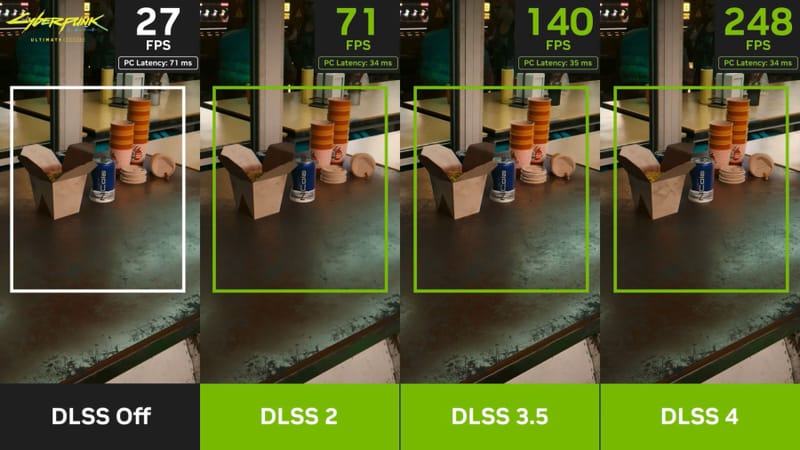
DLSS Multi-Frame Generation builds on the single-frame generation introduced with DLSS 3, which used the RTX 40 series’ Optical Flow Accelerator to insert one AI-generated frame between two rendered frames. Multi-Frame Generation goes further, inserting up to three generated frames for every real one, which is how Nvidia has been able to claim dramatic frame-rate multipliers on RTX 50 cards in supported titles.
Nvidia has maintained that Blackwell’s redesigned hardware, including a faster Optical Flow Accelerator and dedicated AI Management Processor, is what makes generating multiple frames per real frame viable without unacceptable latency or visual artefacts. That is the official justification for keeping the feature exclusive to RTX 50 rather than extending it to earlier generations through a driver update.
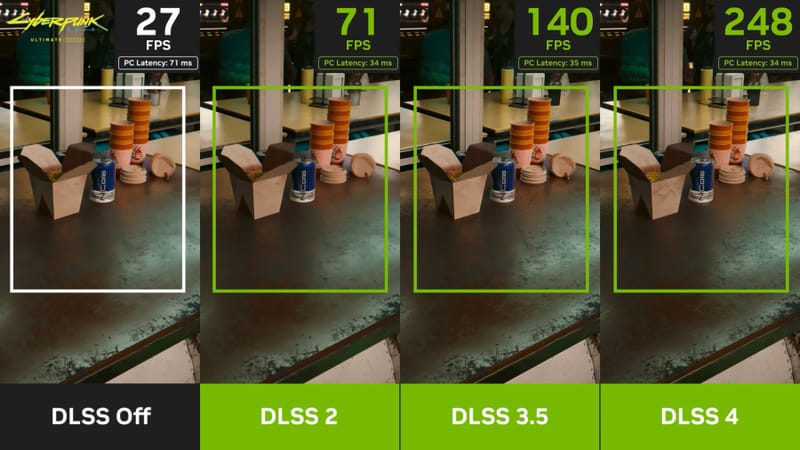
Modders dispute that the gap is quite as clean as Nvidia suggests. Their versions of Multi-Frame Generation running on RTX 40 hardware have shown that the feature can function, even if performance and latency characteristics differ from the Blackwell experience Nvidia markets.
| Feature | RTX 40 series (official) | RTX 50 series (official) |
|---|---|---|
| DLSS Frame Generation | Single generated frame per real frame | Single generated frame per real frame |
| Multi-Frame Generation | Not officially supported | Up to three generated frames per real frame |
| Optical Flow Accelerator | Second-generation | Redesigned, higher throughput |
| Unofficial mod support | Available, repeatedly patched by community | Not applicable, native support |
How the DLSS Multi-Frame Generation mod keeps surviving
Part of the reason this cat-and-mouse game favours the modders is architectural. RTX 40 and RTX 50 cards share enough of the same DLSS software stack that swapping in the right files can trick a game into unlocking features Nvidia intended to gate by driver or firmware checks. Closing that gap completely would likely mean deeper changes than a simple app update can deliver.
There is also a practical limit to how aggressively Nvidia can police this without risking collateral damage. Overly strict detection could flag legitimate configurations or interfere with other tools RTX 40 owners rely on, so the company has generally opted for narrower fixes rather than a blunt instrument that blocks everything at once.
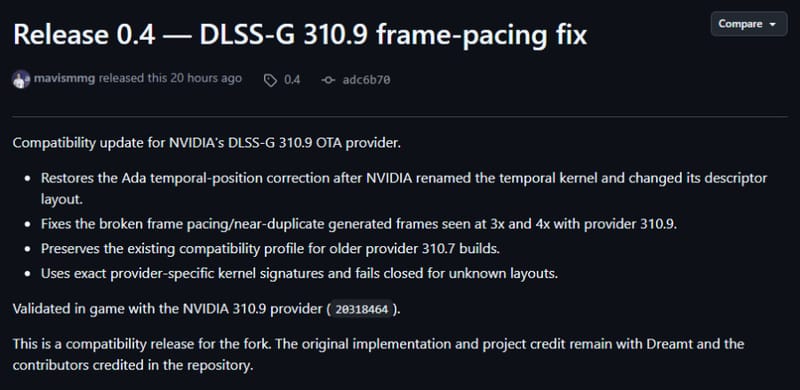
For gamers running RTX 40 series graphics cards, the immediate takeaway is that unofficial Multi-Frame Generation support remains available, at least for now, even if using it means stepping outside Nvidia’s supported configuration. That carries the usual caveats around stability, driver support, and warranty expectations that come with any unofficial modification.
More broadly, the episode reinforces something buyers considering an upgrade should weigh carefully: features Nvidia markets as generational exclusives do not always stay exclusive in practice, but relying on a mod to get there is a different proposition to buying hardware with official support built in. Anyone shopping around RTX 40 series graphics cards or newer RTX 40 SUPER series cards should factor that distinction into any purchase decision rather than assuming a future mod will guarantee feature parity with Blackwell.
It also sits alongside a wider trend of the DLSS ecosystem stretching further back through Nvidia’s own product stack, seen in efforts around DLSS 5 running on older Ampere GPUs and Nvidia’s steady expansion of Nvidia’s official DLSS 5 rollout across its supported game library. Full details on Multi-Frame Generation and how Nvidia positions it officially are available through Nvidia’s own DLSS technology page, which lays out the hardware requirements the company considers necessary for the feature to run as intended.
Whether Nvidia tries another, more thorough block remains to be seen. Given how quickly this round of patching was undone, it would not be surprising if the next attempt meets the same fate.