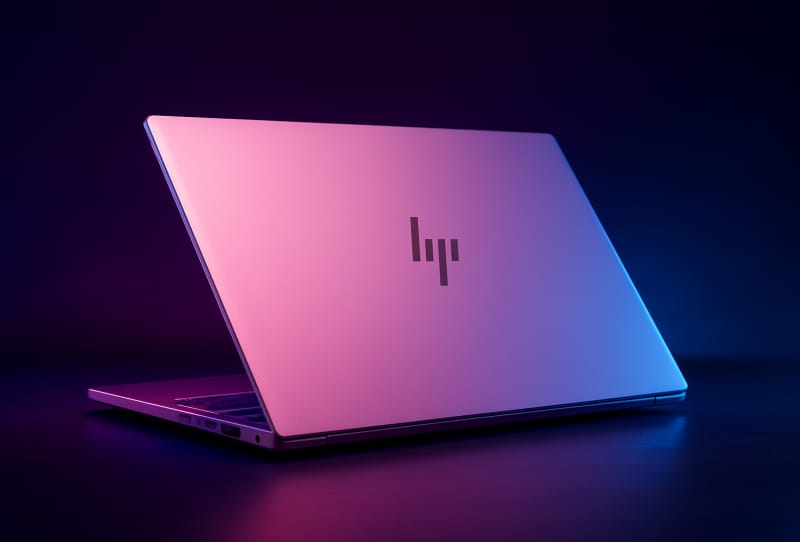
The HP OmniBook 5 is a new 14-inch laptop that pairs three OLED screen options with Intel’s latest Wildcat Lake processors, aiming squarely at shoppers who want a slim, long-lasting machine without the usual compromises on display quality. It arrives alongside a business-focused sibling, the ProBook 4 G2iS, and both lean heavily on Intel’s newest silicon and on-device AI features baked into Windows.
Key takeaways
- ✓The HP OmniBook 5 is a 14-inch laptop built around Intel's new Wildcat Lake processors.
- ✓Buyers can choose from three OLED panels, including a QHD+ HDR option hitting 620 nits peak brightness.
- ✓HP rates the entry configuration's battery life at up to 42 hours on a single charge.
- ✓A built-in HDMI port and dual USB-C ports give it more connectivity than Apple's rival MacBook Neo.
- ✓HP also unveiled the business-focused ProBook 4 G2iS alongside the OmniBook 5, with a sharper 2880×1800 OLED screen.
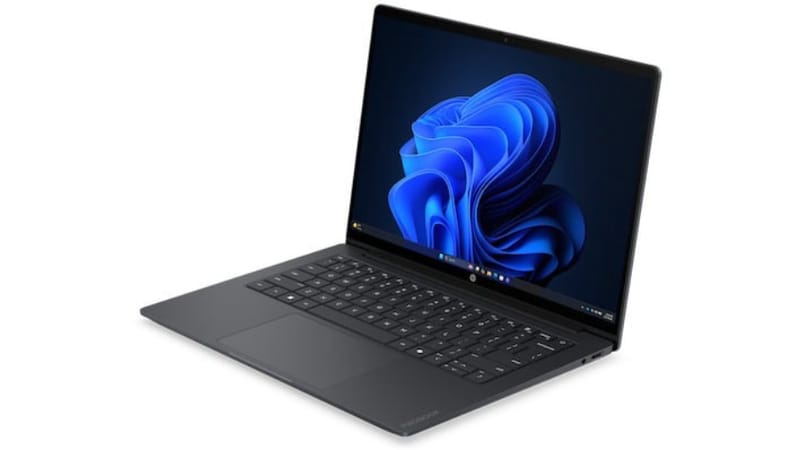
Fourteen-inch laptops have changed shape dramatically over the past decade and a half, and the OmniBook 5 is a tidy illustration of how far the category has come. HP has packed an aluminium chassis, a hinge that folds flat to 180 degrees, and genuinely capable hardware into a body thin enough to slip into a bag without a second thought.
Table of Contents
Wildcat Lake power and genuinely long battery life
At the entry level, the HP OmniBook 5 runs a six-core Wildcat Lake chip that boosts up to 4.4GHz, paired with 8GB of shared LPDDR5 memory and a 256GB SSD. That is not a huge amount of memory by 2026 standards, but the CPU itself is no slouch, and HP says the base configuration can run for up to 42 hours on a single charge, an unusually long figure for a laptop in this class.
Stepping up the range brings a Core 7 350 processor that boosts to 4.8GHz, along with a choice of 12GB or 16GB of memory, a 1TB SSD, and the option of Windows 11 Pro for buyers who need it. The larger configuration also carries a bigger 60Whr battery. Every version includes enough dedicated NPU horsepower to run Windows Studio Effects locally, which covers things like AI-driven background blur and voice clean-up during video calls without leaning on the cloud.
Three OLED panels to choose from
Where the HP OmniBook 5 really separates itself from cheaper rivals is the screen. Buyers can pick between a FHD+ (1920×1200) OLED panel with or without multitouch support, or step up to a QHD+ (2560×1600) HDR OLED display rated for up to 620 nits of peak brightness. HP claims all three options can reproduce the full DCI-P3 colour gamut and are protected by Gorilla Glass 3 for everyday durability.
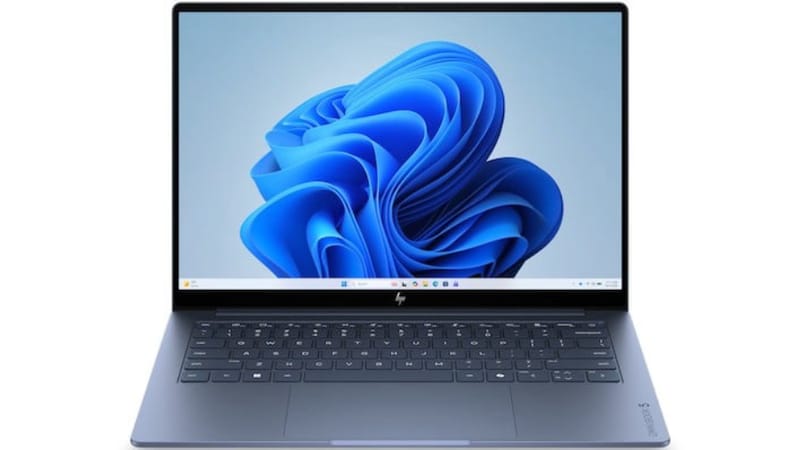
HP also points to a 90 percent screen-to-body ratio, a figure that sounds unremarkable on a phone but is a genuine achievement on a laptop this size. It is part of a broader shift across the PC market, where OLED panels are showing up across the entire PC market, from desktop monitors down to budget-friendly notebooks like this one.
Connectivity keeps pace with the screen upgrade. The OmniBook 5 includes two full-function USB-C ports supporting 10Gbps data, 100W-class power delivery, and DisplayPort 2.1, plus a built-in HDMI port and a 3.5mm combo audio jack. Wireless duties are handled by Wi-Fi 6E, with Bluetooth arriving as either version 5.3 or 5.4 depending on whether the laptop ships with an Intel or Realtek adapter.
How the HP OmniBook 5 stacks up against rivals
HP is clearly positioning the OmniBook 5 against Apple’s phone-chip-powered MacBook Neo, and the spec sheet backs that framing up. The MacBook Neo uses a standard IPS LCD rather than OLED, skips a built-in HDMI port entirely, and carries a smaller 36.5Whr battery compared with the OmniBook 5’s 60Whr pack in its higher configuration. For buyers who value screen quality and physical connectivity over the Apple ecosystem, that is a meaningful gap.
The business-oriented ProBook 4 G2iS, launched at the same time, shares the same Wildcat Lake foundation and aluminium build but pushes further in some areas. It supports up to 32GB of memory, a sharper 2880×1800 OLED panel running at 120Hz with variable refresh rate, and a larger 70Whr battery. It trades the HDMI port for a pair of USB-A connectors, a sensible swap for an office machine that still needs to plug into older peripherals.
| Configuration | Processor | Memory | Storage | Display | Battery |
|---|---|---|---|---|---|
| OmniBook 5 (entry) | Wildcat Lake hexa-core, up to 4.4GHz | 8GB LPDDR5 (shared) | 256GB SSD | FHD+ (1920×1200) OLED | Up to 42 hours rated |
| OmniBook 5 (higher tier) | Core 7 350, up to 4.8GHz | 12GB or 16GB LPDDR5 | 1TB SSD | QHD+ (2560×1600) HDR OLED, 620 nits | 60Whr |
| ProBook 4 G2iS | Wildcat Lake | Up to 32GB | Not disclosed | 2880×1800 OLED, 120Hz, VRR | 70Whr |
What the HP OmniBook 5 means for shoppers
HP has quietly built one of its more compelling thin-and-light laptops in years with the OmniBook 5. The combination of OLED screen choices, long battery life claims, and on-device AI features that work without an internet connection puts real pressure on rivals that still rely on standard LCD panels at similar positioning. It also follows a pattern seen elsewhere in HP’s lineup, including the HP’s own OmniBook 3 16, where HP has leaned on memory and display upgrades rather than flashy redesigns to differentiate its machines.
For buyers comparing options across HP’s wider range, from the gaming-focused HP’s Omen Transcend 14 gaming laptop to the workstation-grade HP’s workstation-class ZBook Ultra G3a, the OmniBook 5 fills a clear gap as the everyday option built for portability and screen quality rather than raw horsepower. Full specifications and configuration details are listed in HP’s official announcement, with the laptop built around Intel’s Wildcat Lake platform that underpins both new models.
Frequently asked questions
What processor does the HP OmniBook 5 use?
It runs on Intel’s Wildcat Lake platform, starting with a six-core chip that boosts to 4.4GHz and scaling up to a Core 7 350 processor that boosts to 4.8GHz in higher configurations.
How long does the HP OmniBook 5’s battery last?
HP rates the entry configuration at up to 42 hours of battery life, while the higher-tier model carries a larger 60Whr battery pack.
Does the HP OmniBook 5 come with an OLED screen?
Yes. Buyers can choose between a FHD+ OLED panel, a touch-enabled FHD+ OLED variant, or a QHD+ HDR OLED display reaching up to 620 nits of peak brightness.
What is the difference between the OmniBook 5 and the ProBook 4 G2iS?
The ProBook 4 G2iS is HP’s business-oriented sibling, offering up to 32GB of memory, a sharper 2880×1800 120Hz OLED screen with variable refresh rate, and a bigger 70Whr battery, though it drops the HDMI port in favour of USB-A connectors.