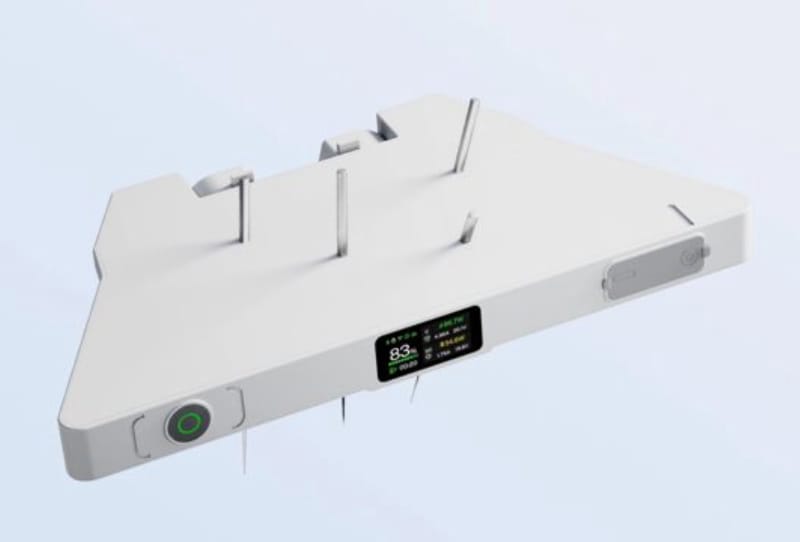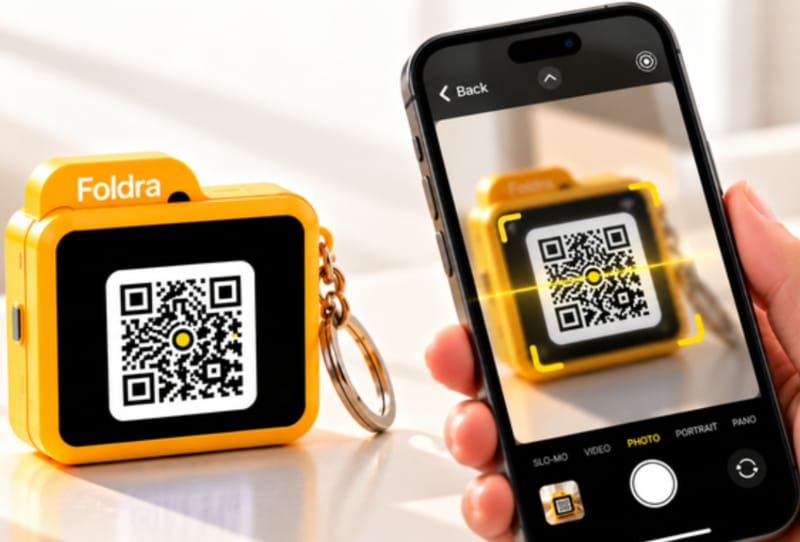
The Foldra pocket cloud server is a tiny wireless storage gadget small enough to clip onto a keyring, yet it can hold files and beam them to nearby phones, laptops and tablets without ever touching the internet. Its maker calls it the world’s smallest wireless server, and it pairs a touch OLED screen with a microSD card slot and a built-in battery, turning a device barely bigger than a USB stick into a self-contained, offline cloud.
Key takeaways
- ✓Foldra is described as the world's smallest wireless server, small enough to hang from a keyring.
- ✓It has a touch OLED screen, a microSD card slot, and a built-in rechargeable battery.
- ✓Files can be shared with nearby phones, laptops and tablets without an internet connection.
- ✓The hardware and software are open source, letting the community inspect and build on the design.
- ✓It works more like a personal offline cloud than a typical USB flash drive.
That combination is unusual. Most portable drives are dumb storage that need a cable and a host computer to do anything useful. Foldra behaves more like a miniature network device, broadcasting its own local connection so other gadgets can browse, upload and download files directly from it. No router, no mobile data, no account login required.
Table of Contents
What the Foldra pocket cloud server actually does
At its core, the Foldra pocket cloud server creates a private wireless network of its own. Nearby phones or laptops can join that network and interact with whatever files are stored on the inserted microSD card, much like accessing a shared folder on a home network attached storage box, except there’s no box, no mains power lead and no setup wizard beyond a quick pairing step.
The small touchscreen on the front lets someone check storage status, manage settings or glance at battery life without plugging the device into a computer first. That’s a meaningful convenience for a gadget this size, since most devices in its class rely entirely on a companion app and offer no on-device feedback at all.
Because everything runs locally, file transfers don’t depend on upload or download speeds from a home internet connection, or on a third-party server being online. For travellers, field workers, or anyone handing off large files in a place with patchy reception, that offline-first design is the whole point.
Specs and design at a glance
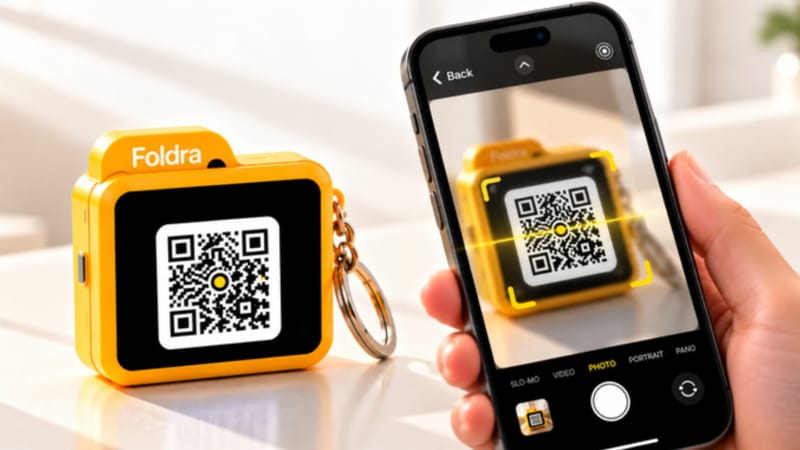
Despite the compact shell, Foldra packs in several components that normally only appear on larger storage devices. The table below summarises what’s known about the hardware.
| Feature | Detail |
|---|---|
| Form factor | Keyring-sized, described as the world’s smallest wireless server |
| Display | Small touch-enabled OLED screen |
| Storage | microSD card slot (card sold separately) |
| Power | Built-in rechargeable battery |
| Connectivity | Local wireless network for nearby devices, no internet required |
| Software model | Open source hardware and firmware |
The reliance on a microSD slot rather than fixed internal storage is a sensible choice. It means capacity isn’t locked in at the factory. Anyone can swap in a larger card, following the official microSD card standard, as storage needs grow or as prices on larger cards come down over time.
How it stacks up against other mini storage gadgets
Pocket-sized storage isn’t new. Small wireless hard drives and portable routers with SD slots have existed for years, often marketed to photographers who need to offload camera cards in the field. What sets the Foldra pocket cloud server apart is the sheer scale of miniaturisation combined with a genuine screen interface, rather than relying purely on a phone app.
It also differs from typical laptops and devices that have shifted toward brighter, sharper laptops that have adopted OLED panels for their main displays; Foldra’s screen is tiny and functional rather than a media viewer, built only to surface status and basic controls.
The open source angle also separates it from most commercial storage gadgets, which tend to be closed systems. That echoes the spirit of another recent open-source hardware project built by independent makers, where the appeal lies in being able to inspect, modify, or repair the device rather than being locked into a single manufacturer’s firmware and app ecosystem.
Why an offline, open source approach matters
Plenty of modern conveniences now assume a constant internet connection, from streaming services to cloud-based services that depend entirely on an internet connection to function at all. Foldra points in the opposite direction, offering a way to move files between devices that works the same whether someone is on a train, in a basement server room, or somewhere with no signal whatsoever.
That offline resilience also has privacy implications. Because files never have to pass through a third-party cloud provider to move between two nearby devices, there’s no remote server logging the transfer or storing a copy. For anyone wary of handing sensitive documents to a cloud account, a local-only transfer method has an obvious appeal.
Being open source adds another layer of trust. Supported by the broader open source hardware community, the design and firmware can, in principle, be reviewed and verified by anyone rather than taken on faith from the manufacturer. For a device that’s essentially a tiny personal network node, that kind of transparency matters more than it would for a simple flash drive.
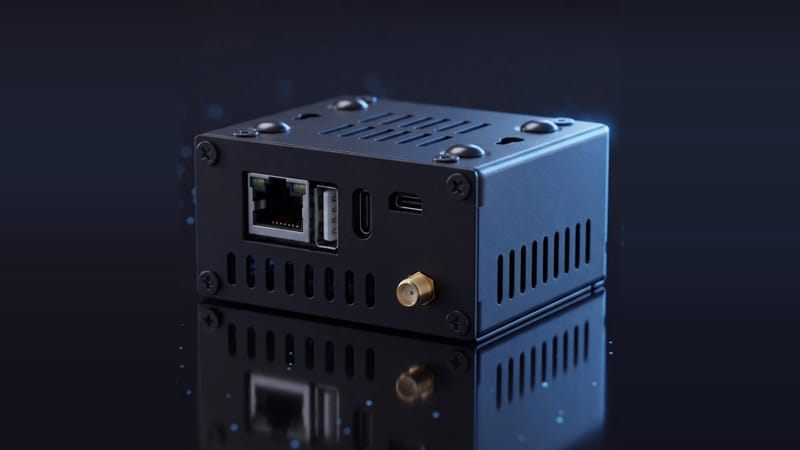
Whether Foldra finds a mainstream audience beyond early adopters and the open source crowd remains to be seen, but the concept fills a real gap. A pocketable, battery-powered, screen-equipped file server that needs nothing more than a microSD card is a genuinely different idea from the usual parade of slightly faster external drives.
Frequently asked questions
Does the Foldra pocket cloud server need an internet connection?
No. It creates its own local wireless connection so nearby phones, laptops and tablets can access stored files directly, without relying on home internet or mobile data.
What kind of storage does Foldra use?
It relies on a microSD card slot rather than fixed internal storage, so capacity can be upgraded simply by inserting a larger card.
Is Foldra compatible with any device?
Because it broadcasts its own local network, most modern phones, laptops and tablets with wireless capability should be able to connect and browse its files, similar to joining a small home network.
Why does being open source matter for a storage device?
Open source hardware and firmware let independent developers and the wider community inspect, verify, and even modify how the device works, offering more transparency than a closed commercial product.