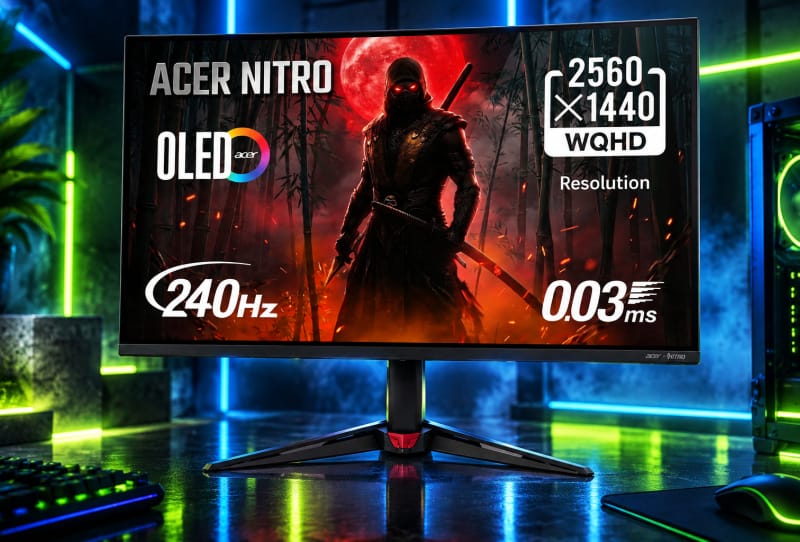
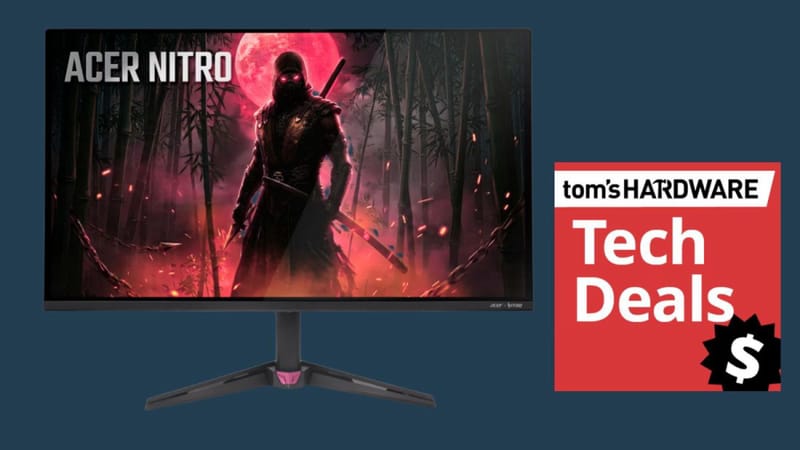
Acer’s new Nitro QD-OLED monitor brings a 27-inch WQHD panel and a 240Hz refresh rate to gamers who want sharper motion and richer colour without stepping up to a flagship-tier display. It slots into Acer’s Nitro range as one of the more accessible ways to get genuine OLED picture quality on a desk built for fast-paced games.
Key takeaways
- ✓Acer's Nitro QD-OLED monitor combines a 27-inch WQHD panel with a 240Hz refresh rate
- ✓QD-OLED panels offer near-instant pixel response and deep per-pixel black levels
- ✓The monitor brings OLED picture quality to a more mainstream gaming audience
- ✓Rivals like ASUS, Gigabyte and AOC are already pushing OLED monitors past 320Hz
- ✓WQHD resolution balances sharpness and frame rate better than 4K for fast-paced games
The panel itself is a 2560 by 1440 QD-OLED display, a resolution sweet spot that keeps detail crisp without demanding the graphics horsepower a 4K panel needs to hit high frame rates. Paired with a 240Hz refresh rate, it’s aimed squarely at competitive and fast-action titles where smooth motion matters as much as colour accuracy.
Table of Contents
What makes the Acer Nitro QD-OLED monitor different
Most budget and mid-range gaming monitors still rely on IPS or VA liquid crystal panels, which light the whole screen from behind and struggle to produce true black. QD-OLED panels, developed using QD-OLED panel technology that combines quantum dot colour filters with an OLED light source, switch pixels on and off individually. That means genuinely black blacks sit right next to bright highlights with no backlight bleed or haloing.
The other big advantage is pixel response time. OLED pixels can change state in a fraction of a millisecond, which is why these panels pair so naturally with high refresh rates. At 240Hz, fast-moving objects in shooters or racing games stay sharper and show less smearing than they would on a comparable LCD panel running the same refresh rate.
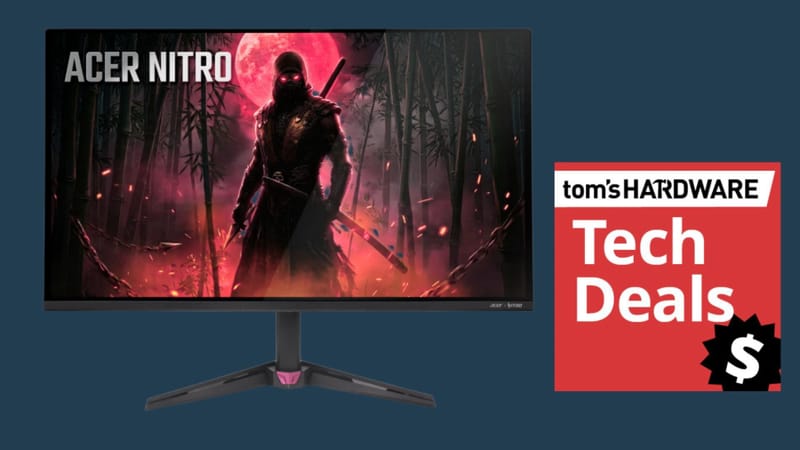
None of this is new territory for Acer. The Nitro line has carried OLED models before, but bringing a 240Hz WQHD QD-OLED panel into a more mainstream tier of the lineup signals that this panel technology is becoming a baseline expectation rather than a premium extra.
How it stacks up against rival OLED monitors
Competition in this space has moved quickly. ASUS recently pushed its ASUS ROG Strix OLED XG27ACDMSR to 320Hz on a QD-OLED panel, while Gigabyte has done something similar with Gigabyte’s own 320Hz OLED monitor, both using five-layer panel construction to chase higher brightness alongside the faster refresh. AOC, meanwhile, has gone even brighter with AOC’s flagship OLED gaming monitor.
Against that backdrop, Acer’s 240Hz figure looks comparatively modest. However, the Acer Nitro QD-OLED monitor isn’t trying to chase the absolute ceiling of refresh rate numbers. It’s aimed at players who want the visual benefits of OLED, deep contrast, wide colour coverage and fast response, without needing the very highest Hz count that only shows its full benefit in esports titles capable of pushing those frame rates consistently.
That positioning matters because 240Hz is already well past the point of diminishing returns for most players and most games. Few graphics cards outside the high end can sustain frame rates anywhere near 320 frames per second in modern titles, so a 240Hz panel remains a realistic target for a much wider range of PC builds.
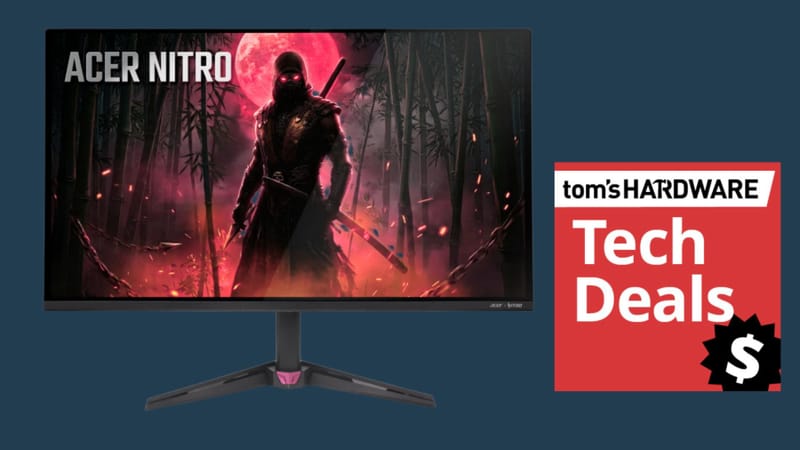
Specifications at a glance
| Feature | Detail |
|---|---|
| Panel type | QD-OLED |
| Screen size | 27 inches |
| Resolution | 2560 x 1440 (WQHD) |
| Refresh rate | 240Hz |
| Product line | Acer Nitro |
What this means for buyers
The arrival of a 27-inch WQHD OLED monitor in a mainstream product line is a useful signal for anyone who has been waiting for panel prices to settle before committing. OLED gaming monitors were, until recently, mostly the preserve of flagship ranges from Samsung, LG and Alienware. Seeing the technology appear in Acer’s Nitro tier suggests panel supply is improving and manufacturing costs are easing.
Buyers should still weigh the usual OLED trade-offs. Static elements like UI overlays, health bars or taskbar icons left on screen for long stretches carry a small risk of permanent image retention over years of heavy use, though modern QD-OLED panels include pixel-shifting and refresh routines designed to minimise that risk. Peak brightness also tends to sit below what a high-end mini-LED LCD can achieve, which matters more for sunlit rooms than darkened gaming setups.
For anyone building or refreshing a gaming PC around a monitor like this, it’s worth reading up on choosing the best gaming monitor for competitive play to work out whether 240Hz at WQHD is the right balance of sharpness and speed for the games actually being played, versus chasing a higher resolution or an even faster refresh rate.
Frequently asked questions
What does QD-OLED mean on a gaming monitor?
QD-OLED combines an OLED light source with a quantum dot colour filter layer. It produces per-pixel black levels, wide colour coverage and very fast pixel response, which together give sharper motion and higher contrast than typical LCD gaming monitors.
Is 240Hz enough for competitive gaming?
For the vast majority of players and PC builds, yes. Frame rates beyond 240 frames per second require very high-end graphics hardware to sustain consistently, so a 240Hz panel still covers most competitive and fast-action use cases comfortably.
Does WQHD resolution make sense for a 27-inch screen?
It does. At 27 inches, 2560 by 1440 resolution delivers sharp detail without the GPU demands of 4K, making it easier to hit high frame rates consistently, which matters more than extra pixel density for fast-paced gaming.
Can OLED monitors suffer burn-in?
There’s a small long-term risk of image retention from static content left on screen for extended periods, though modern QD-OLED panels include pixel-shifting and other protective measures that significantly reduce that risk for typical gaming use.