Gigabyte has unveiled the GO27Q32, a 27-inch QHD gaming monitor that pushes QD-OLED technology to 320Hz while introducing a new five-layer panel structure designed to make the screen brighter and longer-lasting than earlier OLED generations.
Key takeaways
- ✓The Gigabyte GO27Q32 monitor uses a 27-inch QHD panel running at 320Hz with a 0.03ms response time.
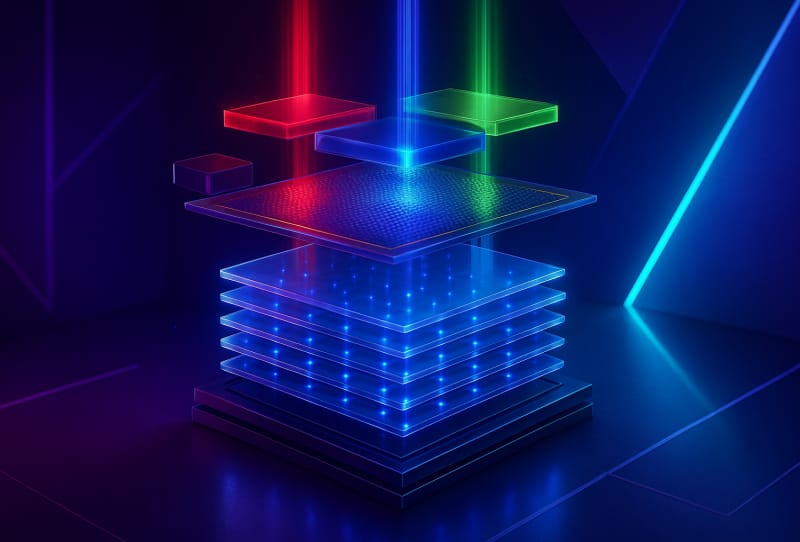
- ✓It is among the first monitors built on Penta Tandem OLED, stacking five light-emitting layers for brightness and longevity.
- ✓Peak HDR brightness hits 1300 nits with VESA DisplayHDR True Black 500 certification and 99.5% DCI-P3 coverage.
- ✓An ObsidianShield film deepens black levels and improves scratch resistance over earlier Gigabyte OLED panels.
- ✓Connectivity includes dual HDMI 2.1, DisplayPort 2.1 and a 15W USB-C port, with G-Sync and FreeSync Premium support.
The Gigabyte GO27Q32 monitor arrives as one of the first displays built on what Gigabyte calls Penta Tandem OLED, a panel architecture that stacks five separate light-emitting layers rather than the two or three layers used in most current OLED monitors. That extra layering is aimed squarely at two of OLED’s traditional weak points: peak brightness and long-term panel wear. According to specifications listed via DisplaySpecifications, the panel also delivers a 0.03ms grey-to-grey response time, among the fastest pixel response figures claimed on any gaming monitor to date.
Table of Contents
A fifth OLED layer built for brightness and longevity
Tandem OLED designs work by layering multiple light-emitting elements on top of one another, which spreads the electrical load across more material and reduces the stress placed on any single layer. Apple and Samsung have already used two-layer tandem structures in laptop and tablet screens to boost brightness without shortening lifespan. Gigabyte’s move to a five-layer Penta Tandem structure on the GO27Q32 pushes that same principle further, and the company pairs it with an ObsidianShield film that deepens perceived black levels and adds scratch resistance to the glass surface.
The combination is reflected in the brightness numbers Gigabyte quotes. The panel manages a typical SDR output of 300 nits and a peak HDR brightness of 1300 nits, backed by VESA DisplayHDR True Black 500 certification and a claimed 1,500,000:1 contrast ratio. Colour performance is rated at 99.5% DCI-P3 coverage with 1.07 billion colours, and Gigabyte says every unit ships factory-calibrated to a DeltaE below 1 in SDR mode and below 2 in HDR mode, figures that matter to colour-sensitive buyers as much as competitive gamers.
Specifications at a glance
| Feature | Specification |
|---|---|
| Panel size and resolution | 27-inch QHD (2560 x 1440) QD-OLED |
| Refresh rate | 320Hz |
| Response time | 0.03ms G2G |
| Peak brightness | 1300 nits HDR / 300 nits typical SDR |
| HDR certification | VESA DisplayHDR True Black 500 |
| Colour coverage | 99.5% DCI-P3, 1.07 billion colours |
| Connectivity | 2x HDMI 2.1, DisplayPort 2.1, USB-C (15W PD), USB 2.0 service port, headphone jack |
| Adaptive sync | Nvidia G-Sync Compatible, AMD FreeSync Premium |
Connectivity and cooling built for marathon sessions
Ports on the GO27Q32 cover two HDMI 2.1 connections, a DisplayPort 2.1 connector, a headphone jack, a USB 2.0 service port, and a USB Type-C input with DisplayPort Alt Mode that also supplies up to 15W of power delivery. That spread should satisfy most desktop setups, and the USB-C port in particular makes it easier to drive the monitor from a single cable off a compatible laptop.
Because OLED panels are more prone to heat-related wear than LCD alternatives, Gigabyte has leaned on a fanless cooling system built around a custom heatsink, a graphene thermal film, and a four-sided dissipation layout. That hardware works alongside Gigabyte’s AI OLED Care software suite, which handles tasks like pixel shifting and brightness management to reduce the risk of burn-in over time. The stand offers up to 130mm of height adjustment along with tilt, swivel, a 90-degree pivot, and standard VESA 100x100mm mounting for third-party arms.
How the GO27Q32 compares to rival OLED monitors
The 27-inch QHD, high-refresh OLED category has become crowded fast, with ASUS’s own 720Hz esports OLED monitor chasing raw refresh rate at a smaller 1080p resolution, while brands like AOC have pursued dual-mode panels that trade resolution for speed, as seen in AOC’s dual-mode 4K and 480Hz display. Gigabyte’s approach with the GO27Q32 sits between those extremes, keeping QHD sharpness while still hitting a 320Hz refresh rate that few LCD panels can match without resorting to similar dual-mode tricks.
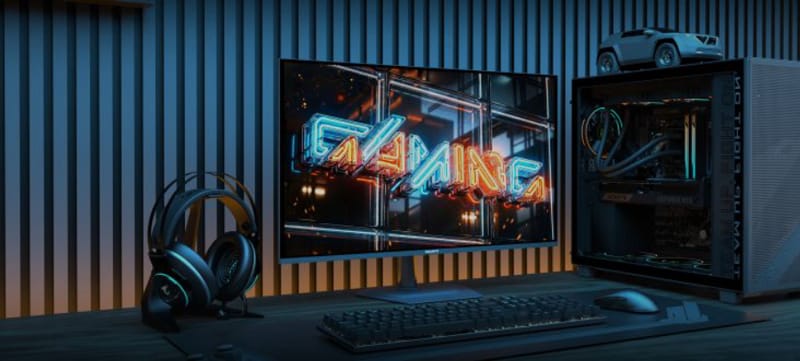
What sets the GO27Q32 apart isn’t the refresh number alone but the panel technology underneath it. Penta Tandem OLED is a genuinely new structure rather than a refinement of existing QD-OLED panels, and if it delivers the brightness and longevity gains Gigabyte is promising, rival manufacturers will likely follow with their own tandem designs within a year or two. For buyers researching choosing the right monitor for competitive play, response time and refresh rate remain the headline figures, but panel durability is increasingly part of that conversation as OLED displaces LCD at the high end.
What it means for Gigabyte and the OLED monitor market
Gigabyte has been building out its OLED monitor range alongside a broader hardware push that includes Gigabyte’s other recent hardware, and the GO27Q32 signals the company wants to lead on panel innovation rather than simply license whatever QD-OLED generation Samsung Display makes available. Full pricing and availability details have not yet been confirmed, so buyers keen on the panel technology will need to wait for retail listings before comparing it directly against existing 240Hz and 360Hz OLED monitors already on shelves.
Frequently asked questions
What is Penta Tandem OLED?
Penta Tandem OLED is Gigabyte’s term for a panel structure that stacks five separate light-emitting layers instead of the one or two layers used in typical OLED screens, a design intended to increase brightness and reduce long-term panel degradation.
How fast is the Gigabyte GO27Q32 monitor?
The panel runs at a 320Hz refresh rate with a 0.03ms grey-to-grey response time, figures aimed at competitive gamers who prioritise motion clarity over higher resolution.
Does the GO27Q32 support HDR?
Yes. It carries VESA DisplayHDR True Black 500 certification, with Gigabyte quoting a peak HDR brightness of 1300 nits and a 1,500,000:1 contrast ratio.
What connections does the monitor include?
It offers two HDMI 2.1 ports, one DisplayPort 2.1 connector, a USB-C port with 15W power delivery and DisplayPort Alt Mode, a USB 2.0 service port, and a headphone jack.