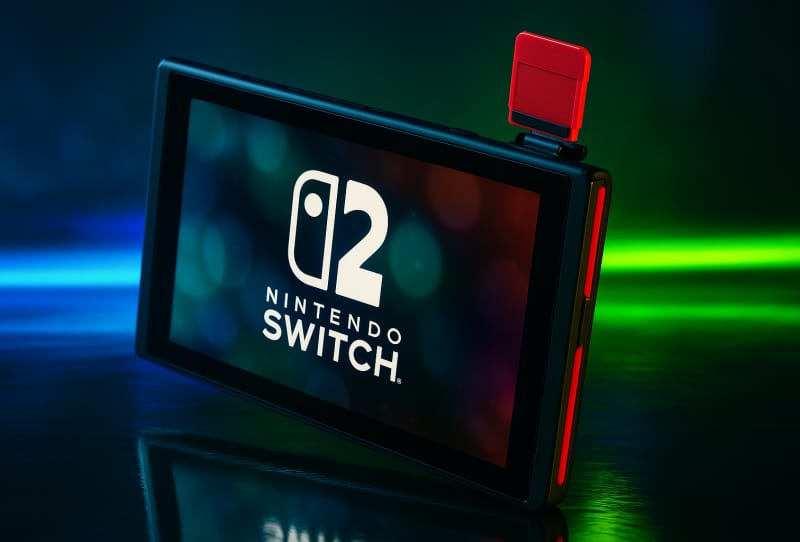
Nintendo game-key cards are quietly changing what “physical game” means on the Switch 2, and plenty of shoppers are getting caught out. The cartridges look identical to a normal game card, slot into the console the same way, and sit on the same shop shelf. The difference only becomes obvious once someone gets home, tries to load the game, and discovers there is nothing actually stored on the cart beyond a licence to download it.
The timing matters. Sony has confirmed it will stop selling physical PlayStation discs in 2027, Grand Theft Auto 6’s boxed release is expected to be a code in a case rather than a full game on a disc, and Xbox’s commitment to physical media looks shaky at best. Against that backdrop, Nintendo’s game-key cards feel like a smaller, sneakier version of the same shift, dressed up to still look like a traditional cartridge purchase.
Table of Contents
What exactly is a game-key card?
Nintendo describes a game-key card as a key to downloading the full game onto a Switch 2 rather than a cartridge that holds the game itself. Buyers still get a case and a cartridge, and that cartridge still needs to be inserted into the console to play, but the actual game files only arrive after a mandatory internet download the first time it is used.
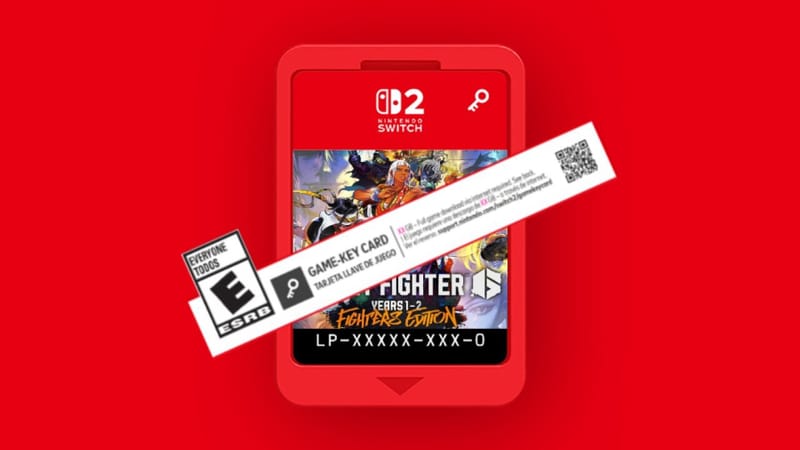
Once that initial download finishes, the game does not need a constant connection to keep working. The cartridge itself still has to stay in the console, though, acting more like a licence dongle than a storage device. Nintendo has been clear that game-key cards are not tied to a Nintendo Account, so they can still be resold, lent out, or moved between consoles just like an ordinary cartridge.
Nintendo’s reasoning comes down to cost. Switch 2 cartridges max out at 64GB of storage, and that capacity gets expensive for publishers to use, especially for games that do not need anywhere near that much space. A title as small as Puyo Puyo Tetris 2S, only a few gigabytes on PC, still ends up as a game-key card because paying for storage nobody uses makes no commercial sense for the publisher.

How to spot a Nintendo game-key card on the shelf
Nintendo does print a warning on the box, though it is easy to miss if shoppers are not looking for it. Near the ratings logo in the bottom corner sits a small key icon alongside the words “GAME-KEY CARD,” along with fine print listing how much free storage is needed and a note that a full download over the internet is required before play.
There is also a small key icon stamped directly onto the cartridge itself, separate from the box. That detail becomes genuinely useful for anyone buying a used game without its original case, since the case artwork will not be there to warn them. Because regular game cards and game-key cards sit side by side on the same shelves with no separate section, it is entirely possible to grab the wrong one without realising until it is too late to download it, whether that is due to no internet at home or simply not checking before a trip.

Which Switch 2 games use game-key cards
The list of publishers choosing the game-key card format is long and growing, and it includes plenty of major releases rather than obscure titles. Reports suggest Nintendo initially only gave third-party developers a choice between the costly 64GB cartridge or the game-key card, which explains why so many big names ended up going the download route by default.
Games confirmed to use game-key cards include Assassin’s Creed Shadows, Borderlands 4, Elden Ring, Hogwarts Legacy, EA Sports FC 26, Final Fantasy VII Rebirth, Persona 3 Reload, Metaphor: ReFantazio, and Minecraft, alongside Capcom titles such as Resident Evil Requiem and Onimusha: Way of the Sword. Smaller games have also joined the list, showing that storage cost, not just game scale, is driving the decision. Anyone eyeing a boxed copy of these titles, or excited about Bloober Team’s upcoming Switch 2 horror title, should check the case for that key icon before assuming it is a full cartridge release.
Why this matters for physical media fans
Whether game-key cards actually count as physical media is a genuine sticking point for collectors. The game will always be there in the sense that a download can be repeated, but that assumes servers stay online and an internet connection is available when needed. A cartridge with the full game baked in can theoretically be played forever, offline, decades from now. A game-key card depends on infrastructure that is not guaranteed to last.
That tension sits alongside broader industry conversations about game preservation, including efforts elsewhere in the industry to preserve physical game boxes and the games inside them for the long term. For now, Nintendo is not abandoning traditional cartridges outright, and plenty of Switch 2 games still ship with everything on the cart. But shoppers who care about owning a complete, self-contained copy of a game need to read the fine print on the box, check for that key icon on the cartridge, and confirm on Nintendo’s official site or the box itself before assuming a Switch 2 purchase is the real deal. It is also worth remembering the basics of getting a new console running, whether that means setting up a Switch 2 on the TV for the first time or sorting out accessories like charging Switch 2 controllers without a dock, since a game-key card still needs a fully functioning, connected console before it will do anything at all.
| Feature | Standard game card | Game-key card |
|---|---|---|
| Game data on cartridge | Yes, full game stored | No, download required |
| Internet needed to play | No | Yes, for first-time download only |
| Cartridge must stay inserted | Yes | Yes |
| Resellable and lendable | Yes | Yes, not tied to an account |
| Identifiable on box | No special marking | Key icon plus “GAME-KEY CARD” text |